Posted in Philosophy

Assessing Leadership: The Search for Quality

How do you assess a leader, or maybe just maybe even yourself? What are the qualities which make any person a good leader or a good person? For each of us the criteria for determination will vary but have similar threads. These are critical times for each of us to evaluate and assess our leaders, want-to-be leaders, and frankly ourselves. A recent Marquette Law School survey showed fifty-seven percent of us have little to no confidence in Congress*. These are our elected representatives and leaders. We should assess them differently.

Think about a few characteristics which can be used to understand if they are making progress in pursuit of being better leaders. Characteristics which we can use to figure out if there is improvement rather than feeling good or feeling satisfied. Decisions on who should be a leader should not be about good feelings, but on tangible qualities.

Ask a few simple questions, these ten might be a good start:

  • Are they criticizing anybody?
  • Are they blaming anybody?
  • Are they accusing anybody?
  • Do they react to criticism and complements the same?
  • When they face obstacles do they find solutions or find fault?
  • When wrong, are they contrite or vengeful?
  • Do they demand loyalty over honesty?
  • Do they say the ‘right things’ or do the right things?
  • Do they look toward the future or dwell on the past?
  • Do they lead through hope or fear?

These are questions we should be asking about those who want to lead. We should be asking ourselves if they are more interested in promoting themselves or our county, state, and country. Are they leaders who bring out the best in all of us, or the worst?

Interestingly, the Greek stoic philosopher Epictetus during his life (50-185 AD) routinely asked many of these questions. He asked them to assess whether he and his students were making progress simply in becoming better people. We can still use them to assess the quality of ourselves and our future leaders.

Every election is an opportunity for each of us to look at the candidates, and ourselves, and ask some hard, yet basic, questions. Elections have consequences. There will not ever be a candidate who will satisfy all of us, on every subject. But there can be candidates who have standards of decency which most of us can appreciate and support. There are those who do lead with vision and recognize to be a world leader you must be an active player in world events and not an isolationist. There are those who do not parse and spin the words and facts for their personal gain or quest to retain power. There are those. We need to find them, support them, and dispose of those who do not genuinely satisfy, at least most of, our expectations of a leader. Never fear the dream of a better political and social system. Face the issues and constructively correct deficiencies, one at a time. #NeverFearTheDream

*MLSPSC18ToplinesRV.knit (marquette.edu)

This was first published in the Bend Bulletin 3/7/24

Posted in Philosophy

Tribalism: Once Saved Us; Now Threatens Us

Tribalism, the mutual agreement to join for the collective good, may have been the deciding act which saved humankind from extinction. We are weaker, slower, and mature at a retarded pace as compared to other top tier predators. Our intelligence and communication skills allowed us to recognize we are stronger together than we were apart. Tribalism saved us as a species. Tribalism is now about the control of thought and dictating morality. It threatens the wellbeing of our communal lives and wellbeing.

The irony is breathtaking. We eagerly join our ‘tribe’ at a sporting event and cheer for our team. We collectively jeer the opponent and their supporters. We don’t ask if the tribesman next to us is of any specific religious or political persuasion. We don’t care, they are part of our team’s tribe, yelling as loud as us. We will part ways and then subdivide into alternate tribes for religious service or a political rally. We will hear how ‘we’ are right, and ‘they’ are wrong. Even though just a few hours before we were high-fiving and hugging ‘them’ at every score. As our tribes shrink, differences magnify. Pride in heritage warps into fear of the unfamiliar and righteousness crowds out nuance. And so, the walls arise. Brick by brick dividing neighbor from neighbor, hands once joined now curled into fists or spread in contempt. Religion is not supposed to be divisive. It is an individual’s path to spiritual enlightenment and salvation. Don’t question their chosen path; be glad they are on one. Politics is a blood sport and all about power. Setting policy and governing is supposed to be an opportunity to politely voice our opinion about the community direction. Expressing one’s opinion, in a democratic republic, was never supposed to succumb to violent yelling or physical threats. But rather, thoughtful debates and exchange of ideas and ideals. Building from our differences for our betterment. True strength springs not from might over another but the robustness within. Creating societies where all parties thrive, not in spite of diversity but because of it. Where our shared hopes eclipse artificial difference. Remember, the opponent’s supporters are neither deplorables nor vermin, they are people. People who have different experiences and beliefs which we can learn from and not fear.

It’s hard to lead when you won’t listen to opposing ideas. Opinions and politics are partisan, the truth isn’t. The whole truth is just the truth, and sometimes it’s hard to hear. Unwillingness to listen leads to authoritarianism. The tribes we are now so closely aligning ourselves to aren’t working for our general well-being but for division. Divisions, initially narrow and arbitrary, will widen and bring general pain and suffering. There is more we can do by being cooperative than being repressive and judgmental. It will not be easy to transcend tribal instincts wired over eons of struggle. The tendency to sort people into “us” versus “them” arises innately. Still, humanity has forged bonds across divides before. We as a country have done this so many times. We must execute that legacy now when tribal lines harden once more. Keep sight not just of our group’s glory but those waiting in the gaps longing to contribute their verse. Our joint chorus will achieve symphonic resonance if we let it. Distinctive voices yet harmonizing ones.

Perhaps new generations will look back at this era of ossified tribalism as the last gasp rather than the death knell of our inclusive society. We must nurture change over panic; patience over prejudice; conscience over convenience; country over party; acceptance over judgment; and truth over fear. The effort is constant and hard. The effort yields a better world and a better country. A community, a grander tribe, where we all belong. #NeverFearTheDream simplebender.com

This article was first published in the Bend Bulletin as a Guest Column 12/14/23

Posted in Philosophy

Choosing Mitfreude over Schadenfreude

Are you deriving more pleasure from someone else’s good fortune (mitfreude) or malicious enjoyment from their misfortune (schadenfreude)? It’s your choice. Is it my imagination, or are more people hoping for and relishing in the misfortune of others? Gleeful when a rival fails so they might rise. Hoping for and gloating at their misfortune. You know people like this. You deal with them every day at work and to some degree in your private life. The ones who plot and scheme to gain by your misfortune and even set the stage for your failure. Spending time setting traps rather than focusing on enhancing their own capabilities. Theirs is the way to the spiral death of society. There is a better alternative, and we see it every day.

The news would make it seem the world has become less tolerant with those who disagree with them. We see and hear so many people pursuing revenge or retribution. Leaders and influencers do anything, say anything, and imply anything which will bring misfortune to those ideologically different. Their followers, rather than asking inconvenient, uncomfortable, questions, trail along, clinging to every word as if gospel, and propagate the incendiary actions. They don’t strive to understand and refuse to yield on any position.

Don’t be misled or disillusioned. These are an unfortunate, disgruntled, minority in the fabric of our social system. The majority wish people well and celebrate their accomplishments. Yes, even if those accomplishments are counter to our desired goal.

This is our individual choice. We can relish in the good fortune of others, or we can choose to wallow in venomous, sadistic, pleasure of their suffering. Choosing to enjoy the good fortune or the pain of others is up to each of us. And by such a choice you clearly show the world what kind of person you are. A society which dwells upon the misfortune of their rivals is destined to fail. It fails because hate isn’t sustainable. Hate breed’s hate. It doesn’t encourage collaboration or competition. We need to collectively find the best solutions. We need to celebrate the accomplishments of others and build upon them. Every day, we get to choose to celebrate other’s joy. We’ve not lost the capacity of compassion. We see it every day in so many ways. We routinely choose compassion over oppression. We choose charity over fraud. We find ways to help those who are less fortunate. We are better than the schadenfreudians. We choose mitfreude. Be the best you can be on your own merit and support those around you, even if you don’t wholly agree with them. And for those others, we must work harder, think deeper, care more, and communicate our position better. #NeverFearTheDream simplebender.com

Mitfreude: Enjoyment derived from observing someone else’s fortune or luck. Schadenfreude: Malicious enjoyment derived from observing someone else’s misfortune.

Posted in Philosophy

A Bungalow Fall

Wishing everyone a wonderful Fall and Thanksgiving……Stay well

You can see more photos and gardening topics at Jan’s Instagram account #GardeningAtTheBungalow

Posted in Philosophy

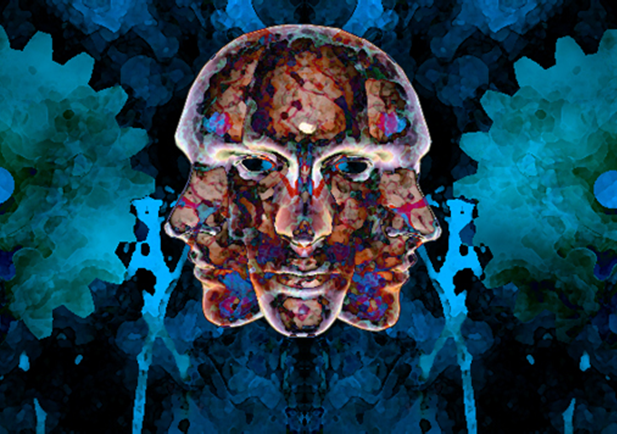
Be in the Moment, Not Captured by It

There is something really special about living in the moment. Being present for those you love or embracing a euphoric moment. There is also something bad about being so consumed by it you are captured and lose your perspective. Animals live only in the moment. Those without a future live only in the past. Those who can’t face reality live in their delusional dreams of the future.

By viewing life from a Janusian perspective you can reflect on your past, be in the moment, and see where your actions are taking you. Look at your past with a dispassionate eye, neither overly positive nor negative. The future won’t surprise you if you take time to see where you are going based upon what you are doing. Doing so will give you a better perspective of moment and your future.

It is so easy to be immersed in the moment. To be enveloped by the experience, good or bad. To be wrapped up in the euphoria of quick gain or titillating emotions. Or you are thrown into despair by sudden loss or penetrating grief. The moment is precariously, and precisely, set between your past and your future. Your actions now are based on what you’ve done and are putting future events into action. Recognize the risks and opportunities as you are enveloped by the present moment. Find something in the moment you enjoy, regardless of how distasteful or unpleasant. You get to choose how you respond to the events and people. But remember how you react sets tomorrow’s stage.

Learn from your past and then let go, you cannot change it. Don’t dream of a future, make one. Relish the moment. It only happens once and is fleeting. But be wary of losing yourself in its allure and possible evil seduction. #NeverFearTheDream

Posted in Joy In Alzheimer's, Philosophy

Joy In Alzheimer’s

Prologue

Let’s just be honest; there is no joy in Alzheimer’s; however, Joy, my mom, is in the middle of it….so ‘Joy In Alzheimer’s’ is where we are. This is an attempt to follow her through this unwinnable battle. To open-up about how the mental disease affects her and those who care and love her. So, how did her long journey down a narrowing path come to this point. A path which no longer has a safety net. Where every stumble, on her old uncertain legs and weakened mind, can lead to uncontrolled dementia and deep dark recesses.

Joy’s road, like most with Alzheimer’s, started long before anyone really knew. My dad passed away over 15 years ago and since then Joy has lived alone. My nephew and his family lived nearby for several years. To their credit they reported subtle changes in her mental abilities. Being remote, the rest of the family dismissed the observations as ‘she’s just getting older’. Six years ago, we moved her from her west Texas home of over 50 years to an independent living facility in central Oregon. Now closer, we could see some subtle changes which age alone couldn’t explain. Three falls, with head injury, just compounded the problem. She began to lose the ability to pay bills and her ‘book-keeping’ went from taking a few hours to taking a few weeks.

We took her to a neurologist under the pretext of getting a baseline assessment after her third fall. The appointment went well. The neurologist wasn’t overly concerned with her cognitive test results. The diagnosis changed at the next appointment six months later. The doctor was concerned with the delusional episodes, the money management deterioration, but the illustration below sort of tipped the scales.

Within six months we had moved her to an assisted living facility, before the independent one was forced to ask us to move her. That’s where she is now and has been for over a year and a half; even though she’ll tell you she just moved in and has changed apartments five or six times, and the entire complex has been rotated around several times.

This was the start of our journey with her down that long narrowing path. We have found humor, character, courage, and sadness along the way. I’m sure we will find more as we continue. These will be the stories I tell, and I’m always interested in comments and support as we try to help each other. We are all on journeys and we shouldn’t judge the paths we are all on. We should just extend a hand and help. You never know, you might be the safety net so many of those with Alzheimer’s and those who are their care partners really need.

NeverFearTheDream simplebender.com @simplebender.bsky.social Stand For Truth

Posted in Philosophy

No Words Needed…..

Sometimes you just don’t need words….

Posted in Philosophy

The Final Promise:…..Do Your Best, Always

Fourth of a four-part series based on “The Four Agreements – A Toltec Wisdom Book”, by Ruiz

There are four personal promises which might transform your life. This is the fourth, and hardest, of these promises. Promise to:

  • Choose your words carefully;
  • Take nothing personally;
  • Never make assumptions;
  • Do your best, always.

Your third personal promise –Do your best, always:

The simplest promise will be the hardest to keep, if no other reason than you will lie to yourself. Your best; a simple concept, or is it? Your best will be different, for the same task, every time you attempt it. It will be different when you are sick verses healthy, rested versus tired, etc. Circumstances don’t matter, just do your best and be honest about your effort. By honestly doing your best you will avoid regret, self-deprecation, and self-judgement.

Everything in life is in flux. Therefore, so is your ‘best’. Sometimes your best will be high quality at other times, not as good in comparison. The promise is, regardless of the circumstances, to do no more and no less than your best, on the moment. Trying to do more than your best will expend unnecessary energy and, in the end, may not yield any better result. Doing less is simply breaking your promise and opening yourself to regret and self-doubt. It doesn’t matter if you are sick, tired, healthy, or refreshed, your best is your best.

You do your best because it’s the right thing to do not for any external reward, but to the integral reward of self fulfilment. Too many perform tasks for an external reward. Doing the arduous, unfulfilling tasks for a raise, a promotion, or to impress. Doing tasks at the best of your ability for yourself is satisfying and will usually result in intangible as well as tangible benefits. The most intangible benefit is you will be happy with yourself. And these days this is very important.

This promise underpins all the others. If you fail this one the others are destined to fail as well. When you do your best you learn to accept and appreciate yourself. You learn how to press and expand your limits and horizons expand. You will enjoy the moment. You will be able to find something to enjoy even in the hardest times. You will find doing your best enables you to keep your other promises. It will be easier to find impeccable words, to not take anything personally, and to not make assumptions. All because you are doing your best to keep those promises.

However, just know you will fail and break these promises. And that’s ok. At least you are trying. You learn more from failure than you do from success. Give yourself a break and honestly recognize your failures. Embrace them and recommit to the promises. Recommit even for an hour, a day, a week. The time will extend with every re-commitment. Your life and the lives of those you care about will improve.

Thanks for your interest and reading….#NeverFearTheDream


Posted in Philosophy

Third Promise…Never Make Assumptions

Third of a four-part series based on “The Four Agreements – A Toltec Wisdom Book”, by Ruiz

There are four personal promises which might transform your life. This is the third of these promises. Promise to:

Your third personal promise –Never make assumptions:

Clear communication with others, at best, is complicated and difficult. Be curious and courageous by asking them questions without making assumptions. Don’t think you know the width and breadth of their comments without asking them questions. The real danger of assumptions is we believe they are true without discovery. They are based on your experience and are likely to be significantly different than the speakers’ intent and direction.

The sadness and drama we witness, and experience is rooted in us making assumptions and taking things personally (breaking our second promise). It is always better to listen empathically and ask questions rather than setting yourself up for pain by assuming. We see and hear what we want to based on our experiences, motivations, and fear. We don’t want to hear anything contrary. We perceive things the way we want , not necessarily how they really are or how others see them.

Our biggest assumption is believing everyone sees life the same way as ourselves. Assume they think the way we think, feel and judge the same way. Or worse yet, we believe they should. Assuming our common experiences overshadow our uncommon ones, which are the ones which make us unique in a society. We must ask and probe to uncover peoples’ real meaning and intent. We simply cannot assume what they are.

Making assumptions in a relationship is more likely to result in conflict rather than accord. They will lead to more misunderstandings, difficulties, and suffering with those we care for than anyone else. We must have the courage to ask them questions before we embark on justifying and explaining to make ourselves feel safe. Make them feel safe first by truly understanding their intent and meaning. You shouldn’t fear being yourself with your loved ones. Love them unconditionally. We are all different and our task isn’t to change them but accept them; as we want them to accept us.

Keep yourself focused on not making assumptions by practicing asking questions and being interested; not judgmental. As you begin to learn how easy it can be to ask questions you will find it easier to ask for what you want as well. Everyone has the right not to answer your questions, but you will never really know unless you initiate the questions.

UP NEXT: DO YOUR BEST, ALWAYS       #NeverFearTheDream

Posted in Philosophy

Four Personal Promises: Second…. Take Nothing Personally

Second of a four-part series based on “The Four Agreements – A Toltec Wisdom Book”, by Ruiz

There are four personal promises which might transform your life. This is the second of these promises. Promise to:

  • Choose your words carefully;
  • Take nothing personally;
  • Never make assumptions;
  • Do your best, always.

Your second personal promise –Take nothing personally:

This world doesn’t revolve around you. It just doesn’t. Your delusional perspective of your personal importance is an expression of your selfishness. What others do and say is a reflection of their reality, which you should respect, but don’t assume it has anything to do with you.

By taking things personally you set yourself up for failure, suffering, abuse, easily become prey, and suffer for nothing. You unnecessarily absorb the pain of others reality. By taking things personally you feel offended and therefore must defend yourself and your beliefs. But do you really have to? If you keep your promise you will acknowledge those words reflect the speaker not you. They probably didn’t keep their first promise which means you must keep your second.

Your point of view is yours just as theirs is theirs. Their words don’t have to be your truth and certainly not worth getting mad or angry about. Getting mad, angry, and defensive discloses your fears and insecurities. Their words have affected you because you choose to let them, not because you are the target. You choose to be a victim. Rather, listen and try to assess what is behind their words. What is making them angry and upset. Don’t add to it by trying to defend yourself.

Watch people and determine if their words follow their action; or are they just lying to you. Don’t expect people to always tell the whole truth, sometimes it’s just too painful, doesn’t fit their agenda, or they are just afraid. If they are lying, there is clearly no reason for you to take what they say personally.

The caveat to this promise is: if your actions or words have caused them pain, suffering, or damage you need to accept responsibility. You need to acknowledge you’ve hurt them, personally, and in fact you must take their words personally and make restitutions.

UP NEXT: NEVER MAKE ASSUMPTIONS       #NeverFearTheDream