Posted in Keystone

America Does Not Need Another Tribe

CATEGORY I: FOUNDATIONAL PHILOSOPHY  |  TOPIC 1 OF 4  |  WHY THIS MOVEMENT EXISTS
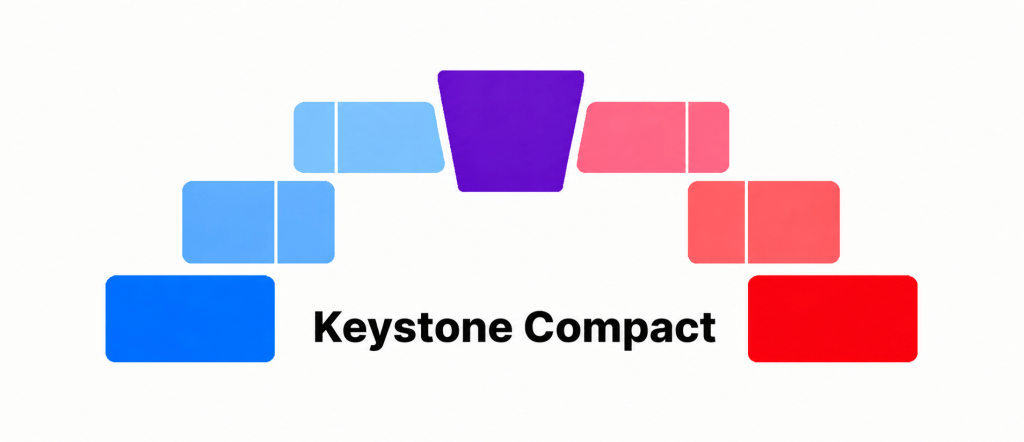
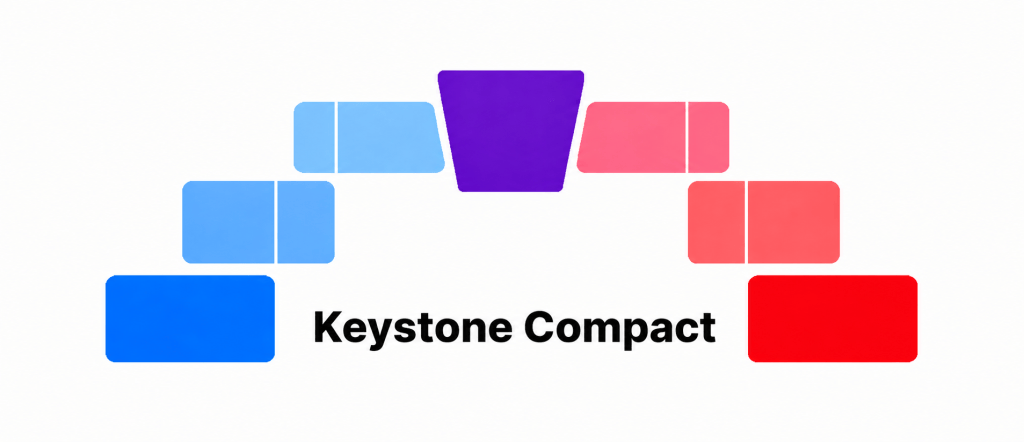
Keystone holds competing forces in position by compression....

The country does not need another political identity. It needs more citizens willing to keep ownership of their judgment

America has no shortage of political tribes. We have colors, slogans, hats, hashtags, enemies, approved grievances, and a daily supply of reasons to be furious. Belonging is not the problem; people naturally seek community. The problem arises when belonging becomes a substitute for judgment—when the team has spoken, and contradiction must be defended. No governing philosophy can survive if citizens apply principles only to their opponents.

Many Americans no longer fit the package deals offered to them. They may believe the government should live within its means without becoming indifferent to suffering. They may support personal liberty while recognizing the need for public order, favor a secure border and workable, lawful immigration, or want reliable energy alongside environmental stewardship. They may value alliances while still asking what commitments cost and where they lead. That is not confusion. It is a refusal to outsource every judgment to a platform.

The tribal bargain is tempting because it simplifies politics. Loyalty brings moral certainty, convenient enemies, and permission to overlook one’s own side. Debt can suddenly look responsible. Executive power can become necessary. Restrictions on speech can be recast as safety, or punishment as patriotism, depending on who holds authority. The facts may be unchanged while the standard quietly shifts.

The Keystone Compact is not an effort to split the difference between the parties. Nor is it an invitation to shop selectively for whichever positions feel comfortable. The keystone in an arch works because competing forces are held in check by structure. Politically, the equivalent is a set of principles sturdy enough to withstand a change in who governs.

That standard creates discomfort on both sides. The populist right can speak of freedom while tolerating government power directed at cultural adversaries and excusing fiscal recklessness. The bureaucratic left can speak of justice while accepting the expansion of administrative control, dependency, public disorder, or decisions increasingly distant from ordinary citizens. The temptations differ, but the civic danger is similar: principles become conditional on who holds power.

Keystone begins with the citizen rather than the coalition. Free citizens are not raw material for political movements. A serious political philosophy should demand less loyalty and more responsibility: think independently, weigh trade-offs, acknowledge costs, apply standards consistently, and remain willing, and eager, to change your mind when the evidence changes.

That need is evident far from Washington. It appears in the small-business owner navigating rules written with larger institutions in mind; the retiree hearing promises while leaders avoid the arithmetic behind them; parents who want schools to teach well rather than become permanent culture-war arenas; and workers who want safe communities, honest wages, reliable power, and a functioning immigration system. These concerns do not line up neatly on a partisan checklist, nor should they.

Calling such citizens ‘moderate’ misses the point. Fiscal honesty is not a midpoint. Equal rights are not a midpoint. Constitutional restraint and competent government are not compromises between extremes. They are standards, and standards matter most when applying them is inconvenient for one’s own side.

The more useful divide, then, is not simply left versus right. It is between citizens who retain their judgment and movements that ask them to surrender it. Political parties can be useful tools, but they become poor masters when membership begins excusing contradiction.

The first Keystone question is therefore not, ‘Which side are you on?’ It is more demanding: when does loyalty stop helping you participate and start giving someone else permission to think for you?

If tribes cannot dictate our judgment, the next principle follows naturally: they cannot dictate our rights either.

Next in Category I: Rights Are Not Tribal Trophies

NeverFearTheDream………. W. C. Barron………. simplebender.com……….keystonecompact.org

-. — / -. . .– / – .-. .. -… . … / .— ..- … – / -. . .– / .. -.. . .- …


Lap Around the Sun: Daily Steps Forward
by WCBarron

Buy at Amazon Buy at Barnes & Noble Buy at Books2Read

Joy in Alzheimer’s: My Mom’s Brave Walk into Dementia’s Abyss
by WCBarron

Buy at Amazon Buy at Barnes & Noble Buy at Books2Read
Posted in Communication

Tarnished Silence

when silence becomes approval

We are raised in an interesting contradiction. Much of life is organized around authority—parents, teachers, coaches, religious leaders, supervisors—yet our representative republic ultimately depends on citizens willing to question authority and exercise free speech. Somewhere along the way, most of us were taught, by these authority figures, a simple, clear lesson: Silence is golden. Sometimes it is, and sometimes it most certainly is not. The question of when silence is virtuous and when it becomes a failure has confronted humanity since antiquity.

Silence is a virtue when chosen, not surrendered. It can reflect humility when we do not know, restraint when emotion outruns judgment, and discernment when truth would be useless or mistimed. Silence can refuse to legitimize a false accusation or an argument built on dishonest terms. It can protect contemplation, grief, dignity, and the recognition that words can diminish some things. Virtuous silence comes from strength, awareness, and self-command—not from fear or imposed obedience. Perhaps the simplest test is this: silence is virtuous when speaking would add more noise than truth, more harm than good, or more heat than light.

But when does silence become tainted? In 1298, Pope Boniface VIII promulgated the Liber Sextus, whose legal rules contain a striking contradiction. Rule 43 states, essentially, “He who is silent seems to consent.” Rule 44 immediately cautions that a silent person neither confesses nor necessarily denies. Even medieval law recognized the problem: silence is ambiguous, and ambiguity can serve both conscience and power.

Ancient Greek thought offers one response. Socrates made the examination of ourselves and our beliefs a moral obligation, a principle most famously preserved in Plato’s Apology. Silence therefore becomes suspect when it shields us from examining falsehood, injustice, or our own comfortable assumptions. The Stoics drew a finer line. Epictetus valued silence as self-command, yet also argued that a duty to a friend or country could require action despite personal danger. Silence should discipline the ego, not excuse moral withdrawal.

Other teachings arrive by different paths. Confucian thought values restraint but also recognizes a duty to remonstrate with authority. Buddhist teaching asks whether speech is not merely true but also beneficial and timely. Daoist and Zen traditions warn that endless words can obscure understanding and that the question itself is sometimes badly framed. Their differences matter because not every silence is cowardice and not every spoken truth is wisdom.

Jewish, Christian, and Islamic traditions likewise place limits on silence. Scripture repeatedly balances restraint in speech with obligations to truth, witness, justice, and the protection of others. Islamic teaching captures this tension particularly well: speak what is good or remain silent, but stand firmly for justice when justice demands a witness. Across these traditions, silence becomes morally suspect when fear or self-interest leads a person to withhold the truth that conscience and circumstance require.

Modern thinkers sharpened the civic consequences. Nietzsche distrusted conformity and the suppression of conviction merely to satisfy the crowd. Gandhi, himself a practitioner of deliberate silence, warned that silence becomes cowardice when the occasion demands the truth. Their concern was not silence itself, but the point at which restraint becomes surrender.

Authoritarian power rarely needs everyone to agree; it benefits when enough people simply refrain from objecting. Fear, comfort, self-interest, exhaustion, and uncertainty can accomplish what censorship sometimes cannot. That does not mean we should speak about everything. Quite the opposite. Thoughtless speech is merely another form of noise, and speaking without understanding can be as damaging as remaining silent without courage.

The first obligation, then, is to think critically—to study, question, and pierce the veil of certainty, manipulation, and falsehood. The second is to recognize when reflection has reached the point at which responsibility begins. Given what I know, can I say it, and am I confronted with what matters? The final question becomes unavoidable: is my silence still a virtue, or has it become consent and tacit approval?

NeverFearTheDream………. W. C. Barron………. simplebender.com……….keystonecompact.org

… .. .-.. . -. – / -.-. — -. … . -. –


Lap Around the Sun: Daily Steps Forward
by WCBarron

Buy at Amazon Buy at Barnes & Noble Buy at Books2Read

Joy in Alzheimer’s: My Mom’s Brave Walk into Dementia’s Abyss
by WCBarron

Buy at Amazon Buy at Barnes & Noble Buy at Books2Read
Posted in Miscellaneous Thoughts

NeverFearTheDream…

History is many things, but primarily the study of cause and effect—if you don’t acknowledge the effect, you will misinterpret the cause. 26.09.06

NeverFearTheDream………. W. C. Barron………. simplebender.com……….keystonecompact.org

Posted in NeverFeartheDream

NeverFearTheDream…

We are sleepwalking through our personal evolution, and when we wake, it might be terrifying—each day slipping by without real attention to our physical, mental, and emotional selves. 26.09.05

NeverFearTheDream………. W. C. Barron………. simplebender.com……….keystonecompact.org

Posted in Keystone

Keystone Compact: A Governing Alternative

The Keystone Compact is my effort to organize ideas about liberty, responsibility, government, and public life into a coherent framework. The views expressed here are mine. Agreement is welcome, disagreement is expected, and thoughtful common ground is the goal. The purpose is not to declare a final answer but to make these principles clear enough to be tested, challenged, and improved.

____________________________________________________________________________

America does not need a softer middle ground between fractured political tribes. It needs a disciplined governing philosophy grounded in liberty, responsibility, strength, and restraint. We are not short on political energy; we are short on governing discipline. One tribe seeks power strong enough to punish cultural enemies. Another seeks power broad enough to manage conscience and outcomes. Both warn against government abuse when the other side governs, then tolerate it when control changes hands.

The Keystone Compact begins with a refusal: citizens should not be required to trade judgment for belonging. This is neither centrism nor an average of two broken agendas. A bridge between two sinking ships remains a poor place to live.

Its core statement is direct: government should be strong where it must be, limited where it should be, and humble where it has repeatedly failed. It should secure rights, protect public order, defend the country, enforce fair rules and contracts, keep essential promises, and live within its financial reality. It should not manage private conscience, punish peaceful dissent, censor opposition, pick economic winners through political favor, subsidize irresponsibility, or mortgage the future for the next election.

Free Lives. Honest Budgets. Responsible Government.

Personal liberty is the default, but it does not include harming others. Rights must apply even to those we dislike. Social peace requires pluralism: citizens must remain free to speak, worship, marry, organize, raise families, and disagree without government harassment. Public safety and due process are not competing values. Order without rights becomes intimidation; rights without order become fragile.

Fiscal discipline is moral discipline because every unfunded promise has a future owner. Markets need competition, enforceable rules, and consequences for fraud—not exemptions for insiders. Safety nets should prevent ruin while restoring dignity, independence, and work, where possible. Decisions should remain close to communities whenever practical, so citizens can see results and hold leaders accountable.

Those principles lead to policies that will discomfort both tribes. Keystone supports balanced-budget discipline, pay-for rules for spending and tax cuts, and a simpler, flatter tax code that protects lower-income households, retirees, and small businesses. It would protect current Social Security and Medicare beneficiaries while fixing the math for younger generations. Health care should offer clearer pricing, stronger primary care, catastrophic protection, competition, and understandable choices. Education should combine strong public schools, family choice, vocational dignity, and one firm rule: public money requires public accountability.

The Compact takes a pro-choice position grounded in government restraint, where medicine, conscience, privacy, and bodily autonomy intersect. It affirms responsible citizens’ constitutional right to own firearms while insisting that rights and responsibilities travel together. It supports constitutional policing, due process, and firm consequences for violent and repeat offenders. On immigration: deport criminals, secure the border, respect work, modernize lawful immigration, protect genuine asylum seekers, and stop conflating cruelty with control.

National resilience requires practical discipline. Energy policy should be diversified, technology-neutral, and reliability-first, with energy sources judged by performance, cost, resilience, security, and environmental impact. Permitting should protect health and habitat without making needed infrastructure impossible to build.

Institutions also need repair before they harden into inheritance. The Compact supports constitutionally grounded, carefully phased 20-year active terms for Supreme Court justices rather than lifetime tenure and political roulette. Voting districts should use equal population as the controlling standard, applied through neutral, transparent criteria rather than partisan advantage or incumbent protection. Voters should choose representatives, not the other way around.

Abroad, the United States should support allies, strengthen NATO, resist authoritarian aggression, and defend its interests without writing blank checks. Military commitments should have clear objectives, oversight, burden-sharing, and an answer to the question, What next? Strength does not require silence, and loyalty does not require automatic agreement.

These priorities share a principle: maximum practical liberty, minimum necessary coercion, honest public accounting, and equal rules. That is the Keystone Test: Does a policy protect liberty, respect constitutional limits, show the bill, solve a real problem, avoid unnecessary coercion, preserve local flexibility, reduce favoritism, strengthen civic trust, and leave the country more resilient? If it cannot withstand those questions, it may be less about governing than about theater.

The Keystone Compact asks Americans to reclaim the habits of a free people: tell the truth, pay the bills, respect differences, defend rights, protect the vulnerable, reward work, punish corruption, question power, keep the lights on, and leave the country stronger.

Rights for everyone. Favors for no one. Power with limits. Policy with sense.

The series begins with the citizen. Before budgets, borders, courts, energy, or foreign policy, a more basic question comes: can Americans keep their judgment when the tribe starts chanting?

NeverFearTheDream………. W. C. Barron………. simplebender.com……….keystonecompact.org

-. — / -. . .– / – .-. .. -… . … / .— ..- … – / -. . .– / .. -.. . .- …


Lap Around the Sun: Daily Steps Forward
by WCBarron

Buy at Amazon Buy at Barnes & Noble Buy at Books2Read

Joy in Alzheimer’s: My Mom’s Brave Walk into Dementia’s Abyss
by WCBarron

Buy at Amazon Buy at Barnes & Noble Buy at Books2Read
Posted in Political

No Clear Path

What if you followed the rules? What if you left your family, risked everything on a dream, studied, worked, invested, and built a life around a single opportunity? What if, after doing everything asked of you, you discovered there was no clear path to citizenship? Worse, what if the permission that allowed you to build that life could change at the whim of an executive?

That is part of America’s immigration problem we rarely discuss. We talk about immigrants as though they were a single legal class. They are not.

Some entered the country unlawfully. Some entered legally and overstayed. Others came legally as students, researchers, workers, investors, refugees, asylum seekers, or under humanitarian protections. Their legal status—and their paths forward—are very different.

Refugees and people granted asylum can, currently, pursue permanent residence and, ultimately, citizenship. Qualifying Special Immigrant Visa recipients, including some Afghans who worked alongside the United States, can enter as lawful permanent residents.

But many other legal classifications offer no direct path. Students on F-1 or M-1 visas, exchange visitors on J-1, visitors on B-1/B-2, and treaty traders and investors on E-1/E-2 are here under temporary, nonimmigrant classifications. They may eventually qualify for permanent residence through other means, but their original status does not lead there.

Then there are Temporary Protected Status, DACA, and humanitarian parole. These can allow people to remain, work, study, raise families, and build lives here without providing a direct path to citizenship. TPS is temporary by statute. DACA is deferred enforcement, not lawful immigration status. Parole is temporary permission, not permanent admission.

That distinction matters because temporary protections can expire, be narrowed, terminated, or become entangled in litigation. Someone can follow the rules governing a program and still discover that the protection surrounding them has changed.

Following the rules should mean something.

We are equally careless when discussing immigration violations. Unlawful presence (i.e., overstaying a student visa) is generally a civil violation. Improperly entering the country is different. Under 8 U.S.C. §1325, a first improper entry is generally a misdemeanor. A subsequent improper-entry conviction can be a felony, and reentry after formal removal is a separate felony-level offense.

Those distinctions matter when deciding punishment, but they conveniently disappear when everyone becomes simply an ‘illegal’.

People accused of serious crimes should be arrested and stand trial. If convicted, they should be punished. Immigration status should not immunize anyone from accountability, but it shouldn’t be its sole basis of investigation and prosecution.

Accountability should remain tied to conduct, evidence, and due process. ICE/DHS data illustrate the distinction. An analysis of 438,537 people detained during the first fourteen months of the current administration found that about 3% had convictions for violent felonies such as homicide, sexual assault, or robbery. That does not mean the remaining 97% were all legally present or had no criminal history. It does mean that deportable and violent criminal are very different classifications. Arrests should be honest and focused, not just about meeting a quota.

When deportation is followed by confinement in a foreign prison, another question arises. That confinement is not merely the six-month §1325 penalty being served overseas. Removal, criminal punishment, and foreign imprisonment are distinct legal acts that require separate justification.

America benefits from immigrant labor in agriculture, construction, hospitality, and manufacturing; from foreign students and researchers in our universities and laboratories; and from entrepreneurs willing to invest their capital and ambition here.

We can enforce our borders without pretending everyone arrived the same way. We can remove dangerous criminals without treating every immigration violation as a violent crime. And we can insist on an orderly immigration system while acknowledging that the system itself is often anything but orderly, but it doesn’t have to be violent.

The question we should be asking: If someone follows the rules, shouldn’t there be a predictable rule for what comes next? If we choose not to offer a path, shouldn’t we say so clearly? And when the government changes the rules beneath someone who followed them, how much notice, proportionality, and due process does justice require?

A nation of laws should be strong enough to enforce them—and disciplined enough to distinguish between breaking the law and having the law change under your feet.

NeverFearTheDream   W. C. Barron   simplebender.com

..-. — .-.. .-.. — .– / – …. . / .-. ..- .-.. . …


Lap Around the Sun: Daily Steps Forward
by WCBarron

Buy at Amazon Buy at Barnes & Noble Buy at Books2Read

Joy in Alzheimer’s: My Mom’s Brave Walk into Dementia’s Abyss
by WCBarron

Buy at Amazon Buy at Barnes & Noble Buy at Books2Read
Posted in NeverFeartheDream

NeverFearTheDream…

Friendships survive the pain of turbulence, distance, and uncertainty; companionships and alliances don’t. One is grounded in respect; the others are grounded in comfort and safety. 26.09.04

NeverFearTheDream………. W. C. Barron………. simplebender.com……….keystonecompact.org

Posted in NeverFeartheDream

NeverFearTheDream…

Is the carrot meant to be reached—or merely to make the horse pull harder? 26.09.03.1

NeverFearTheDream………. W. C. Barron………. simplebender.com……….keystonecompact.org

Posted in NeverFeartheDream

NeverFearTheDream…

Our lives rarely follow the path our ego imagines. Accept and embrace where you are, release the burden of disappointment, and move forward, always forward. 26.09.03

NeverFearTheDream W. C. Barron simplebender.com

Posted in Keystone

Keystone Test:

Judge the Power, Not the Party

We are bracing to endure the countless ads, promises, and false narratives in the midterms. Before backing a promise, consider what authority it confers, what costs it conceals, what outcomes it promises, and whether you would trust it if roles were reversed.

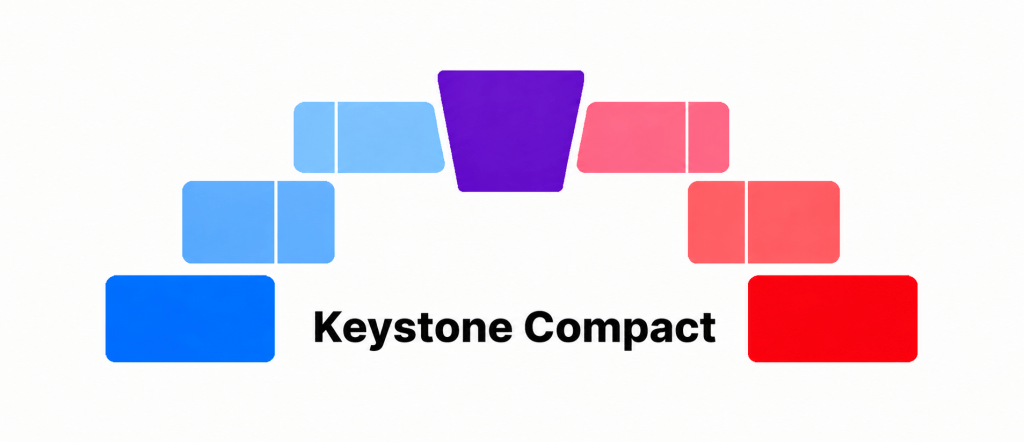
We don’t need contracts, treaties, or MOUs, which turn out to be just words on paper, signed apparently with disappearing ink. We need real commitment, a covenant, a compact. Guidelines that let us truly assess the candidates, the parties, and their platforms. Like a keystone holding an arch together, taking a critical view of all sides, not just one, and holding up from the center. The Keystone Compact is a principle that should endure changes in party, personality, beneficiary, and political fashion.

The Keystone Test is not a purity test. It is a discipline that evaluates governing principles.

Before granting authority, spending money, or surrendering liberty, ask:

  • Does it protect liberty?

Peaceful adult life belongs to the person living it. Rights must protect speech, conscience, privacy, property, bodily autonomy, lawful self-defense, due process, and equal treatment. Liberty does not excuse harm to others.

  • Does it respect constitutional limits?

Good intentions do not confer unlimited authority. Power requires a lawful basis, defined boundaries, meaningful review, and consequences for abuse.

  • Does it solve a real problem?

Identify the problem, state the intended outcome, and measure performance. A policy that cannot define success is usually crafted for applause rather than for improvement.

  • Does it avoid unnecessary coercion?

Government should use no more force, surveillance, restrictions, or bureaucracy than the problem requires. National power should not replace local action simply because it offers a louder voice.

  • Does it show the bill?

Disclose the full cost, who pays, who benefits, and what future obligation is created. Spending without pay-fors and tax cuts without spending discipline are the same form of evasion.

  • Do equal rules apply?

Rights cannot depend on identity, party affiliation, wealth, influence, or popularity. Markets should not be skewed toward donors or incumbents. Enforcement should not vary by target.

  • Does it preserve local proof?

Keep decisions close to citizens, practical, visible enough to measure, and flexible enough to correct. Local control cannot excuse violations of constitutional rights.

  • Does it strengthen capacity?

Serious policy should help people stand up and leave the country better prepared for the next disruption. It should strengthen work, family, safety, community, civic trust, reliability, and resilience.

  • Does it limit entrenchment?

Emergency powers and orders need to expire. Institutions need renewal. Districts should serve voters; courts should remain independent and not become lifetime partisan prizes; and failed policies must be removable.

  • Would we accept the same power in our opponents’ hands?

If a power seems safe only when our side controls it, it is not truly safe. If a rule is fair only when it helps our coalition, it is not truly fair.

Not every candidate will receive ten yeses. Constitutional rights sometimes require national protection. A true emergency may require temporary extraordinary action. The test requires leaders to identify and limit tradeoffs and to remain accountable.

The test is straightforward. A tax cut must be paired with spending discipline. Public safety must protect citizens and uphold due process. Immigration policy must restore the rule of law, punish criminals, respect work, and fix legal pathways. Energy policy must preserve reliability while improving measurable environmental performance. Foreign policy must define American interests, objectives, costs, and limits.

The Keystone Test will not eliminate disagreement but will make hypocrisy harder to hide. Judge the policy before the party, the power before the personality, the result before the slogan, and the bill before the accolades.

Now is the time for free citizens to stop asking whether a policy helps their tribe and to start asking whether that power deserves to survive the next election.

NeverFearTheDream………. W. C. Barron………. simplebender.com……….keystonecompact.org

-.- . -.– … – — -. . / -.-. — — .–. .- -.-. –


Lap Around the Sun: Daily Steps Forward
by WCBarron

Buy at Amazon Buy at Barnes & Noble Buy at Books2Read

Joy in Alzheimer’s: My Mom’s Brave Walk into Dementia’s Abyss
by WCBarron

Buy at Amazon Buy at Barnes & Noble Buy at Books2Read