It’s easy to fall into a routine—a pattern, a path, a simple rut. After a while, it can feel like being a snake in a wagon-track after rain: pressed into the groove, unable to see a clean way out. Stuck. Destined to follow the track wherever it leads.
But remember, you helped get yourself into it, and you can help get yourself out. The way out begins with choice, then a chance, then change. Even when a situation feels unsolvable or risky, you can still act—if only to begin the process. Yes, many parts of life are socially or professionally controlled. Even inside those boundaries, there are choices—subtle ones, small ones, but choices, nonetheless. The point is to exercise them.
Every choice has consequences. That is not a reason to freeze; it is a reason to brace. The choices and chances do not have to be big, bodacious gestures. Small, incremental shifts can be deeply significant. Change often starts there: deciding you want it, choosing toward it, and accepting the chance that comes with each step.
You don’t have to wait for a grand opening, a sign, or even the perfect plan. You need to make a choice and follow through — today. Even a small pivot can change your life’s course. Many of us like the phrase ‘turning over a new leaf’ because it is clean and peaceful. In practice, it is usually more complicated than the phrase suggests—longer-term, sometimes riskier. Still, the principle holds: be willing to turn the leaf and look for something new. Yes, there may be thorns. That comes with reaching. Sometimes the only way to discover is to try.
And if you think you’ve already turned every leaf in your effort to change, wait for spring. There will be a whole forest again—even the trees in your own yard will leaf out—offering a fresh crop of leaves to turn; nature is annoyingly generous that way. Take a deep breath and just start turning. NeverFearTheDream simplebender.com
True peace involves transparency and lasting stability, not just temporary agreements that leave underlying issues unresolved.
Peace usually arrives in one of two ways: the combatants decide they’ve had enough, or one side is crushed. When the cost of continuing exceeds the cost of stopping, both parties yield—grudgingly—and accept a compromise. It’s rarely elegant. More often, it’s a deal both sides dislike, but it’s better than attending the next round of funerals.
Mediators can help when they are genuinely independent: attentive to each side’s fears, aims, and non-negotiables, and skilled at translating rage into terms that can be signed. A good mediator doesn’t erase the chasm; they build a narrow, temporary bridge and keep traffic moving long enough for a fragile truce to harden into something closer to peace.
But when the mediator wants something out of the game, the process shifts. Influence becomes leverage. The negotiation stops being about stabilizing a region and starts being about capturing value. Quiet “side letters” and backchannel commitments on resources, arms, protection, exclusive access to markets, manufacturing, or intellectual property tilt the table before the first public handshake. The parties are no longer bargaining over borders or security alone; they’re trading away remaining national assets and future autonomy to a broker whose primary loyalty is to their own gain.
That doesn’t produce peace. It produces a transactional truce: temporary, brittle, and designed to be violated and renegotiated. One side will test it, and the other will retaliate. Both will rearm. Both will reposition, and each will be desperately trying to win the mediator’s favor for the inevitable next round.
And the cold-eyed, self-impressed mediator will call it “progress,” label it “strategy,” and shop for new pressure points. This is not mediation; it is profiteering, prolonging pain for profit. An oversized, bombastic arms dealer in a tailored suit, prolonging the pain until the spoils are secured. Always boasting of skills that don’t exist, promising ridiculous timeframes, and fleecing the dying for the privilege of false hope.
The irony is hard to miss: if the combatants ever compared notes, exposed the hidden terms, and refused to be monetized, they might discover a common enemy—not across the front line but behind the curtain: the amoral mediator profiting from perpetual instability. NeverFearTheDream simplebender.com
Life is, at best, chaotic. The one thing you can count on is this: it will be filled with uncertainty. What hits you each day is the collision of countless variables—some predictable, most not. Family and friends. Strangers and rivals. Systems you can’t see. And the raw creators of nature itself.
Uncertainty isn’t a flaw in the design. It IS the design. Embracing it helps you build resilience, stay adaptable, and stay alive in the face of life’s surprises.
Some people try to wish or pray uncertainty away. But hoping for more certainty won’t help you push your limits; it usually does the opposite. It shortens your horizon and shrinks the map. It suppresses adventure. If someone wants a smaller life, that’s their choice. But uncertainty won’t be evicted. It will still show up—quietly or violently—on its own schedule.
When uncertainty knocks you down (and it will), we tend to choose one of three responses: stay down and quit, get up and struggle to regroup, or defiantly say, “Oh hell no,” and press harder against the change in plans. Any of these can be human in the moment. There’s nothing wrong with any of them, and frankly, each will be chosen at one time or another. But patterns become character. If you practice quitting, you’ll rarely have the fortitude to choose defiance when it matters.
Plan and prepare with a serious focus. Think through permutations. Recognize disadvantages while stacking small advantages to counter them. Formulate your plan and then hold it loosely while expecting the unexpected. Clarity doesn’t come from eliminating uncertainty; it comes from facing and moving through it. Make uncertainty your sparring partner, not your enemy. Embrace it. It’s already walking beside you and could become your best friend. NeverFearTheDream simplebender.com
We stand in awe at the wonder of a rainbow, where two ends seemingly anchored move with your motion. Two ends unite in a seamless band of color that reflects our shared human experience. The same unifying bands remind us that despite our differences, we are connected through the same light, the same colors, the same humanity.
Christian Lent begins in one sanctuary with penance: remember your mortality and The Sacrifice. Islamic Ramadan begins in another realm with a whispered intention: remember your dependence. Different rituals: yet, both trace back to the same broad spiritual lineage—Abraham. Fasting, repentance, charity, and self-denial are shared practices rooted in this common heritage. They are carried forward in both Islam and Christianity, illustrating our interconnected spiritual traditions.
Between those ends stretches the rainbow’s spectrum — red to violet, each band distinct, each shade necessary. The beauty is not in uniformity but in ordered diversity. Every band retains its identity while belonging to and building something larger.
Bias is what happens when we insist that only our perspective is right. When we claim ownership of the light and forget that our perceptions are shaped by perspective, we neglect the reality that shared understanding and compassion define humanity.
Fasting under a church steeple or a mosque minaret confronts the same human experience and encourages acceptance and understanding. The rainbow does not advocate for which end is the original or correct. It simply refracts what already exists, the light that we all are.
Unity is not sameness. It is recognition and acceptance. For the rainbow to exist, there must be interaction between sky and earth, sun and rain, and yet we can stand on different ground and share the same light, fostering openness and clarity.
When bias dissolves, what remains is not a blurred identity but a clearer vision of our interconnectedness. We realize that the bonds we share are not forced but natural, like the spectrum of a rainbow that was always one phenomenon, reflecting the unity inherent in our diversity.
Two unique ends. Shared colors. Common light. Humanity does not need to merge to be united. It only needs the clarity to see the arc. NeverFearTheDream simplebender.com
On Wednesday, February 18, 2026, Christians enter Lent and Muslims begin their first full fast of Ramadan. Ramadan and Lent align closely in 2026 and overlap meaningfully in 2027, a convergence that recurs roughly every 33 years, next appearing around 2059–2061. Ramadan follows a purely lunar calendar, while Lent follows a solar-lunar calculation tied to Easter; their seasons of sacrifice and faith overlap only when the drifting Islamic year aligns with the Christian liturgical cycle—an intersection that occurs roughly once every 33 years and can last several consecutive years before separating again.
Before dawn, I watched a fishing boat riding the black seam of the horizon off the rugged, unmerciful Oregon coast. The winter swells were building as the storm approached, and one bright mast light—tiny at that distance—kept announcing itself. It bobbed and drifted, sliding right, dipping down, climbing back—never still. The rougher the water became, the more that light danced, hypnotic and uneasy, like a pulse you couldn’t stop watching.
I pictured the crew out there—cold, wet, working for every inch of their livelihood—rocking at the mercy of a winter ocean that doesn’t negotiate. Then the light softened. It blinked once. And then it was gone. Just gone.
I leaned forward and stared until my eyes hurt. Four possibilities flashed through my mind, half of them concerning: the boat had turned, the power had failed, the sea had taken it, or it had sailed over the horizon. When dawn finally thinned the night, I still couldn’t find the vessel. The view was magnificent—and bleakly vacant.
I kept turning it over. That bright beacon was the American Dream: a light you can earn into existence. Risk. Work. Pride in the day’s catch. A stubborn belief that effort matters. It also felt like something else—something more fragile than we like to admit. A vessel doesn’t survive the storm, and its light doesn’t stay bright just because it once was; it stays bright because someone maintains it. Someone powers it. Someone refuses to let it fail.
Now the larger beacon the world has watched—our democracy—looks less steady than it used to. Is the vessel simply turning, its beam shifting out of our line of sight? Or is it losing power? Is it taking on water from neglect, corruption, ego, and self-inflicted damage?
The ocean doesn’t care what flag flies on a boat. It has swallowed the famous and the foolish. What makes this loss feel different is that the light represented not a ship at all—it was a method: an educated citizenry, self-restraint, lawful transfer of power, and the courage to resist tyranny without becoming it. That doesn’t replicate easily. It’s not a gadget you install. It’s seamanship, practiced daily.
Democracy doesn’t need constant tinkering by people trying to remake it in their own image. It needs upkeep. It needs citizens who treat it like a shared vessel, not a private yacht. It needs leaders who care more about the ship and the crew than about the applause on the deck.
I kept scanning the horizon, straining for a pinprick of light—any sign the boat hadn’t gone under. If it’s only turned, the beam will come back. If it’s crippled, we’ll learn what we never wanted to learn: a beacon can fail. If it sailed away, it would be alone in the ocean, and risks increase, especially for mutiny. History doesn’t promise rescue or replacements.
And if we want the beacon back, it won’t be because we wished for it. It will be because we, the crew, set this ship right. Democracies fail the way machines do: ignored tolerances, deferred maintenance, and a crew that doesn’t heed the telltale sounds of failure. So here’s the corrective action: stop rewarding sabotage, stop normalizing lies, stop treating institutions like disposable parts. Do the boring work—vote, show up locally, protect the rulebook, and enforce consequences. If we don’t, the beacon won’t “fade,” but our vessel will lose power and be swallowed by the sea. It will be lost forever. NeverFearTheDream simplebender.com
NeverFearTheDream simplebender.comStand For Truth
Please consider following simplebender, you’re reading makes my writing more fun..…
Comments and thoughts are always welcome and feel free to re-post …..
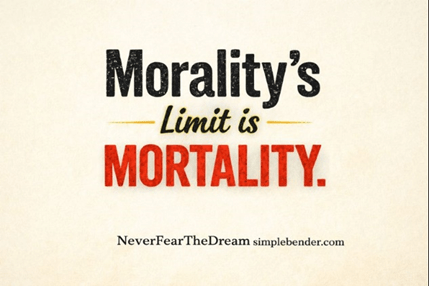
Morals are the guardrails of daily life. When laws are slow, ambiguous, or absent, morals keep neighbors from becoming predators. Yes—morals change, even within a single culture. Some call that “decline.” Others call it “advancement.” When morality ceases to be a shared thread and becomes a private permit, I’m only limited by my moral limits, which are the only ones that matter; social order is at risk.
We don’t have to guess whether moral change can be good. Slavery was defended based on profit and convenient readings of scripture. Interracial marriage was illegal in many states until 1967. Divorce was branded a moral failure, even as an escape from violence. Women who chose careers over homemaking were dismissed as selfish, as if ambition were a vice.
Even our smaller moral judgments have shifted. Tattoos and piercings, once shorthand for “irresponsible,” “a drunken folly,” or signs of criminal association, are now common, meaningful personal statements and art. Online dating used to carry a whiff of desperation, but now it’s ordinary, and even practical.
So the issue isn’t the changing landscape of morality. The issue is the persistent temptation of power to usurp it. It’s when a determined few, or an individual, insist that their morals should govern everyone else, while exempting themselves from the burden of society’s norms of consistency.
That’s when moral limits replace moral fiber. Moral fiber restrains the self. Moral limits wielded by the powerful are used to restrain others. When leaders claim to be the sole keepers of the moral framework, history doesn’t reward them with harmony. Instead, it rewards them with conflict, mistrust, and the slow degradation of the very moral foundation they claim to defend. And those who mainly want comfort, access, and advantage will often go along—because chameleon morality is profitable when you’re standing near the throne.
In a healthy society, the moral posture of elected officials should broadly reflect the people they serve—all of them, not just the loyal, the loud, and/or those who bend a knee. Moral diversity isn’t wrong; it’s necessary. But a line is crossed when one imposes their morality on others without dialogue. Majority rule matters, but so do minority rights—because “shared morality” without protection becomes tyranny with faux-moral backing.
Morals will keep evolving as life does. Moral fiber isn’t loud. It shows up in restraint, fairness, and the humility to admit, “I could be wrong.” A society isn’t shaken because people argue about morals; it is when the powerful stop being bound by anything—when “values” become a weapon, not a compass.
Find your moral fiber, but don’t stop there. Demand it—publicly and relentlessly—from anyone who seeks authority over your life. If they won’t live by civil standards, treat their immoral talk as propaganda to be challenged and rejected. One certainty: moral limits cease with mortality. NeverFearTheDream simplebender.com
NeverFearTheDream simplebender.comStand For Truth
Please consider following simplebender, you’re reading makes my writing more fun..…
Comments and thoughts are always welcome and feel free to re-post …..
True friends are solid rock under your feet. Those who befriend for personal gain are shifting desert sands.
You’re born into a family. There’s a bond there; sometimes warm, sometimes strained, but it exists whether you asked for it or not. Friends are different. Friends are chosen. You choose them, and more importantly, they reciprocate that choice.
Some friends come from our reckless, impetuous youth. Some from our careers. Some from neighborhoods, teams, projects, and the accidents of geography. Time and distance shuffle the cast, but the real ones don’t become strangers. They steady you. They don’t demand a performance. They can disagree without turning you into a defendant. You remember them fondly, and when you see them again after years, you can still pick up mid-sentence, as if time never got a vote. That’s friendship. Not constant contact. An unshakable bond. These are the people you brought into each other’s lives, not for gain but for mutual support.
But there are others. People who orbit you for their own advantage. Their support is there—until it costs them something. Their loyalty is conditional. Their kindness comes with a receipt. They keep score, question motives, and disappear when you’re inconvenient or irrelevant. These relationships can be helpful, even mutually beneficial, but they’re transactions, not friendships. The difference between them is where people get hurt. With transactional allies, trust is offered in exchange for leverage.
Choose wisely, not selfishly. Choose friends for support, and benefits will often follow. Choose people for benefit, and deception shouldn’t surprise you. NeverFearTheDream simplebender.com
NeverFearTheDream simplebender.comStand For Truth
Please consider following simplebender, you’re reading makes my writing more fun..…
Comments and thoughts are always welcome and feel free to re-post …..
People who stop overanalyzing the past have better odds at a successful future.
There is value in embracing the past and looking to the future simultaneously—to practice the philosopher’s “Janusian mindset”—while staying present in the moment. Yet, as we age, whether as individuals or nations, we tend to focus more on our past. We romanticize times when we felt invincible—periods of vitality, learning, and growth. We were finding our strengths, supporting and hiding our weaknesses, all the while learning to see the same in everyone around us.
Now, here we are—a little older, slower, and weaker, but much wiser. And therein lies the key to our future. The secret is not to dwell on who we were, but to leverage our accumulated knowledge and experience for the good of those around us. Greatness is not measured by what we’ve done, but by how we uplift others. As individuals, it’s in how we help our communities; as a nation, it’s in how we inspire global respect for democracy and human dignity. This is the message that philosophers, teachers, and prophets throughout history have conveyed. Greatness was never about personal glory—it was about collective well-being.
Let’s focus less on what we were and more on what we can become, using our experiences to encourage, not oppress. Let’s leverage those experiences not to oppress but to encourage and uplift. The sacrifices of the “Greatest Generation” showed us that we should stand up for those who suffer and support the vulnerable, both locally and globally. We, too, can inspire by looking back as we move forward, coaching the next generation to be better. We must be mindful of what we teach and how we act; the next generation and the world are watching — everything. Our ability to influence and guide them is directly related to our credibility.
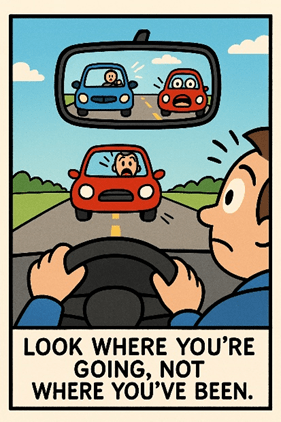
Staring in the rearview mirror is a great way to have a wreck while driving forward. As this year ends and we begin another lap around the sun, glance back with gratitude, acknowledging the memories, but keep your eyes focused on the future—for all of us. NeverFearTheDream simplebender.com
First published in Bend Bulletin 1/7/26
NeverFearTheDream simplebender.comStand For Truth
Please consider following simplebender, you’re reading makes my writing more fun..…
Comments and thoughts are always welcome and feel free to re-post …..
Religion has always walked a knife-edge between faith and power. Religion is best when it brings comfort and worst when it becomes a tool of politics. Within our lifetime, there are two salient examples of the twisting of religion and state power: Iran and Russia. Two very different nations illustrate how this symbiotic relationship unfolds and precisely why our founders wisely established a separation between the church and the state. Spoiler alert—the walls are crumbling.
Iran: Mosque as State—Under the Shah, Iran’s clerics were suppressed, their influence diminished as the monarchy rushed to modernize. In 1979, the pendulum swung violently back. Ayatollah Khomeini and the mosque became the state itself. For decades, sermons dictated law, dissent was heresy, and the Revolutionary Guard enforced both politics and piety. Religion achieved supremacy at the cost of freedom.
Today, Iran’s youth — connected, progressive, impatient — are no longer persuaded by clerical authority. Protests after the death of Mahsa Amini revealed the fracture: religion wielded as control is no longer seen as sacred. The bargain that once restored the mosque’s power has hardened into a straitjacket, hollowing faith even as its institutions endure.
Russia: Saints for Soldiers—For most of the 20th century, the Russian Orthodox Church was brutalized under communism. Priests executed, cathedrals destroyed, believers silenced. When the Soviet Union collapsed, the Church sought revival — but revival required allies. Putin offered protection, prestige, and funding. In return, Patriarch Kirill and his bishops sanctified not only his rule, but his wars. Each branch of the Russian military is assigned a patron saint, and these are displayed as soldiers march—icons and rifles in hand. And mosaics of saints standing beside tanks and missiles—faith stitched into firepower.
It is a mutual, parasite-host alliance for survival. The Church props up the empire; the empire props up the Church. Orthodoxy regains prestige after decades of persecution, while the Kremlin secures sacred legitimacy for its conquests.
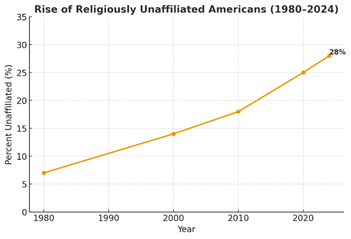
United States: Are Pulpits the Next Podiums?—Judeo-Christianity has influenced our national culture from its founding. Currently, church attendance is shrinking, younger generations walk away, scandals erode credibility, and the religiously unaffiliated approaches 30% of the population (PRRI). We are evolving into a secular nation of diverse beliefs. In this decline and transition, political power has become a lifeline for some of the more radical to guard against the nightmare of irrelevance becomes a reality.
Some fringe religious leaders now align with vocal politicians who promise to “fight for them,” to restore an age and influence gone by. In exchange, some of their pulpits have become podiums. Political leaders boast, “I hate my enemies,” and vow to “beat the hell out of them,” these words juxtaposed to:” do good to those who hate you, bless those who curse you, pray for those who mistreat you.” The contrast is crisp —aggressive pulpits now espouse vengeance rather than pleading for understanding. Rhetoric that contradicts the very teachings once held sacrosanct. The threat of pulpits becoming podiums is a genuine concern.
Lessons: Learn the Lessons—The parallels are clear. In Iran, religion became the state. In Russia, the Church promotes the empire for its own security. In America, the mainstream is often overshadowed by extremists who cling to authoritarian strongmen for cultural relevance and power—trading faith’s essence for influence.
When religion becomes a weapon of politics, the backlash is not revival but rebellion. These bargains may preserve institutions for a generation, but they ultimately lead to decay.
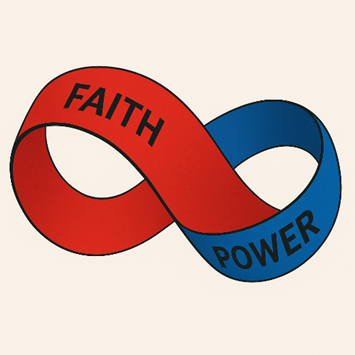
Like a Möbius strip, the inside and outside of faith and power continuously trade places, with no true end and no certainty. The loop is endless, the inversion unending — a path where faith loses its soul and nations lose their way, twisting around and around until revolt. The American founders understood this and wisely built institutional walls between state and church to prevent their blighted bonding, but now the walls are crumbling. #NeverFearTheDream
First published in Bend Bulletin 10/29/25
Always feel free to re-post—anywhere, anytime, to anyone—share freely.
NeverFearTheDream simplebender.comStand For Truth
If you’re looking for daily thoughts and insights you will want to start the morning with:
Lap Around the Sun: Daily Steps Forward
If you know someone who is facing any facet of Alzheimer’s they might gain some insight from:
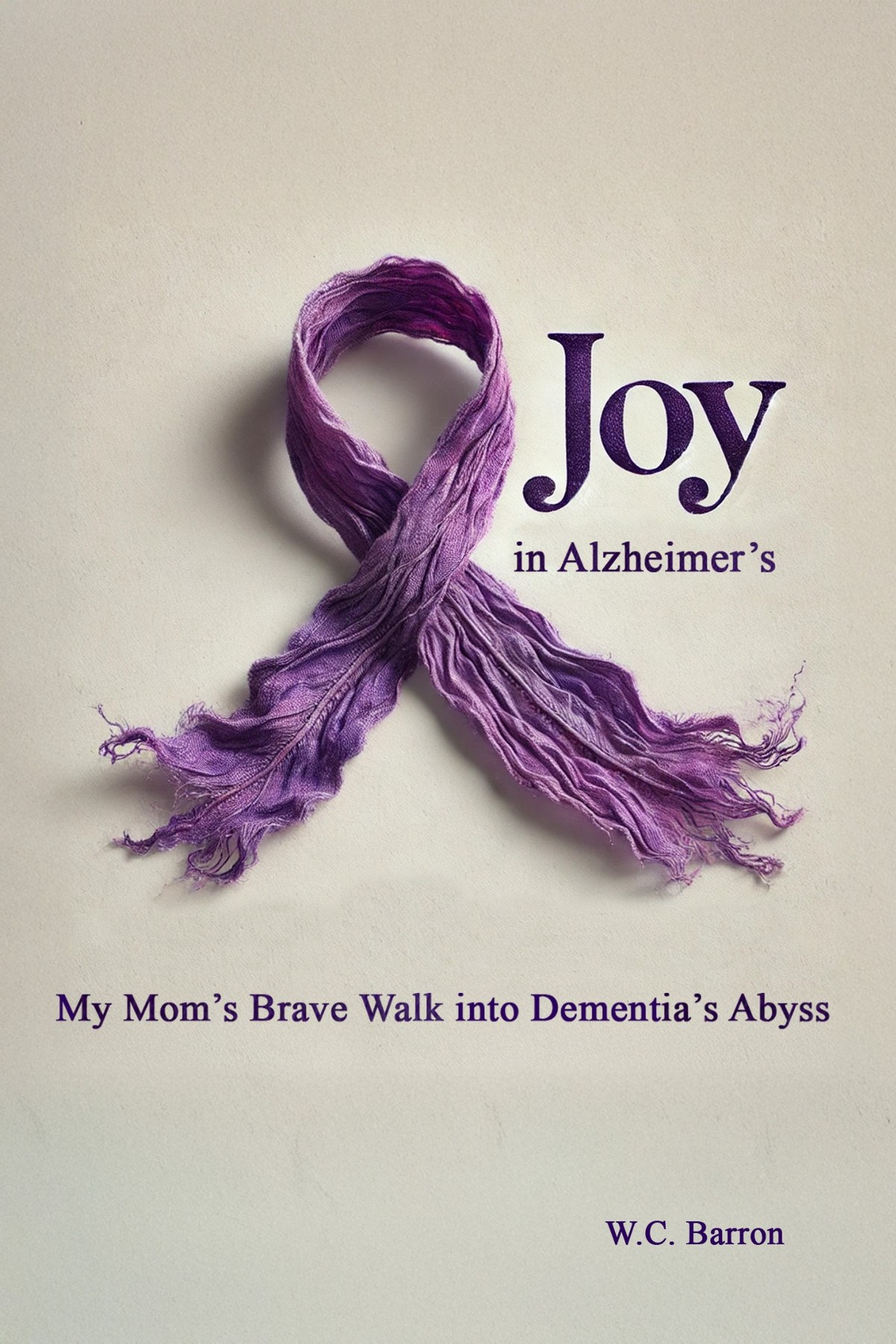
Joy in Alzheimer’s: My Mom’s Brave Walk into Dementia’s Abyss
Please consider following simplebender, you’re reading makes my writing more fun..…
Comments and thoughts are always welcome and feel free to re-post …..
The old man sat on the porch, the autumn wind stirring the fallen leaves. His grandson, an impatient teen, leaned against the rail and sighed heavily.
“Opportunity for everyone—what a joke,” the boy muttered. “Not for us anymore. Maybe for someone else—they’ve taken everything.”
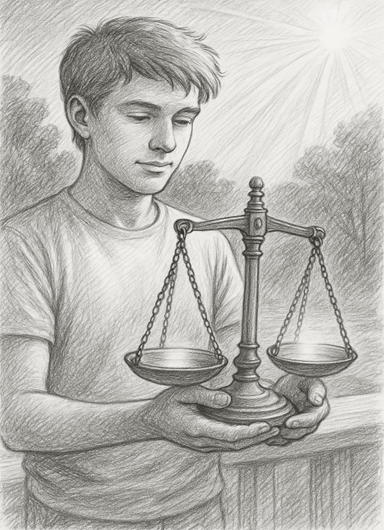
The grandfather didn’t answer. He reached for a small, rusted balance scale on the railing—an heirloom from his own father.
“You know this scale?” he asked. “Your great-grandad was a miner. He used it to weigh ore, but he said it measured something greater than metal—justice. Not everything weighs the same, but a good scale makes sure the measure is fair.”
He dropped a pebble on one pan. “This is what you think you’ve lost.” Then another. “And this, what someone else gained.”
The boy watched, his arms crossed, curiosity overtaking his frustration.
The old man added a third pebble, heavier than the rest. “This one’s the story you were told—that if their side rises, yours must fall. That story was sold by the same people who bent the beam and called it balance.”
The boy frowned. “What do you mean?”
“When I was your age,” said the grandfather, “we believed hard work guaranteed the climb. For a while, it did. Then markets changed and factories closed, machines got smarter, and those who owned the levers of money built taller ladders while the rest of us argued over who deserved the bottom rung. Now they feed you anger because angry men don’t notice the hands at the top pressing on the scale. They treat us like puppets—because too many dance when they pull the strings.”
He flipped the scale over; the pebbles scattered. The arms hung limp, like broken marionettes. “They’ve convinced you the problem is the person climbing beside you. But look closer—the scale isn’t even anchored to the ground anymore. The fight isn’t for equal weight; it’s for honest measure. Equity means measuring every stone’s, every person’s, its true worth.”
The boy’s jaw tightened. “So what do I do with that?”
The grandfather smiled. “Simple. Stop counting other people’s pebbles and start measuring their worth. Fix the scale. Learn, build, vote, speak, stand—not for the side you were born on, but for the fairness your great-grandad believed in. Opportunity isn’t gone, son. It’s just been disguised by those who need you too angry to see the game.”
The boy turned the scale in his hands. It felt lighter than he’d imagined—and suddenly, so did he. He set it on the railing, and as the arms found their balance, the old man said softly, “Remember, life’s not meant to be equal—it’s meant to be just.”#NeverFearTheDream
Equality assumes sameness, but nature has never been equal. No two stones weigh alike, no two lives start level. Equity is the art of fair measure — adjusting the balance so that justice, not uniformity, prevails. It asks that we see worth in context, not in comparison. The world doesn’t need everyone to carry the same load; it requires each of us to bear our share with integrity and pride. The lesson of the scale is simple: fairness isn’t about equal weight, but about honest measure — the foundation of any just and enduring society.
54% of Black men born in the bottom income quintile remain there as adults, compared to 22% of White men.1
Hispanic children are more likely than Black children but less likely than White children to move up from the bottom 20% into the middle or top 40%.2
Black boys earn less than White boys in 99% of U.S. neighborhoods.1
Among children from low-income households, only 17% of White children remain in the bottom decile as adults versus 42% of Black children.3
Between cohorts born in 1978 and 1992, the racial mobility gap shrank by about 27%, yet Black men and Native Americans remain twice as likely as White men to experience downward mobility.4
1:(Brookings, 2018; Chetty et al., Opportunity Insights, 2018)
2:(Chicago Fed, 2023; Opportunity Insights, 2018)
3:(Equitable Growth, 2022; Pew Research Center, 2022)
4: (Equitable Growth, 2023; U.S. Census Bureau, 2024)
Always feel free to re-post—anywhere, anytime, to anyone—share freely.
NeverFearTheDream simplebender.comStand For Truth
If you’re looking for daily thoughts and insights you will want to start the morning with:
Lap Around the Sun: Daily Steps Forward
If you know someone who is facing any facet of Alzheimer’s they might gain some insight from:
Joy in Alzheimer’s: My Mom’s Brave Walk into Dementia’s Abyss
Please consider following simplebender, you’re reading makes my writing more fun..…
Comments and thoughts are always welcome and feel free to re-post …..






 SimpleBender.....wcb