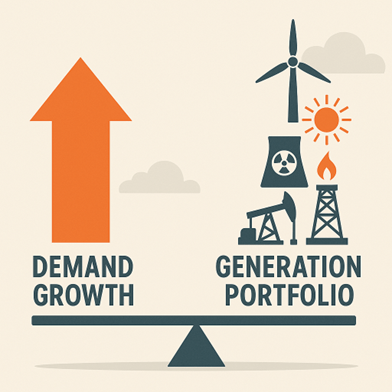
The belief that locals know best what their community needs is compelling—until the federal government, for its own interests, decides otherwise.
Every nation is, at its core, an aggregation of countless smaller communities. Their borders shift as people move, economies fluctuate, and climates change. The long-standing argument that small, local government is superior to distant, centralized power is often taken as self-evident. Local leaders adapt quickly, drawing on resources, traditions, and the lived experience of those they serve. They sense the moral, cultural, and economic pulse in ways no outsider can.
By contrast, Washington moves slowly, buffeted by shifting political winds. Federal agencies bring expertise and funding, but too often those come with strings attached—mandates, conditions, or partisan leverage.
Local governments—cities, counties, states—are closest to the people and should be empowered to govern on issues most immediately affecting them. Immigration, gun control, abortion, emissions, education standards, or building codes are best addressed where conditions are specific. One state may prioritize sanctuary protections because it sees both humanitarian and economic value. Another may impose stricter gun laws to curb violence. Coastal and seismically prone cities may demand tougher building codes, while a rural state may focus on education standards rather than curbing gun violence. The point is not uniformity, but responsiveness.
Once a community has chosen its path, federal interference should be rare, reserved for extraordinary circumstances and backed by a vast consensus, requiring a supermajority to overrule the state. Congress too often legislates to the lowest common denominator, imposing one-size-fits-all rules that lower standards in some places while raising costs in others. If a community accepts the burden of stricter laws, it should also have the right to live with the consequences of its decision.
Here lies the contradiction: advocates of small government often champion decentralization only until local choices cut against their own ideology. Then, suddenly, they turn to Washington to override what they dislike. Add the influence of corporate lobbying, and state sovereignty erodes further.
Still, there are functions only a strong federal government can perform. Disaster relief, national defense, international diplomacy, monetary policy, and drug standards cannot be parceled out state by state without chaos. Imagine fifty separate armies, currencies, or foreign embassies. Some responsibilities must be assigned to the center.
The truth is both inconvenient and straightforward: local government is more nimble and responsive, but it cannot stand alone. The federal government has the scale to manage what transcends borders, but it should not micromanage what can be handled more effectively on the ground.
“The powers delegated by the proposed Constitution to the federal government are few and defined. Those which are to remain in the State governments are numerous and indefinite.”James Madison, Federalist No. 45
The challenge—and the opportunity—is to lean into the strengths of each. Let local government govern where local knowledge matters most. Let the federal government act where unity is essential. The balance, not the dominance of one over the other, is what will preserve both liberty and effectiveness. However, this then raises a large, unspoken, and glaring question: How will local governments pay for the services they want without asking the federal government for assistance? #NeverFearTheDream
NeverFearTheDream simplebender.com@simplebender.bsky.socialStand For Truth
If you’re looking for daily thoughts and insights you will want to start the morning with:
Lap Around the Sun: Daily Steps Forward
If you know someone who is facing any facet of Alzheimer’s they might gain some insight from:
Joy in Alzheimer’s: My Mom’s Brave Walk into Dementia’s Abyss
Please consider following simplebender, you’re reading makes my writing more fun..…
Comments and thoughts are always welcome and feel free to re-post …..
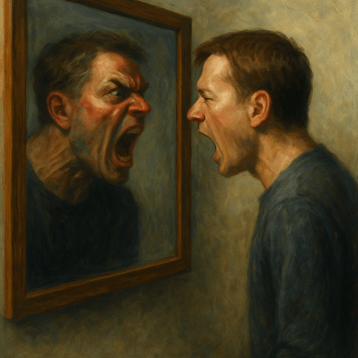
History wears many masks. To some, it is nothing more than a tidy chronology of people and events. To others, it is the triumphal record of victors praising themselves over the vanquished. But its critical purpose is deeper: a study of cause and effect, an unblinking analysis illuminating the consequences when we choose to forget.
Amnesia is accidental, an uncontrolled loss of memory. What we face today is not amnesia but willed forgetting — intentional oblivion, the deliberate distortion of our collective memory. History is not supposed to soothe or flatter. In its fullness, it unsettles even as it enlightens. It is conscience and compass, guide and warning. Once edited for convenience or neutered by policy, it ceases to be either. It becomes propaganda for the weak, a tool of control disguised as comfort and a noble past.
The danger of this willed forgetting is simple: when the past is edited, the future tends to repeat its horrors and evils. Obliterated memory opens the door to evil and foolish repetition. It allows reality to be twisted into fictions that serve those who want to manipulate and/or lack the courage to confront and learn from the past. We cannot forget that human beings were once legal property, subject, without recourse, to mental, physical, and sexual abuse at the will of their ‘owners’. It is too easy to forget that this country was built upon and continues to rely on the labor of immigrants. We cannot forget the mortality and misery of children before vaccines — iron lungs for polio, blindness and brain damage from measles, deafness from mumps, miscarriages from rubella. To erase these memories is to invite and hasten the return of these atrocities.
We must have the courage to stand in the breach against this intentional oblivion. To study history, its cause and effect, is to bear witness, to heed its cries so that the next generation is spared their toll. It is too easy to listen to policymakers who pander for power. Too easy to strip protections from the weakest among us. It’s too easy to erase artifacts, ban books, and redact textbooks, all in the name of comfort. We must not turn a blind eye or deaf ear to the cries of those lessons lest we allow the next generation to suffer the plagues that will insidiously creep in and take their toll.
But comfort is not progress. Memory, even painful memory, is the price of wisdom and freedom. If we genuinely want to move forward, we must resist the temptation to rewrite the past and accept instead the discomfort of truth. Only in remembering — fully, painfully, and honestly — can we avoid repeating what history has already judged too costly to endure. You must understand the past to plan your future. Don’t erase, modify, or twist history—learn from it. #NeverFearTheDream
NeverFearTheDream simplebender.com@simplebender.bsky.socialStand For Truth
If you’re looking for daily thoughts and insights you will want to start the morning with:
Lap Around the Sun: Daily Steps Forward
If you know someone who is facing any facet of Alzheimer’s they might gain some insight from:
Joy in Alzheimer’s: My Mom’s Brave Walk into Dementia’s Abyss
Please consider following simplebender, you’re reading makes my writing more fun..…
Comments and thoughts are always welcome and feel free to re-post …..
Isolationism is not simply folding one’s arms and turning inward. It is worse. It is an accelerant poured on the fire of realignments already underway. Today, American isolationist tendencies, packaged as “America First” or wrapped in tariff protection, are not just national policies; they are geopolitical catalysts. And those sparks are igniting a wildfire that pushes Europe and the BRICS nations closer together, while the United States drifts toward self-marginalization.
The European Union, long a stable and interdependent ally, is recalibrating. Reeling from broken treaties and facing generational tariffs on steel, autos, and manufactured goods (Financial Times, July 2025), Brussels is negotiating as if Washington is no longer a reliable partner. Free trade agreements with India and Mercosur are being revived, with trade deficits accepted as a form of diversification insurance (European Commission, 2024). Strategic forums like Weimar+ are asserting European security identity outside NATO’s shadow. EU leaders now warn against “lecturing” the Global South (European Council, 2025), recasting Europe as a multipolar broker rather than a U.S. dependent.
BRICS has seized the moment. Expanded to include Saudi Arabia, the UAE, and Egypt, the bloc now represents nearly 47% of global GDP (PPP) and more than half of the world’s population (CFR, 2025). Intra-BRICS trade has surpassed flows with the G7 (BCG, 2024), and new payment systems are being constructed to reduce dollar dependence. By mid-2025, dollar use in inter-BRICS trade had fallen to one-third of prior levels (AgWeb, 2025). China and India—the world’s largest food consumers—are securing long-term agricultural pacts with Brazil and Russia (USDA, 2024).
Once again, America’s rural farm belt is bearing the brunt. U.S. agricultural exports to China fell 17% in early 2025 (American Action Forum), while South American soy and Russian wheat dominate EU and Asian contracts (Financial Times, June 2025). Brazil alone shipped $106 billion in agricultural commodities in 2024, much of it bound for Asia under preferential trade agreements (USDA, 2024). The USDA forecasts a 25% decline in net farm income in 2025 (USDA ERS). Rural America, once the proud breadbasket of the world, is being replaced—collateral damage of shortsighted policies and shifting winds of trade.
It does not take much to project forward. The U.S., reliant on debt-driven consumption, faces narrowing options. If Europe deepens trade with BRICS, and BRICS solidifies internal financing systems, the U.S. risks exclusion from supply chains and capital flows. Dollar dominance will not collapse, but it will erode as alternatives gain trust. The industrial base is unprepared—hampered by high labor costs and neglected infrastructure. America risks becoming a secondary commodities market for EU and BRICS products while its traditional export advantages are sourced elsewhere.
Yet decline is not destiny. The U.S. still holds immense resources: the deepest capital markets, unmatched military power, and hubs of innovation in energy, biotech, and technology. But those strengths are not shields against mistrust. They cannot offset a strategy that drives allies and rivals alike toward new arrangements that deliberately exclude us.
America’s greatest risk is not sudden collapse but creeping irrelevance: farm towns hollowed, factories bypassed, financial hubs sidelined, and household debt climbing. Isolationism, sold as insolating protection, will instead isolate. In a world reorganizing outward, self-marginalization is the steepest price of all. #NeverFearTheDream
NeverFearTheDream simplebender.com@simplebender.bsky.socialStand For Truth
If you’re looking for daily thoughts and insights you will want to start the morning with:
Lap Around the Sun: Daily Steps Forward
If you know someone who is facing any facet of Alzheimer’s they might gain some insight from:
Joy in Alzheimer’s: My Mom’s Brave Walk into Dementia’s Abyss
Please consider following simplebender, you’re reading makes my writing more fun..…
Comments and thoughts are always welcome and feel free to re-post …..
Some communities insist no one has the right to tell you what goes into your body. Vaccine mandates for children? Eliminated. Parents, they say, should decide. Yet the same lawmakers ban abortion, declaring the state must dictate what goes into—or comes out of—a woman’s body. One breath they champion autonomy—“your body, your choice.” The next, they revoke it. That is the hypocrisy of their own making: a logic trap.
This is hubris—elevating choice above consequence until the reckoning arrives. By enthroning autonomy in one case and crushing it in another, political positions collapse under their own contradictions.
The deeper problem is not hypocrisy alone, but the refusal to face consequences. If a sick, unvaccinated child infects another and death follows, is that so different from a parent choosing to end a pregnancy? Both are questions of prevention—or its absence. Both end in the loss of life. Stripped of rhetoric, the moral arithmetic is the same.
Plato’s Ship of State reminds us that freedom without shared responsibility is not freedom but chaos. To let each untrained helmsman steer as he pleases is to wreck the vessel and drown all aboard. Vaccine “freedom” follows the same course: individual choice unmoored from collective duty imperils the innocent.
Abortion bans claim to “protect life.” Yet removing vaccine safeguards erodes the very protections that preserve the living. Both paths, meant to uphold life, may instead hasten its loss. Vaccination is not solely a personal decision; it is an act of care for the vulnerable child who cannot choose. To shrug it off is to clearly echo and exclaim the denial: “I am not my brother’s keeper.” That is tragedy—outcome born of blindness to consequence.
If morality is to mean anything, it cannot be applied with one hand and denied with the other. If a child who is unable to be vaccinated dies from exposure, who bears responsibility? The parents of the unvaccinated infecting child? The government that stripped safeguards? The community that endorsed it? Those who hold women accountable for abortion, especially those who are rape victims, cannot escape this parallel dilemma. Freedom framed as virtue but practiced as refusal to protect another is no virtue at all. Either the body is inviolable, or it is not. Either life is sacred in all forms, or it is not. Pretending otherwise is meant to satisfy a political base, but it cannot withstand the test of reason—or history. #NeverFearTheDream
NeverFearTheDream simplebender.com@simplebender.bsky.socialStand For Truth
If you’re looking for daily thoughts and insights you will want to start the morning with:
Lap Around the Sun: Daily Steps Forward
If you know someone who is facing any facet of Alzheimer’s they might gain some insight from:
Joy in Alzheimer’s: My Mom’s Brave Walk into Dementia’s Abyss
Please consider following simplebender, you’re reading makes my writing more fun..…
Comments and thoughts are always welcome and feel free to re-post …..
The world’s expectation of the United States has shifted—and with it, the nation’s business climate. In recent months, the U.S. has altered long-standing treaty commitments, reduced foreign aid, and extended cordiality toward governments once deemed global pariahs. But what’s unfolding domestically may be worse: an extortion tax on America’s innovators and businesses.
New Gatekeepers of Innovation: Universities—the cradle of U.S. invention—are under pressure not just to meet academic standards but to bend to the political and financial whims of federal funding agencies. The current administration recently invoked the Bayh–Dole Act to demand that Harvard disclose all patents tied to federally funded research and justify their use. Officials threaten to seize or relicense patents if unsatisfied. Harvard holds more than 5,800 such patents, making the scope of this action unprecedented in modern U.S. research policy. It also ignores the principles behind a patent, which is to protect the holder from infringement and allow unfettered use for their chosen purpose.
This follows similar disputes in which Columbia paid over $220 million and Brown about $50 million to settle federal claims tied to research funding. While the Bayh–Dole Act technically allows such interventions, the tactic has rarely been used to this degree and is viewed by critics as an intimidation lever—discouraging innovation rather than protecting the public interest. Federal funding for university research has already fallen 18% between 2011 and 2021, placing the U.S. 27th among OECD nations relative to GDP.
The result: private investors could increasingly control university-generated intellectual property, profiting when it suits them—or worse, foreign research entities could surpass U.S. capabilities entirely.
Corporate Pay-to-Play: The private sector is not immune. Under the Hart–Scott–Rodino Act, mergers above set thresholds must pay filing fees ranging from $30,000 to over $2.3 million. These fees are predictable; the new problem is the creeping insertion of ideological conditions into merger approvals.
In one recent case, the Federal Trade Commission considered requiring merging companies to pledge not to boycott platforms based on political content. The Federal Communications Commission has also been accused of pressing telecom firms to dismantle diversity, equity, and inclusion programs in exchange for approval. Such moves transform regulatory review from market oversight into ideological enforcement.
Tribute for Trade: Meanwhile, domestic companies face conflicting regulations, shifting markets, and tariffs imposed without transparent justification. Tariffs—already a hidden tax—are now coupled with the specter of requiring companies to share a percentage of revenues or profits to secure an export license. While no such policy is yet on the books, the idea mirrors the royalty extraction models of state-controlled economies. It would not just reduce profitability; it could drive companies to cede markets to foreign competitors.
From Rhetoric to Reality: For an administration elected on promises of being “pro-business” and “cutting regulations,” these actions move in the opposite direction. They discourage innovation, deter mergers, burden trade, and concentrate control in the hands of government gatekeepers. This is not the free-market leadership America once championed—it is a pay-to-play extortion system closer to the state-ownership models of authoritarian regimes and organized crime—what wonderful examples to replicate for a government of the people. Just hope someone with integrity is keeping track of the extorted money. #NeverFearTheDream
NeverFearTheDream simplebender.com@simplebender.bsky.socialStand For Truth
If you’re looking for daily thoughts and insights you will want to start the morning with:
Lap Around the Sun: Daily Steps Forward
If you know someone who is facing any facet of Alzheimer’s they might gain some insight from:
Joy in Alzheimer’s: My Mom’s Brave Walk into Dementia’s Abyss
Please consider following simplebender, you’re reading makes my writing more fun..…
Comments and thoughts are always welcome and feel free to re-post …..
Perfect storms don’t appear overnight. They brew over years, with shifting conditions that slowly build into turbulent waves and headwinds. Our financial storm is no different. Patience and persistence—not quick fixes for political gain or to placate an impatient electorate—are the only means to weather it.
After World War II, America emerged as the world’s manufacturing powerhouse. In 1950, four in ten workers were employed in manufacturing or farming. Today, it is fewer than one in ten. Urban centers now dominate public policy, with four urban residents for every one rural—compared to 1.4 to 1 in 1950. Over the same period, private debt ballooned from $142 billion to nearly $49 trillion, while our national debt-to-GDP ratio climbed from 0.9 to 4.0—among the highest in the developed world, worse even than Greece before its IMF bailout. By IMF criteria, the U.S. now checks multiple distress boxes: soaring debt, accelerating accumulation, vast unfunded liabilities, and a widening deficit. We are a nation of consumers, not producers, and we have run a trade deficit every year since 1960.
The irony is stark. In 2001, the federal budget posted a $128 billion surplus, with forecasts indicating that the national debt would be entirely retired by 2009. Two decades later, we face a $1.7 trillion deficit and a $33 trillion debt. Tax cuts have increased the debt-to-GDP ratio by 37%, boosted spending by 33%, and added another 28% to COVID-era responses. Seventy-seven percent of the debt increase is attributed to bipartisan legislation, as federal spending rose from 17% of GDP to 23%, while revenue fell from 19% to 16%.
These are the numbers. They reveal a storm that has been decades in the making. The U.S. is unlikely to reverse course quickly, as we lack the necessary manufacturing infrastructure, globally competitive wages, or political appetite to balance spending with revenue. If 2001 tax and spending levels had been maintained, the debt picture would look radically different. But we didn’t, and we can’t go back. We’ve now doubled down, and Congress has passed legislation that is projected to add another $3 trillion to the debt while concurrently cutting social and international support programs. The cost of these programs is now the burden of each state. Some will shoulder their share, others will opt not to, at the detriment of their citizens.
The way forward will not be painless. Gutting agencies or waging trade wars won’t solve structural imbalances. We will face difficult choices, including the scope of social welfare programs, military commitments, and global engagement. To remain respected, we cannot retreat behind walls of protectionism—we will need cooperation from allies while we put our house in order.
Ultimately, the national problem mirrors the personal one. Our culture of instant gratification and debt-driven consumption cannot be sustained. Just as households must learn to live within their means, so too must the nation. It will take time, sacrifice, and discipline to undo decades of drift toward becoming a debtor nation of consumers that we are now. #NeverFearTheDream
NeverFearTheDream simplebender.com@simplebender.bsky.socialStand For Truth
If you’re looking for daily thoughts and insights you will want to start the morning with:
Lap Around the Sun: Daily Steps Forward
If you know someone who is facing any facet of Alzheimer’s they might gain some insight from:
Joy in Alzheimer’s: My Mom’s Brave Walk into Dementia’s Abyss
Please consider following simplebender, you’re reading makes my writing more fun..…
Comments and thoughts are always welcome and feel free to re-post …..
When did masks shift from villains to “authorities”?
When I was a kid, masks were for the bad guys. Bandits in Westerns, bank robbers with bandanas, the Klan hiding under white hoods, and the muggers in dark alleys. A mask meant you didn’t want to be recognized because you were doing something you shouldn’t be doing. Evil hid its face. Goodness walked in daylight.
But now? Somewhere along the way, the script flipped. Those we were told to trust—law enforcement, federal agents—have adopted the mask. Acting with impunity, ICE officers are staging “operations,” Homeland Security agents are sweeping into neighborhoods, even U.S. Marshals and Border Patrol units, all with faces hidden. They now resemble the masked members of Patriot Front or Blood Tribe. Once respected symbols of authority, they are now appearing faceless, anonymous, and interchangeable. Supporters argue that the masks protect officers from retaliation or online targeting, but to the rest of us, it appears to be a means to avoid scrutiny and shirk accountability.
The claim is they’re targeting “the worst of the worst.” That phrase is supposed to conjure violent criminals, cartel bosses, or human traffickers. Yet the data tells a different story: government data shows that the majority — often well over half, approaching 70%—of ICE detainees have no criminal record at all. They’re being seized at immigration hearings where they’ve come voluntarily, pursued through farm fields, even pulled from schools and churches. They are NOT gunmen. Not the “worst of the worst.” They are just the easy ones. The soft targets. The ones who won’t shoot back.
Which raises the uncomfortable questions: do the masks hide fear, or shame? Fear of retaliation if they went after actual hardened criminals? Shame at arresting the powerless in the most public and humiliating of ways? Or maybe the mask makes it easier to see human beings as quotas instead of neighbors. Is this about public safety—or about hitting administrative numbers?
It’s a bitter irony. The only true ‘good guys’ who still wear masks today are doctors and firefighters. Their anonymity is a sacrifice, not secrecy. They shield their faces not to hide, but to protect and survive, thereby shielding others. That’s the difference. One mask hides identity to avoid accountability; the other shields life in the service of it.
The lesson is as old as childhood morality tales: if you hide your face to do your work, maybe, just maybe, it’s the kind of work that shouldn’t be done in the first place.
NeverFearTheDream simplebender.com@simplebender.bsky.socialStand For Truth
If you’re looking for daily thoughts and insights you will want to start the morning with:
Lap Around the Sun: Daily Steps Forward
If you know someone who is facing any facet of Alzheimer’s they might gain some insight from:
Joy in Alzheimer’s: My Mom’s Brave Walk into Dementia’s Abyss
Please consider following simplebender, you’re reading makes my writing more fun..…
Comments and thoughts are always welcome and feel free to re-post …..
We stand on the edge, about to return to a dark period in our history—not the chains of the plantation, but a new form of labor, forged in law and sanitized by policy. Its roots are not in the Lost Cause but in Jim Crow, born of a single parenthetical phrase. It sits there in plain sight, unhidden, and dangerous—a legal justification waiting to be revived.
13th Amendment to the United States Constitution: “Section 1. Neither slavery nor involuntary servitude, except as a punishment for crime whereof the party shall have been duly convicted, shall exist within the United States, or any place subject to their jurisdiction.”
That loophole was not an afterthought. It was demanded and defended to secure the Amendment’s ratification in 1865. Southern states then weaponized it through convict leasing and chain gangs. A practice some want to pretend didn’t happen and want to erase or bury in vague history—as if it never really happened.
The logic is chillingly simple. Every undocumented entrant violates Federal law. First entry: misdemeanor. Re-entry: felony. The 13th doesn’t distinguish — a crime is a crime. Increasingly, arrests occur without warrants, and detentions blur the line of due process, regardless of the circumstances. Traditionally, the punishment has been deportation. However, deportation leaves a labor vacuum in construction, agriculture, manufacturing, and other services. A clear economic disaster and ample justification for yet another ‘National Emergency.’ The temptation is obvious: why expel “criminals” when you can harness their labor?
Congress has never summoned the courage to erase this parenthetical. For 160 years, the loophole has endured. A handful of States have purged it from their constitutions, but the Federal version reigns supreme. If it is exploited again, it could be a mix of State and Federal sponsored incarcerated labor. We’ve lacked the fortitude to change it, and now may pay the price for our lack of conviction and foresight.
The path forward isn’t clear—it could be problematic, but it doesn’t have to be. Rather than arresting, deporting, or conscripting, let’s build America’s future upon the hopes, dreams, and passion all of us have to offer. But that isn’t history’s pattern. And history’s show never ends—it simply changes costumes.
NeverFearTheDream simplebender.com@simplebender.bsky.socialStand For Truth
If you’re looking for daily thoughts and insights you will want to start the morning with:
Lap Around the Sun: Daily Steps Forward
If you know someone who is facing any facet of Alzheimer’s they might gain some insight from:
Joy in Alzheimer’s: My Mom’s Brave Walk into Dementia’s Abyss
Please consider following simplebender, you’re reading makes my writing more fun..…
Comments and thoughts are always welcome and feel free to re-post …..
Ideas can wound more deeply than fists—their scars often outlast bruises. But dissent isn’t treason; it’s the American expectation. The audacity to voice a contrarian view without fear of punishment was once a defining feature of our national character. That freedom, that courage, is slipping.
A fundamental right is to stand, speak, write, or peacefully protest what you believe is wrong. It’s a moral responsibility at the core of our civic being. It is how we started. As Americans, it is who we are.
Yes, this right has been repeatedly abused and suppressed: during the Civil Rights Movement, LGBTQ advocacy, and Black Lives Matter protests. These weren’t our proudest moments—they were our failures. And yet, we are better than those moments. And we are better because of them. Just as we should be better than today’s attempts to silence pro-Palestinian and pro-Ukrainian voices, or to weaponize immigration enforcement.
Yes, public safety matters. And yes, misinformation can be dangerous, especially when weaponized at scale. But the line between protection and suppression is perilously thin. When fear becomes a rationale for silencing protest, we drift toward authoritarianism under the guise of security.
But let me be honest. I write this as someone of privilege—a white male in the dominant race and gender. I’ve never feared for my safety when expressing my views. I’ve never had to calculate the cost of speaking out to simply be heard. That insulation is not universal. And acknowledging that it is the least I can do.
The truly brave are those who speak anyway, knowing the risks. Minorities are demanding the rights that this country claims to guarantee. Immigrants who were escaping violence and chasing a future are thrust back into violence. And yet, their domestic complicit employers are not subject to the heavy hand of the law. The Pro-Palestinian voices speaking into the silence of global indifference as their homeland, their homeland of generations, is taken and broken, and their families are indiscriminately killed and starved. And even those supporting Ukraine as it fiercely defends its children and its homeland from slaughter by an invading army.
They are the ones carrying this nation’s conscience forward. They take the blows, not for fame or ideology, but for survival and dignity. The road to a better America is paved by those who get off the couch and speak out through civil dialogue, discord, and yes, disobedience.
This country grows not by force, but by engagement. We will be stronger when those in power trade masks and riot gear for open conversation—and when fabricated, non-existent, dystopian, national “emergencies” are no longer used to justify suppression. When we are afraid to speak out, the words of others fill the void, becoming all that is heard. When those of us who can speak don’t, we become complicit in the decay. The slide is ours to stop; or ours to be held accountable.
NeverFearTheDream simplebender.com@simplebender.bsky.socialStand For Truth
If you’re looking for daily thoughts and insights you will want to start the morning with:
Lap Around the Sun: Daily Steps Forward
If you know someone who is facing any facet of Alzheimer’s they might gain some insight from:
Joy in Alzheimer’s: My Mom’s Brave Walk into Dementia’s Abyss
Please consider following simplebender, you’re reading makes my writing more fun..…
Comments and thoughts are always welcome and feel free to re-post …..