Posted in Current Events, Political

Our Future or Present: Authoritarianism and Transactional Leadership: Reprinted…..for a Reason

No Kings, slash through blood dripping crown

This was first published 8/29/22; yes 2022. It seems unfortunately appropriate that I republish it recognizing the events in which we currently find ourselves and the world

_________________________________________________________________________________________

Our grand experiment of Democracy is dramatically different than every social norm, every other system of leadership, governance, and social fabric with which we live. It’s little wonder our system is always under attack and slowly yielding to authoritarianism. We must stay committed to our representative republic and the triad balance of power. If not, we too will slip into a transactional authoritarian government.

Social norms in our family, religion, business, and most world governments, have a strong bias toward authoritarianism. This is what we grew up with. A family structure which requires the adult(s) to be responsible and accountable. Youth are rewarded for following instructions and guidelines. In world religions, there is the priest, pastor, imam, grandmaster, or lama. Each controlling the message. All imposing authority over their flock. Grooming them for the future of the leader, ‘church’, or cult. At its worst this level of uncontrolled authority leads to mass suicides and child abuse. In business, unless you are self-employed, we all have supervisors. Authorities giving us assignments, judging our performance, and controlling our wages. This is when we truly begin to feel the influence and practice of transactional leadership. When decisions are made, not necessarily on the merits of the problem but on how the results can affect individuals and organizations. Globally, very few countries have histories other than dictator, monarchy, warlord, or czar. Their culture and history are rooted in non-democratic leadership. The plague of transactional leadership is the most dangerous in governments. Casting long term policy aside for near term benefit of themselves, their cronies, and minions. To be clear, there is a difference between transactions for self interest and those for policy advancement.

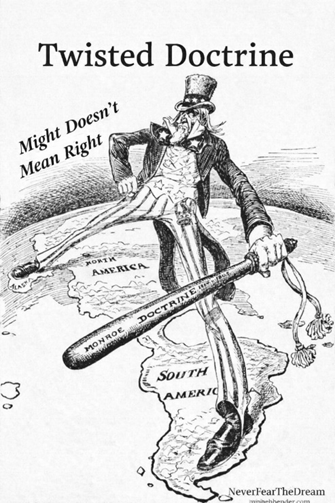
Fledgling democracies of the former Soviet Union and the countries which blossomed during the Arab Spring have fallen back to authoritarian governments where transactions are key to survival. Russia and China have changed their constitutions allowing Putin and Xi to be leaders for life, returning to the time of Stalin and Mao. Are we on the same precipice? We’ve seen the original basis of triad balance of power eroded as the executive branch has usurped congressional powers. Methodically, creating a ‘strong’ executive branch and thereby a weak, neutered, dysfunctional legislature. Boisterous, self-absorbed, ‘leaders’ don’t really care about your cause, only your money and your vote. In exchange, they will act as your advocate and protector. Disparage, insult, and harass those whom you believe are a threat, especially minorities, in exchange for your support. They will play the victim, if they think they can tug at your heart so you will tug at your wallet. Candidates pandering for their endorsement want it only to gain your support. They fear the zealous wrath at the polls so, as chameleons, will enthusiastically espouse whatever the loudest want to hear. Everything is a transaction. More ‘perfect’ phone calls. No long-term policy and direction considered. It boils down to: Put me in power today, keep me in power tomorrow and I’ll do your bidding, to hell with what’s right.

How do we arrest the accelerating demise of our democracy? We should re-establish the balance of power. The triad must be equal and accountable to each other. Executive orders should have sunsets and if not codified by Congress should expire. Restore and strengthen Congressional subpoena power. Reign in Executive Privilege; it’s a shield for deceit. Institute term limits on Supreme Court Justices and require the Senate to act immediately on nominations. Institute Congressional term limits and dismantle the seniority power structure. The Electoral College process should be updated, ensuring the count based on the people’s vote not the State’s politicized legislature.

Our democracy has matured over time, and we must be wary of the pendulum swing toward authoritarian transactional leadership. Once there, the fight to climb back up the moral pedestal will be very hard. We don’t need protectors. We need calm, stable, policy driven leadership. We need to declare allegiance to the Constitution not any party or person. #NeverFeartheDream

Posted in Current Events, Political

Guardrails Against the Authoritarianism Storm

Columns supporting our Constitutional Liberties

Article first published in the Bend Bulletin 9/27/25

The Bill of Rights was not a mere document, but a product of the founders’ deep suspicion of concentrated power. They had witnessed the crushing of liberties under a monarchy and feared that even a republican government might someday drift toward authoritarianism. The First Amendment enshrines freedoms of mind and voice; the Second Amendment ensures the citizenry will never be entirely powerless should those freedoms come under assault. This foresight of the founders enlightens us about the historical context of the Bill of Rights, giving us a deeper understanding of our constitutional rights.

History was their teacher. British suppression of colonial assemblies, censorship of dissenting press, and the Intolerable Acts were enforced not with argument but with troops. The Revolution began not at a printing press, but when local militias clashed with regular soldiers at Lexington and Concord (1775) to resist the seizure of their weapons. It was this combination—ideas in pamphlets like Common Sense (1776) and the willingness to defend them—that secured independence.

James Madison (Federalist 46) envisioned an armed citizenry as the ultimate check on federal overreach, noting that “the advantage of being armed” would deter encroachments on liberty. Alexander Hamilton (Federalist 29), though skeptical of full-time militias, conceded that a people capable of bearing arms would make any tyranny costly. Later commentators, such as St. George Tucker (1803), referred to the Second Amendment as the “true palladium of liberty,” a final barrier against usurpation (Tucker, Blackstone’s Commentaries).

The framers did not celebrate rebellion, and neither should we. They built a republic designed to settle disputes through institutions—legislatures, courts, and elections—not through insurrection. The Second Amendment was less an invitation to revolt than a final constitutional guardrail, a reminder to government that the people remain sovereign. It was meant to make authoritarian control—whether through censorship, suppression of dissent, or militarized governance—impractical.

“The Second defends the First,” captures part of this truth but misses the deeper genius of the American design. Our first line of defense for free expression is institutional: the separation of powers, judicial independence, and a free press that is able to hold the government accountable. An armed citizenry is the last resort, the failsafe that ensures no regime can permanently silence the governed, providing a sense of security about our rights.

Even in polarized times, the resilience of this framework is remarkable. Courts still strike down attempts at censorship, legislators still debate fiercely, and citizens continue to speak, publish, assemble, and worship according to their conscience. With some legislators seeming to yield to the mob or bend a knee for their own political survival, our Constitution has withstood civil war, economic depression, McCarthyism, and demagoguery precisely because its protections are layered—legal, institutional, and cultural. The greatest defense of liberty is not fear of armed resistance but the enduring resolve of citizens who insist on their right to speak and be heard. When we do not defend the first, we risk the second, the fourteenth, the fifteenth, and the nineteenth. When we defend free speech, preserve checks and balances, and reject authoritarian shortcuts and fragile egos—whether from the left or the right—we prove that the American experiment remains not only viable but vital. This reiteration of the importance of defending free speech should empower you and make you feel responsible for upholding your rights, instilling a sense of duty and empowerment in you. # NeverFearTheDream # Stand for Truth # Stand with Pride # Stand with Spine

For Every Problem...A Solution...
Lap Around the Sun: Daily Steps Forward
Joy in Alzheimer’s: My Mom’s Brave Walk into Dementia’s Abyss

Posted in Current Events

Deportation: Ideology’s Failed Business Model

Strip the politics and twisted morality from the equation and look at the ledger. Detain-and-deport is a bad deal, a bad business model. It is a capital-intensive, low-yield operation that consumes cash upfront and erases future revenue streams. ICE’s reports estimate 2024 detention at ~$152 per person per day, and Alternatives to Detention (ATD/ISAP) run less than $4.20/day. With an average detention time of ~47 days, costs are roughly $7,100 before airfare or litigation. The ATD analogue costs approximately $200. The ATD option is significantly more cost-effective. No operator would choose a bloated workflow over one that accomplishes the compliance goals, unless driven by ideology. [1][2][3]

What are the “savings” from deportation? They are mostly phantom fiction. Undocumented immigrants are largely ineligible for means-tested benefits (Medicare & SNAP) but do pay taxes—$96.7 billion in 2022. Every removal wave eliminates the systematic recurring cash flow to Social Security, Medicare, and state/local treasuries. That’s not ideology; it’s real revenue loss, which U.S. taxpayers must now cover. [4]

Scale it to policy. FY2024 removals: 271,484. Apply the per-diem and dwell time above, and you’re in multi-billion direct outlays—before transport—plus foregone taxes compounding each year that workers would have remained employed. The CBO is explicit and clear: higher immigration raises revenues faster than outlays and lowers deficits over the 2024–2034 period—those are good things. Shrinking the workforce via deportation pushes the other way—those are bad things. [5][6][7]

Now consider and add the 2025 capex binge. Florida’s “Alligator Alcatraz” chomped up $245M+ in contracts, faces $15–$20M in immediate shutdown costs, and could leave taxpayers with approximately $218M if closure holds. In Texas, the Fort Bliss complex is a $1.2–$1.26B build for a 5,000-bed camp. None of this produces tradable output; it locks in fixed costs for an already established inferior business model. [8][9][10][11]

Deportation supporters claim enforcement frees jobs for U.S. citizens. Reality check: key sectors (agriculture, construction, and manufacturing) depend on immigrant labor. In agriculture, roughly 42% of hired crop workers lack work authorization. Remove that labor at harvest and you don’t get higher yields; you get unpicked fields and lost revenue—exactly what state-level crackdowns have shown. Construction and parts of manufacturing tell similar stories: persistent vacancies and delayed projects don’t resolve themselves without labor—but look, ICE just booked another flight. [12]

Crucially, there’s a proven substitute. Case-management ATD programs deliver 97–99% court-appearance compliance at a fraction of detention costs. If the goal is rule-of-law compliance, ATD wins on both price and performance. Detention should be the exception for demonstrably high-risk cases. [13][14][15]

If you’re genuinely fiscally conservative, the decision tree is simple. Each detained-then-deported worker carries:

  •  a high acquisition cost (detention, transport, litigation, facilities),
  •  negative NPV from lost tax receipts, and
  •  sector-level output losses when crops aren’t picked or projects slip.

In contrast, ATD + lawful work authorization during proceedings flips the script:

  • minimal custody costs,

(2) continued tax payments, and

(3) fewer supply-side shocks.

Even hard-line models concede that mass deportation shrinks GDP by the trillions. The Penn Wharton Budget Model, a conservative economic model, concedes that mass deportation shrinks GDP by trillions—that’s a bad thing—and projects primary deficits of approximately $862–$987B over 10 years under mass deportation scenarios. That’s the destruction of U.S. shareholder value.[16][17]

If this were optimizing a business, you’d terminate detention first, scale case management ATD, and reserve deportation for the narrow slice where public safety benefits justify the expenditure. Anything else is a bad deal and taxpayer-subsidized ideology—that’s not a good thing. #NeverFearTheDream


Footnotes

[1] U.S. Immigration and Customs Enforcement, “Alternatives to Detention (ATD)” — < $4.20/day ATD vs ~$152/day detention. ICE
[2] ICE, Fiscal Year 2024 Annual Report — average length of stay 46.9 days. (PDF) ICE
[3] American Immigration Council, “Alternatives to Immigration Detention: An Overview.” American Immigration Council+1
[4] Institute on Taxation and Economic Policy (ITEP), “Tax Payments by Undocumented Immigrants” — $96.7B in 2022. ITEP
[5] ICE news release (Dec. 20, 2024): 271,484 removals in FY2024. ICE
[6] Congressional Budget Office, “Effects of the Immigration Surge on the Federal Budget and the Economy” — higher immigration lowers deficits via revenues > outlays. Congressional Budget Office+1
[7] ICE, “FY2024 Annual Report” companion release. ICE
[8] AP News, “Florida may lose $218M on empty ‘Alligator Alcatraz’ as judge orders shutdown.” AP News+1
[9] CBS Miami, “Florida taxpayers could be on the hook for $218 million … ‘Alligator Alcatraz.’” CBS News+1
[10] Yahoo News round-ups on court-ordered shutdown and wind-down. Yahoo+1
[11] The Texas Tribune, “Feds plan to build nation’s biggest migrant detention center at Fort Bliss” — $1.26B, 5,000 beds. The Texas Tribune
[12] U.S. Dept. of Labor, NAWS 2021–2022 (Report No. 17) — ~42% of hired crop workers lack work authorization; summary page. DOL+1
[13] Human Rights First, “Proven Alternatives to Mass Incarceration of Families” — programs with ~97% appearance; cost far below detention. (PDF/brief) Human Rights First+1
[14] Women’s Refugee Commission, Family Case Management Program — ~99% compliance with ICE and court. (Report/summary) Women’s Refugee Commission+1
[15] National Immigrant Justice Center, “The Real Alternatives to Detention.” (Policy brief) National Immigrant Justice Center
[16] American Action Forum, “The Budgetary and Economic Costs of Addressing Unauthorized Immigration” & “A Costly Immigration Policy” — $400–$600B federal cost; −$1.6T GDP. AAF+1
[17] Penn Wharton Budget Model, “Mass Deportation of Unauthorized Immigrants: Fiscal and Economic Effects” — revenues −$300.4B (2025–2034); primary deficits +$862B pre-feedback, +$987B with feedback. (Brief & PDF) Penn Wharton Budget Model+1

For Every Problem...A Solution...
Lap Around the Sun: Daily Steps Forward
Joy in Alzheimer’s: My Mom’s Brave Walk into Dementia’s Abyss

Posted in Current Events

From Comfort to Crisis: The Coming Reliability Deficit

The era of power limitations and rationing may be knocking on our door. Without a portfolio of power generation, the reality of July heat waves and January cold snaps causing rolling blackouts can be expected. Driven by data centers, the focus on household electrification, and a population that expects 24/7 plug-and-play power, the demand for electricity in the U.S. is increasing. Yet, the national discourse is veering towards reducing or even eliminating key alternatives—wind, solar, nuclear—and increasing reliance primarily on a finite resource; hydrocarbons. This is likely a shortsighted policy choice.

It is a potentially dangerous gamble. Our current fleet of natural-gas plants already runs near record levels, and petroleum generation is a rounding error in national totals. The Department of Energy (DOE) warns that by 2030, more than 100 GW of firm capacity will retire, while only 20GW of the planned new capacity is firm, dispatchable power. This type of power, which can be relied upon to meet demand at any time, is crucial for maintaining a stable and reliable grid. Even if we invested in new gas turbines today, it would take years to finance, permit, build, and connect them. Transmission projects face decade-long lead times even with streamlined regulations. In the meantime, demand does not politely wait—it climbs relentlessly, pressing the grid ever closer to its limits and breaking point.

And when, not if, the grid fails, the pain will not be evenly distributed. Households near and below the poverty line will suffer the most. For them, a prolonged outage in the middle of a heat dome or a polar vortex is not just uncomfortable—it is life-threatening. Wealthier households can afford generators, home batteries, or even leave town, but the poor cannot. Businesses will be forced to close, adversely affecting commerce. The cascading effects will stress public safety, and security risks will magnify as communications, traffic systems, and emergency response falter. This isn’t a dystopian forecast but a reasonable scenario to expect, or at least plan for.

The capital cost of replacing all lost alternatives with new gas is daunting, and would expose consumers to fuel price volatility and emissions penalties. More importantly, it overlooks the reliability and diversity that a balanced portfolio brings. A grid built on a single fuel is fragile—one pipeline outage, one price spike, one extended heavy load event away from disaster. Just like your personal finances, a balanced portfolio is more stable and outperforms all others. By diversifying our energy sources, we can build a more resilient and reliable grid, providing all of us with reassurance.

A more prudent path forward is to accelerate what works: finish stalled renewable projects, extend nuclear plant lifetimes, and streamline permitting for clean firm capacity. Oil and gas should remain the dependable floor—the baseload anchor, providing a consistent level of power—but not the sole pillar holding up the house. Meeting demand is possible, but only if we stop dismantling the roof while the storm clouds are gathering. My life has been in the oil and gas industry—but we must recognize that wind farms aren’t inherently evil; solar energy has its place in many regions, nuclear power should always be an option, and battery technology is essential. The choice is between planning now and positioning for the future. Spiking energy costs and rolling blackouts should not be acceptable options; they should be considered national failures. #NeverFearTheDream

For Every Problem...A Solution...
Lap Around the Sun: Daily Steps Forward
Joy in Alzheimer’s: My Mom’s Brave Walk into Dementia’s Abyss

Posted in Current Events, Political

Vilifier to Victim Cycle

Vilification is not an innocent weapon — it’s a destructive one. It takes little effort to sling insults, caricature opponents, or cast entire groups as villains. But like a boomerang, what you hurl often returns. The sharper the words, the more likely they cut you on the rebound. This cycle of destruction is something we must recognize — and break.

When you vilify, you don’t invite reasoned debate but reactionary hate. Anger rarely absorbs anger; it mirrors it. History shows escalation is almost inevitable: one stone cast is met with another, one torch answered with fire. In that spiral of hostility, the target shifts. Today’s accuser becomes tomorrow’s accused. The vilifier becomes the victim.

History offers painful lessons. Denunciation fueled the French Revolution, each faction outshouting and out-purging the last. Robespierre, once the loudest voice condemning “enemies of the revolution,” soon faced the guillotine he praised. Hate and retribution have no loyalty — they devour their own.

Modern politics echoes the same pattern. Leaders, activists, and media figures who stoke division often find themselves caught in the very fires they lit. Hate has no brake; once unleashed, it runs its own course.

Vilification is seductive. It feels like strength — drawing bold lines, protecting your tribe, mobilizing energy. But human nature is wired for reciprocity: what we project comes back. To weaponize hate is to release a force you cannot control. Your gender, race, faith, politics, or power won’t shield you — the backlash spares no one — you reap what you sow.

This is not a call for naïve pacifism but for clarity. To vilify is to plant the seed of retribution. To demonize is to risk becoming the demon in another’s story. History is merciless to those who think they can ride the tiger of hate and not be eaten.

When there is no room for counter-opinion, there is no compromise. Without compromise, polarity hardens into conflict. And conflict, left unchecked, leads to violence — and death. But there is hope. We should call for understanding, not for “beating the hell out of” those we oppose. Listening can reveal common ground. Words can wound, but they can also heal. If we speak to persuade rather than to poison, we stand a chance of escaping the boomerang’s return flight. Vilification may win the moment, but it never secures a peaceful future.  #NeverFearTheDream

For Every Problem...A Solution...
Lap Around the Sun: Daily Steps Forward
Joy in Alzheimer’s: My Mom’s Brave Walk into Dementia’s Abyss

Posted in Current Events

Roundabout Books-Bend, Oregon–Sat. 9/20

Excited to be part of this two hour event at Roundabout Books in NWCrossing, Bend this Saturday 12-2p.m.

Hoping all my Bend friends will come by and say hello. I will also have copies of Joy in Alzheimer’s: My Mom’s Brave Walk into Dementia’s Abyss……

Please support local authors and local book sellers…….

Posted in Current Events

Local Government Works Best—Until It Doesn’t

The belief that locals know best what their community needs is compelling—until the federal government, for its own interests, decides otherwise.

Every nation is, at its core, an aggregation of countless smaller communities. Their borders shift as people move, economies fluctuate, and climates change. The long-standing argument that small, local government is superior to distant, centralized power is often taken as self-evident. Local leaders adapt quickly, drawing on resources, traditions, and the lived experience of those they serve. They sense the moral, cultural, and economic pulse in ways no outsider can.

By contrast, Washington moves slowly, buffeted by shifting political winds. Federal agencies bring expertise and funding, but too often those come with strings attached—mandates, conditions, or partisan leverage.

Local governments—cities, counties, states—are closest to the people and should be empowered to govern on issues most immediately affecting them. Immigration, gun control, abortion, emissions, education standards, or building codes are best addressed where conditions are specific. One state may prioritize sanctuary protections because it sees both humanitarian and economic value. Another may impose stricter gun laws to curb violence. Coastal and seismically prone cities may demand tougher building codes, while a rural state may focus on education standards rather than curbing gun violence. The point is not uniformity, but responsiveness.

Once a community has chosen its path, federal interference should be rare, reserved for extraordinary circumstances and backed by a vast consensus, requiring a supermajority to overrule the state. Congress too often legislates to the lowest common denominator, imposing one-size-fits-all rules that lower standards in some places while raising costs in others. If a community accepts the burden of stricter laws, it should also have the right to live with the consequences of its decision.

Here lies the contradiction: advocates of small government often champion decentralization only until local choices cut against their own ideology. Then, suddenly, they turn to Washington to override what they dislike. Add the influence of corporate lobbying, and state sovereignty erodes further.

Still, there are functions only a strong federal government can perform. Disaster relief, national defense, international diplomacy, monetary policy, and drug standards cannot be parceled out state by state without chaos. Imagine fifty separate armies, currencies, or foreign embassies. Some responsibilities must be assigned to the center.

The truth is both inconvenient and straightforward: local government is more nimble and responsive, but it cannot stand alone. The federal government has the scale to manage what transcends borders, but it should not micromanage what can be handled more effectively on the ground.

“The powers delegated by the proposed Constitution to the federal government are few and defined. Those which are to remain in the State governments are numerous and indefinite.” James Madison, Federalist No. 45

The challenge—and the opportunity—is to lean into the strengths of each. Let local government govern where local knowledge matters most. Let the federal government act where unity is essential. The balance, not the dominance of one over the other, is what will preserve both liberty and effectiveness. However, this then raises a large, unspoken, and glaring question: How will local governments pay for the services they want without asking the federal government for assistance? #NeverFearTheDream

For Every Problem...A Solution...
Lap Around the Sun: Daily Steps Forward
Joy in Alzheimer’s: My Mom’s Brave Walk into Dementia’s Abyss

Posted in Current Events

Cause and Effect

History wears many masks. To some, it is nothing more than a tidy chronology of people and events. To others, it is the triumphal record of victors praising themselves over the vanquished. But its critical purpose is deeper: a study of cause and effect, an unblinking analysis illuminating the consequences when we choose to forget.

Amnesia is accidental, an uncontrolled loss of memory. What we face today is not amnesia but willed forgetting — intentional oblivion, the deliberate distortion of our collective memory. History is not supposed to soothe or flatter. In its fullness, it unsettles even as it enlightens. It is conscience and compass, guide and warning. Once edited for convenience or neutered by policy, it ceases to be either. It becomes propaganda for the weak, a tool of control disguised as comfort and a noble past.

The danger of this willed forgetting is simple: when the past is edited, the future tends to repeat its horrors and evils. Obliterated memory opens the door to evil and foolish repetition. It allows reality to be twisted into fictions that serve those who want to manipulate and/or lack the courage to confront and learn from the past. We cannot forget that human beings were once legal property, subject, without recourse, to mental, physical, and sexual abuse at the will of their ‘owners’. It is too easy to forget that this country was built upon and continues to rely on the labor of immigrants. We cannot forget the mortality and misery of children before vaccines — iron lungs for polio, blindness and brain damage from measles, deafness from mumps, miscarriages from rubella. To erase these memories is to invite and hasten the return of these atrocities.

We must have the courage to stand in the breach against this intentional oblivion. To study history, its cause and effect, is to bear witness, to heed its cries so that the next generation is spared their toll. It is too easy to listen to policymakers who pander for power. Too easy to strip protections from the weakest among us. It’s too easy to erase artifacts, ban books, and redact textbooks, all in the name of comfort. We must not turn a blind eye or deaf ear to the cries of those lessons lest we allow the next generation to suffer the plagues that will insidiously creep in and take their toll.

But comfort is not progress. Memory, even painful memory, is the price of wisdom and freedom. If we genuinely want to move forward, we must resist the temptation to rewrite the past and accept instead the discomfort of truth. Only in remembering — fully, painfully, and honestly — can we avoid repeating what history has already judged too costly to endure. You must understand the past to plan your future. Don’t erase, modify, or twist history—learn from it. #NeverFearTheDream

For Every Problem...A Solution...
Lap Around the Sun: Daily Steps Forward
Joy in Alzheimer’s: My Mom’s Brave Walk into Dementia’s Abyss

Posted in Current Events

Isolationism’s Price Tag: Self-Marginalization

Isolationism is not simply folding one’s arms and turning inward. It is worse. It is an accelerant poured on the fire of realignments already underway. Today, American isolationist tendencies, packaged as “America First” or wrapped in tariff protection, are not just national policies; they are geopolitical catalysts. And those sparks are igniting a wildfire that pushes Europe and the BRICS nations closer together, while the United States drifts toward self-marginalization.

The European Union, long a stable and interdependent ally, is recalibrating. Reeling from broken treaties and facing generational tariffs on steel, autos, and manufactured goods (Financial Times, July 2025), Brussels is negotiating as if Washington is no longer a reliable partner. Free trade agreements with India and Mercosur are being revived, with trade deficits accepted as a form of diversification insurance (European Commission, 2024). Strategic forums like Weimar+ are asserting European security identity outside NATO’s shadow. EU leaders now warn against “lecturing” the Global South (European Council, 2025), recasting Europe as a multipolar broker rather than a U.S. dependent.

BRICS has seized the moment. Expanded to include Saudi Arabia, the UAE, and Egypt, the bloc now represents nearly 47% of global GDP (PPP) and more than half of the world’s population (CFR, 2025). Intra-BRICS trade has surpassed flows with the G7 (BCG, 2024), and new payment systems are being constructed to reduce dollar dependence. By mid-2025, dollar use in inter-BRICS trade had fallen to one-third of prior levels (AgWeb, 2025). China and India—the world’s largest food consumers—are securing long-term agricultural pacts with Brazil and Russia (USDA, 2024).

Once again, America’s rural farm belt is bearing the brunt. U.S. agricultural exports to China fell 17% in early 2025 (American Action Forum), while South American soy and Russian wheat dominate EU and Asian contracts (Financial Times, June 2025). Brazil alone shipped $106 billion in agricultural commodities in 2024, much of it bound for Asia under preferential trade agreements (USDA, 2024). The USDA forecasts a 25% decline in net farm income in 2025 (USDA ERS). Rural America, once the proud breadbasket of the world, is being replaced—collateral damage of shortsighted policies and shifting winds of trade.

It does not take much to project forward. The U.S., reliant on debt-driven consumption, faces narrowing options. If Europe deepens trade with BRICS, and BRICS solidifies internal financing systems, the U.S. risks exclusion from supply chains and capital flows. Dollar dominance will not collapse, but it will erode as alternatives gain trust. The industrial base is unprepared—hampered by high labor costs and neglected infrastructure. America risks becoming a secondary commodities market for EU and BRICS products while its traditional export advantages are sourced elsewhere.

Yet decline is not destiny. The U.S. still holds immense resources: the deepest capital markets, unmatched military power, and hubs of innovation in energy, biotech, and technology. But those strengths are not shields against mistrust. They cannot offset a strategy that drives allies and rivals alike toward new arrangements that deliberately exclude us.

America’s greatest risk is not sudden collapse but creeping irrelevance: farm towns hollowed, factories bypassed, financial hubs sidelined, and household debt climbing. Isolationism, sold as insolating protection, will instead isolate. In a world reorganizing outward, self-marginalization is the steepest price of all. #NeverFearTheDream

For Every Problem...A Solution...
Lap Around the Sun: Daily Steps Forward
Joy in Alzheimer’s: My Mom’s Brave Walk into Dementia’s Abyss

Posted in Current Events

The Logic Trap of “Choice”: But Whose Choice?

Some communities insist no one has the right to tell you what goes into your body. Vaccine mandates for children? Eliminated. Parents, they say, should decide. Yet the same lawmakers ban abortion, declaring the state must dictate what goes into—or comes out of—a woman’s body. One breath they champion autonomy—“your body, your choice.” The next, they revoke it. That is the hypocrisy of their own making: a logic trap.

This is hubris—elevating choice above consequence until the reckoning arrives. By enthroning autonomy in one case and crushing it in another, political positions collapse under their own contradictions.

The deeper problem is not hypocrisy alone, but the refusal to face consequences. If a sick, unvaccinated child infects another and death follows, is that so different from a parent choosing to end a pregnancy? Both are questions of prevention—or its absence. Both end in the loss of life. Stripped of rhetoric, the moral arithmetic is the same.

Plato’s Ship of State reminds us that freedom without shared responsibility is not freedom but chaos. To let each untrained helmsman steer as he pleases is to wreck the vessel and drown all aboard. Vaccine “freedom” follows the same course: individual choice unmoored from collective duty imperils the innocent.

Abortion bans claim to “protect life.” Yet removing vaccine safeguards erodes the very protections that preserve the living. Both paths, meant to uphold life, may instead hasten its loss. Vaccination is not solely a personal decision; it is an act of care for the vulnerable child who cannot choose. To shrug it off is to clearly echo and exclaim the denial: “I am not my brother’s keeper.” That is tragedy—outcome born of blindness to consequence.

If morality is to mean anything, it cannot be applied with one hand and denied with the other. If a child who is unable to be vaccinated dies from exposure, who bears responsibility? The parents of the unvaccinated infecting child? The government that stripped safeguards? The community that endorsed it? Those who hold women accountable for abortion, especially those who are rape victims, cannot escape this parallel dilemma. Freedom framed as virtue but practiced as refusal to protect another is no virtue at all. Either the body is inviolable, or it is not. Either life is sacred in all forms, or it is not. Pretending otherwise is meant to satisfy a political base, but it cannot withstand the test of reason—or history. #NeverFearTheDream

For Every Problem...A Solution...
Lap Around the Sun: Daily Steps Forward
Joy in Alzheimer’s: My Mom’s Brave Walk into Dementia’s Abyss