Posted in Philosophy

Denial: Affirmation Without Challenge

The Real TDS

Are we truly more in denial than previous eras, or does the abundance of information make denial more tempting and widespread?

That may be the uncomfortable question of our age. Human beings have always lived in a mixed atmosphere of truth, delusion, hope, fear, rumor, and self-protection. We hear what comforts us. We believe promises that flatter us. We reject bad news when it threatens the identity we have already bought.

The difference today is volume. Twenty-four-hour news, algorithmic outrage, curated feeds, and tribal media do not challenge our denial. They organize, affirm, and sell it back to us as courage.

Denial often starts with Avoidance, not peace. When facts threaten our identity, many choose silence over the courage of acknowledgment. It isn’t about conflict avoidance. We don’t want to have to talk about or acknowledge the problem, especially when the facts are stacking up against us.

Rather than face it, we earnestly struggle to find Justification. We find ways to rationalize behavior that is clearly outside our norms and moral window. We explain away behavior we would have condemned yesterday. The moral window shifts, but we pretend the house has not moved.

We quickly find scapegoats to Blame. We eagerly shift responsibility to other people, dehumanized organizations, or ‘unavoidable’ circumstances. Clearly, ‘fake news’ is reporting only the maleficence. The courts and elections are rigged. The experts are bought. The ‘enemy’ is mentally deranged. Once the scapegoat is chosen, conscience can go back to sleep.

Rather than exercising critical thinking, we look the other way when the behavior and comments show defiant Persistence. The pattern repeats, but repetition no longer alarms us. It numbs us. What once shocked us becomes background noise. What once disqualified a leader becomes “just how he talks.”

Then come the never-ending Promises. Ukraine will be resolved quickly. Affordability is coming. The debt will not matter. The files will be explained later. The war was necessary. The damage was total. And immigration enforcement will only target the “worst of the worst.” But even that phrase deserves scrutiny. If the policy is true, why do roughly 70% of people in ICE detention have no criminal conviction? That does not mean every detainee has a legal right to remain. It does mean the slogan is doing more work than the facts. “Worst of the worst” becomes less a standard of enforcement than a permission slip for public indifference, warrantless detainment, and deportation.

And when all else fails, we eagerly seek and are offered Distractions to turn our minds away from the uncomfortable truths being seen every day. We focus on unrelated activities to distract our minds from the problems. Another enemy. Another slogan. Another shiny bobble for our minds trained to ignore major failures.

Nations look away in installments. Not all at once. Not with one grand act of evil. But with a little silence here, a little rationalization there, and a little contempt for the suffering of people outside the tribe.

That is why Gaza matters. Whether one accepts the final legal label or not, credible international bodies have documented acts they characterize as genocide. That should be enough to stop moral people in their tracks. Instead, many ask which side benefits politically from saying it out loud, and many just say the claims are propaganda.

Yes, the Iran claims do matter. If a nuclear program is “obliterated,” but if ambition remains intact, does the threat remain? Does ambition alone warrant annihilation? The question is more of a moral one than a military one. Are we defending truth, or defending the story we were sold?

That is why threats toward Cuba, Greenland, and Venezuela matter. Not because every claim is equal, but because each tests whether we still evaluate power by principle, or merely by who is wielding it.

Yes, the national debt matters. Gross federal debt now exceeds the size of the entire U.S. economy, yet we still speak as if greatness can be financed forever on borrowed money and borrowed faith. We have tolerated elevated spending, tax-cutting, and political promises without demanding financial responsibility.

This is Truth Denial Syndrome — the real TDS — not the lazy dismissal of a so-called “derangement syndrome.” It is not confined to any one party, ideology, or tribe. It lives wherever loyalty becomes more important than reality. It grows wherever affirmation reigns supreme without challenge.

The cure is not outrage. Outrage is too easy. Instead, cultivating patience and critical thought can empower us to prioritize facts, country, and shared values first, and tribal loyalty a far distant third.

If we cannot face what is plainly in front of us, we will not solve our most pressing problems. We will merely keep applauding those who taught us not to see them. NeverFearTheDream   simplebender.com

.-. ..- – …. / -.. . -. .. .- .-.. / … -.– -. -.. .-. — — .


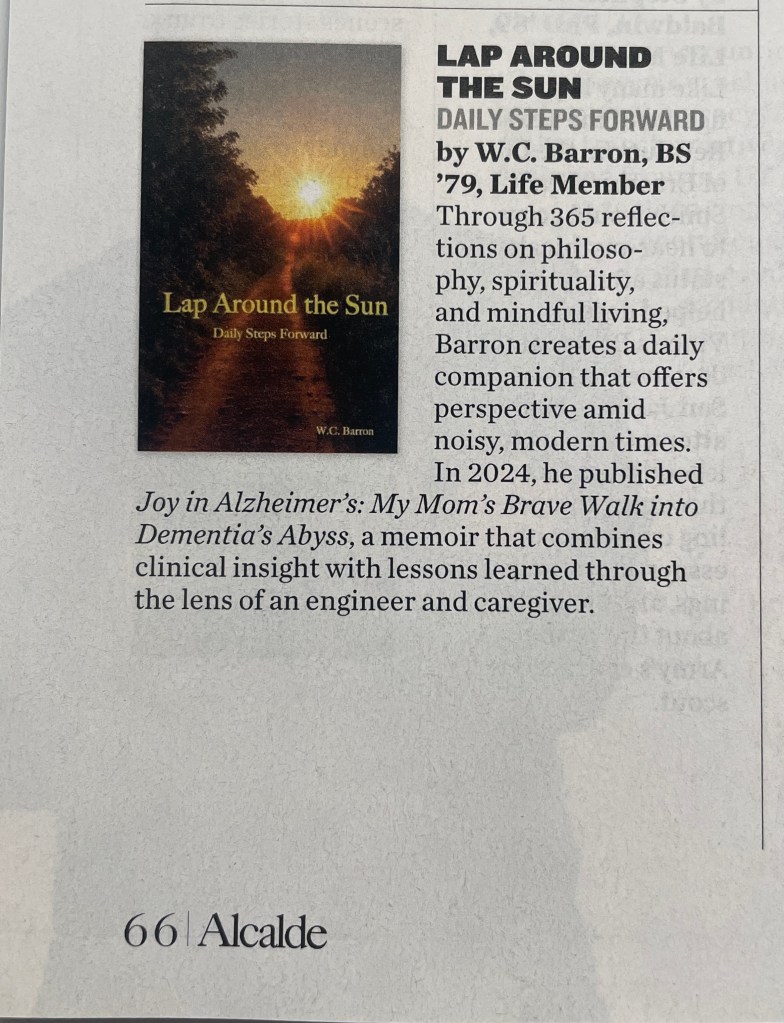
Lap Around the Sun: Daily Steps Forward
by WCBarron

Buy at Amazon Buy at Barnes & Noble Buy at Books2Read

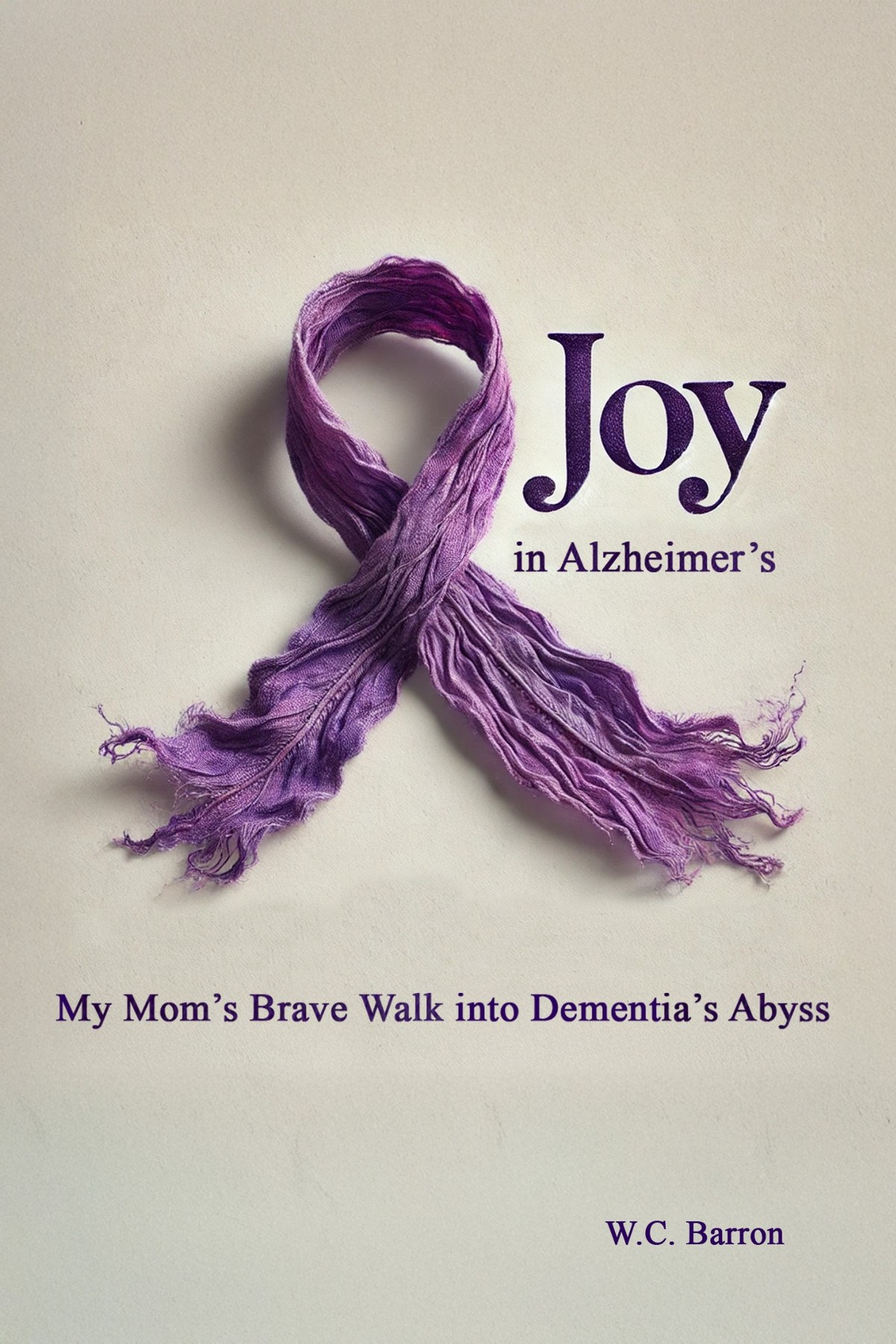
Joy in Alzheimer’s: My Mom’s Brave Walk into Dementia’s Abyss
by WCBarron

Buy at Amazon Buy at Barnes & Noble Buy at Books2Read
Posted in NeverFeartheDream

Never Fear The Dream…

The purest form of love is giving attention; the simplest form is listening. 26.06.05

.. -. … …. .- .-.. .-.. .- ….

Posted in Communication

Acceptance Begins at the Edge of Discomfort

If you want a hard truth heard, do not force it down a tribe’s throat. Put it at the edge of discomfort: enough to unsettle, not enough to trigger denial.

That is the persuasion problem of our age. People do not reject hard truths mainly because they are stupid. They reject them because identity is a jealous god. Push too hard, and the mind stops weighing evidence and starts defending the tribe. The goal is not to shrink the truth. It is to keep it alive long enough to be considered.

America today is tribally polarized. Roles harden. Citizens become partisans, partisans become enforcers, and institutions become stages for moral theater. Once people put on the uniform—left, right, patriot, victim, savior—they begin protecting the costume more than the country. That is when perception narrows. People stop seeing what is there and see only what their side allows and encourages.

Assumptions are now doing the thinking for us. We assume motive, assign malice, infer treason, and skip the harder question: are we defending truth or just our people, our tribemates? A culture built on bad assumptions is easy to manipulate because it is forever reacting to ghosts of its own making.

Politicians understand this perfectly. Their dilemma is simple: outrage pays better than honesty. The incentives reward escalation, not recognition. So they sell salvation by tribe. Every movement gets its redeemer, every grievance its gospel, every rival its devil. Once politics becomes a theology, evidence no longer persuades. It offends.

It is a patriotic act of citizenship to confront flag-wrapped deceit. It is betrayal to protect the propaganda because it flatters your side. Tribes rarely change when they are merely condemned. They change when they realize they have been used and duped. When loyalty and trust have been exploited and promises broken.

Credibility is the fulcrum. Not charisma. Not certainty. Not volume, but credibility. If the messenger is fair, restrained, and willing to judge friend and foe by the same standard, hard truths stand a chance. Without that, even truth sounds like contrived spin.

Perhaps the first duty of persuasion is not accusation but calibration: how do we tell people what they do not want to hear without pushing them so far into defensiveness that they cannot hear at all?  NeverFearTheDream   simplebender.com

.-. ..- – …. / .. -. / … — .- .-.. .-.. / -.. — … . …


Lap Around the Sun: Daily Steps Forward
by WCBarron

Buy at Amazon Buy at Barnes & Noble Buy at Books2Read

Joy in Alzheimer’s: My Mom’s Brave Walk into Dementia’s Abyss
by WCBarron

Buy at Amazon Buy at Barnes & Noble Buy at Books2Read
Posted in Philosophy

Peace without Freedom: A Broken Covenant

Can’t have one without the other….

Freedom and peace are often treated as separate goods, as if one belongs to politics and the other to the soul. They are not separate. They are symbiotic. Without freedom, peace becomes submission. Without peace, freedom becomes a perpetual struggle for breath.

The mistake many states, movements, and even neighborhoods make is assuming that peace can be imposed by force. It cannot, at least not for long. Silence is not peace. Order is not peace. The absence of visible conflict is not peace; it is grievance-driven underground. People who believe their liberties have been diminished, ignored, or confiscated rarely accept that condition as final. They endure it, absorb it, disguise it, and eventually resist it. The smoldering ember remains, ready to flash into flame at the slightest gust.

But freedom alone is not enough. Freedom without restraint or mutual obligation becomes disorder, and disorder is the graveyard of peace. A society that insists on unlimited personal freedom soon creates a condition in which no one feels secure. And insecurity invites control and intervention. That is the old cycle: fear breeds coercion, coercion breeds resentment, resentment ignites conflict, and conflict destroys peace.

The only durable balance is consent and compromise. People will accept limits when those limits are shared, lawful, and transparent, and when they are accepted as the price of living together. They will not accept them when they are imposed by force, hypocrisy, or elite exemption. Peace built on consent can endure. Peace built on confiscation is only a ceasefire with better public relations.

The hard truth is this: freedoms voluntarily surrendered for common life may preserve peace; freedoms taken away in the name of peace usually poison it. The real question is not whether societies can have order without liberty, but whether peace can survive where freedom no longer exists.  NeverFearTheDream   simplebender.com

.-. . … .–. . -.-. –


Lap Around the Sun: Daily Steps Forward
by WCBarron

Buy at Amazon Buy at Barnes & Noble Buy at Books2Read

Joy in Alzheimer’s: My Mom’s Brave Walk into Dementia’s Abyss
by WCBarron

Buy at Amazon Buy at Barnes & Noble Buy at Books2Read
Posted in NeverFeartheDream

Never Fear The Dream…

Curiosity, doubt, and questioning are signs of a vibrant mind—acceptance without them signals that your mind has died, and your spirit will follow, leaving you merely a vessel, a toy for someone else’s use. 26.06.01

-.-. ..- .-. .. — … – .. -.–

Posted in Philosophy

Promises Don’t Pay the Bills

Promises don’t do much. Action does.

Every day, people, institutions, and governments make promises. We make them to others and to ourselves. But promises are hollow until backed by something tangible. A bell is hollow, too, but it makes no sound until someone strikes it. The bell is potential. The strike is proof. So it is with promises.

We are buried in them.

There are financial promises. Politicians promise lower costs, higher wages, and prosperity just over the next hill. Employers promise loyalty until the quarterly numbers disappoint. Contracts promise fairness right up to the moment one side decides the fine print matters more than the spirit.

There are civic and public-policy promises. Protect the safety net, cut taxes, improve schools, enforce the law equally, and restore trust. But how often are these promises used to manipulate or distract? Clarifying this helps readers recognize when promises are genuine and when they are empty words.

Then come the personal promises, those daily little monuments to human self-delusion. Promises to spouses, friends, family, and, especially, ourselves. I’ll do better. I’ll start tomorrow. I’ll be there. I’ll change. Of course you will.

The hard truth is simple: promises are cheap in speech and costly in practice. Contracts become “just words on paper.” International agreements are twisted, ignored, or discarded with astonishing ease. Personal commitments are even easier to betray because the excuse-maker and the offender inhabit the same skin. Actions, however, reveal true integrity.

This is where character, credibility, and policy are revealed: not in the promise, but in what follows. Failure to act tells you one thing. Follow-through reveals true character and commitment. So watch closely. Listen carefully. Ignore the rebranding, the rephrasing, the rehearsed sincerity, and the endless re-promising.

Watch for the strike, listen for the bell, not the promise of sound.

But yes, “I’ll love you in the morning,” “the check is in the mail,” and “you’ll get tired of winning so much,” I promise. NeverFearTheDream   simplebender.com

.–. .-. — — .. … .


Lap Around the Sun: Daily Steps Forward
by WCBarron

Buy at Amazon Buy at Barnes & Noble Buy at Books2Read

Joy in Alzheimer’s: My Mom’s Brave Walk into Dementia’s Abyss
by WCBarron

Buy at Amazon Buy at Barnes & Noble Buy at Books2Read
Posted in NeverFeartheDream

Never Fear The Dream…

Sometimes all we need is a touch of a hand, a glance of an eye, or even a soft, caring word to keep going. 26.05.07

.- .-.. …. .- — -.. ..- .-.. .. .-.. .-.. .- ….

Posted in NeverFeartheDream

Never Fear The Dream…

Value your own thoughts as much as, or more than, others’, but not excessively. Your inner thoughts are also a breeding ground for self-deceit and delusion. Strive for silent awareness of yourself and your surroundings. 26.05.07

.–. .-. — — .. … .

Posted in Political

The Risk of Confessional Rule

The Slow Drift from Equal Citizenship to Preferred Creed

Public religion isn’t a threat to a constitutional representative republic, but the slow shift of any faith into an unofficial civic requirement for belonging, legitimacy, and governance definitely is. America was intentionally founded in opposition to England’s older pattern, in which the Crown was part of an established church and public life often depended on religious preferences, exclusions, and tests. The American break wasn’t a rejection of faith; it was a rejection of confessional hierarchy as the basis of national power. That’s why Article VI prohibits religious tests for office and why the First Amendment bans religious establishment while protecting free exercise. It’s also why there’s a separation between church and state.

Societies rarely move suddenly toward a confessional order just because people become more devout. Instead, they reach that point through fear, division, and state-building. When trust is low and division runs deep, rulers, rather than leaders, rely on the strongest available organizing principle. Religion is appealing because it already includes law, moral authority, institutions, schools, literacy networks, courts, and elite brokers. Historians of confessionalization have long linked these religious structures to early modern statehood and social discipline. When civic trust declines, creed becomes a tempting political support and a unifying force.

Religion in public life is normal. Moral arguments in politics are inevitable. Churches and believers have every right to persuade, organize, and vote. But a republic begins to deform when faith ceases to be a source of conviction and instead becomes a badge of civic rank. The moment any religion is treated as a marker of who is more truly American, more fit to govern, or more entitled to define the law, the country starts slipping away from equal citizenship and toward a softer confessional order.

That is also why small actions matter, and patterns need to be recognized. One state legally requires the Ten Commandments to be displayed in public school classrooms, while another blocks an anti-Sharia amendment because it singles out Islam for disfavored treatment. Preference on one side and fear on the other are how confessional politics normalize themselves within a constitutional order that still speaks the language of neutrality.

America is not going to become the Christian version of the Islamic Republic of Iran tomorrow, and lazy comparisons weaken the argument. Iran’s constitution clearly establishes Twelver Ja‘fari Islam as the official and unchangeable foundation of the state, and ours expressly prohibits religious preference.

We are not there yet. But confessional policies do not happen all at once. They develop through preference, symbolism, exception, and entitlement; one step at a time. If we ever decide that one faith makes a citizen more trustworthy, more representative, or more authentically American than another, then by what honest argument do we say we are still defending a constitutional republic rather than starting to join the Islamic Republic of Iran in the confessional distinctions we were meant to escape? NeverFearTheDream   simplebender.com

.- .-.. …. .- — -.. ..- .-.. .. .-.. .-.. .- ….


Lap Around the Sun: Daily Steps Forward
by WCBarron

Buy at Amazon Buy at Barnes & Noble Buy at Books2Read

Joy in Alzheimer’s: My Mom’s Brave Walk into Dementia’s Abyss
by WCBarron

Buy at Amazon Buy at Barnes & Noble Buy at Books2Read
Posted in NeverFeartheDream

Never Fear The Dream…

A key to life is accepting torments as companions and drawing strength from their difficulties—in this, there is raw power. 26.05.06

.- -.-. -.-. . .–. –