Posted in NeverFeartheDream

NeverFearTheDream…

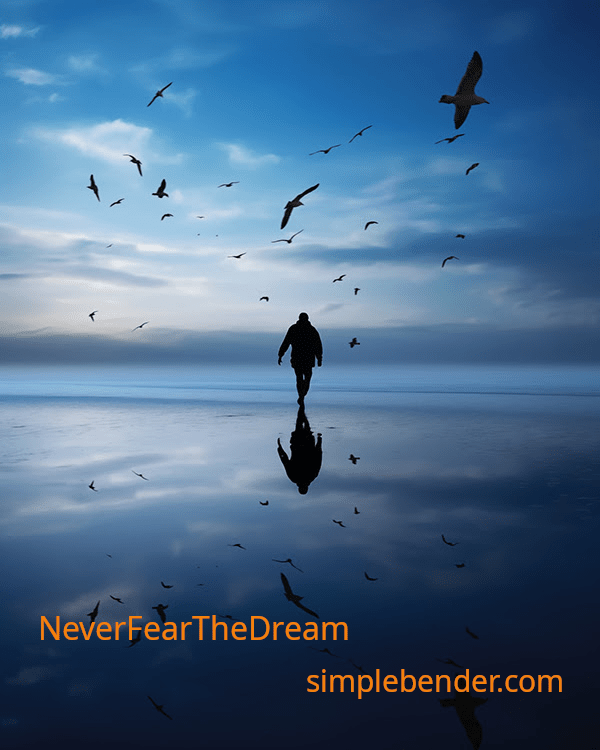
Our lives rarely follow the path our ego imagines. Accept and embrace where you are, release the burden of disappointment, and move forward, always forward. 26.09.03

NeverFearTheDream W. C. Barron simplebender.com

Posted in Keystone

Keystone Test:

Judge the Power, Not the Party

We are bracing to endure the countless ads, promises, and false narratives in the midterms. Before backing a promise, consider what authority it confers, what costs it conceals, what outcomes it promises, and whether you would trust it if roles were reversed.

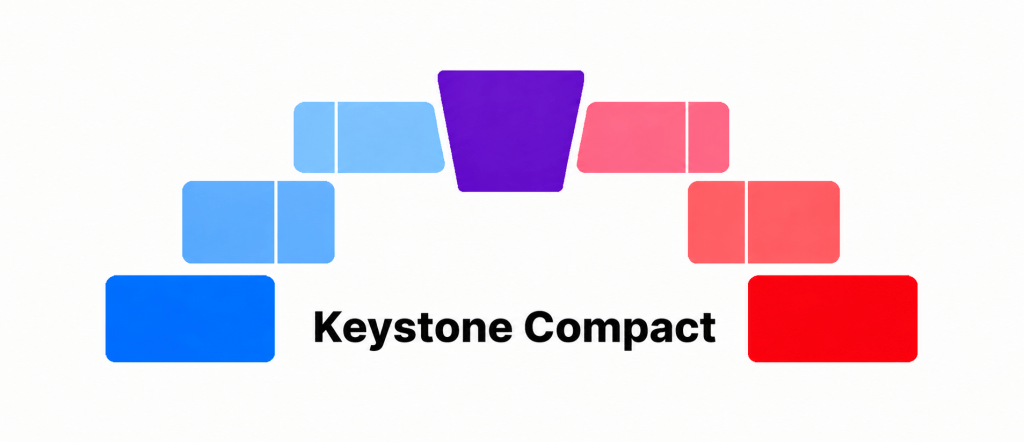
We don’t need contracts, treaties, or MOUs, which turn out to be just words on paper, signed apparently with disappearing ink. We need real commitment, a covenant, a compact. Guidelines that let us truly assess the candidates, the parties, and their platforms. Like a keystone holding an arch together, taking a critical view of all sides, not just one, and holding up from the center. The Keystone Compact is a principle that should endure changes in party, personality, beneficiary, and political fashion.

The Keystone Test is not a purity test. It is a discipline that evaluates governing principles.

Before granting authority, spending money, or surrendering liberty, ask:

  • Does it protect liberty?

Peaceful adult life belongs to the person living it. Rights must protect speech, conscience, privacy, property, bodily autonomy, lawful self-defense, due process, and equal treatment. Liberty does not excuse harm to others.

  • Does it respect constitutional limits?

Good intentions do not confer unlimited authority. Power requires a lawful basis, defined boundaries, meaningful review, and consequences for abuse.

  • Does it solve a real problem?

Identify the problem, state the intended outcome, and measure performance. A policy that cannot define success is usually crafted for applause rather than for improvement.

  • Does it avoid unnecessary coercion?

Government should use no more force, surveillance, restrictions, or bureaucracy than the problem requires. National power should not replace local action simply because it offers a louder voice.

  • Does it show the bill?

Disclose the full cost, who pays, who benefits, and what future obligation is created. Spending without pay-fors and tax cuts without spending discipline are the same form of evasion.

  • Do equal rules apply?

Rights cannot depend on identity, party affiliation, wealth, influence, or popularity. Markets should not be skewed toward donors or incumbents. Enforcement should not vary by target.

  • Does it preserve local proof?

Keep decisions close to citizens, practical, visible enough to measure, and flexible enough to correct. Local control cannot excuse violations of constitutional rights.

  • Does it strengthen capacity?

Serious policy should help people stand up and leave the country better prepared for the next disruption. It should strengthen work, family, safety, community, civic trust, reliability, and resilience.

  • Does it limit entrenchment?

Emergency powers and orders need to expire. Institutions need renewal. Districts should serve voters; courts should remain independent and not become lifetime partisan prizes; and failed policies must be removable.

  • Would we accept the same power in our opponents’ hands?

If a power seems safe only when our side controls it, it is not truly safe. If a rule is fair only when it helps our coalition, it is not truly fair.

Not every candidate will receive ten yeses. Constitutional rights sometimes require national protection. A true emergency may require temporary extraordinary action. The test requires leaders to identify and limit tradeoffs and to remain accountable.

The test is straightforward. A tax cut must be paired with spending discipline. Public safety must protect citizens and uphold due process. Immigration policy must restore the rule of law, punish criminals, respect work, and fix legal pathways. Energy policy must preserve reliability while improving measurable environmental performance. Foreign policy must define American interests, objectives, costs, and limits.

The Keystone Test will not eliminate disagreement but will make hypocrisy harder to hide. Judge the policy before the party, the power before the personality, the result before the slogan, and the bill before the accolades.

Now is the time for free citizens to stop asking whether a policy helps their tribe and to start asking whether that power deserves to survive the next election.

NeverFearTheDream………. W. C. Barron………. simplebender.com……….keystonecompact.org

-.- . -.– … – — -. . / -.-. — — .–. .- -.-. –


Lap Around the Sun: Daily Steps Forward
by WCBarron

Buy at Amazon Buy at Barnes & Noble Buy at Books2Read

Joy in Alzheimer’s: My Mom’s Brave Walk into Dementia’s Abyss
by WCBarron

Buy at Amazon Buy at Barnes & Noble Buy at Books2Read
Posted in NeverFeartheDream

NeverFearTheDream…

Existing is what your body does on its own; living is what happens when your heart and mind show up. 26.09.02

NeverFearTheDream W. C. Barron simplebender.com

Posted in Philosophy

A Republic of Appearances

W. C. Barron esse quam videri

Betrayal should hurt. It should burn a little, especially when it is a betrayal of what we once believed ourselves to be.

Somewhere along the way, we began mistaking the appearance of greatness for greatness itself. We wrapped ourselves in gilded tapestry, built elaborate spectacles, polished the veneer—and hoped no one would notice the tarnish and rust beneath. Our national buildings, institutions, and monuments have been altered, renamed, and draped in political imagery, as their historic meaning increasingly competes with the personality of the moment.

Public money, public space, and presidential attention continue flowing toward spectacle—troops in the capital, cage fights on the White House lawn, the capital’s streets converted for racing, monuments, banners, and ceremonies. The White House increasingly resembles a gilded monument to personal taste rather than the temporary residence of the republic’s leader. Meanwhile, the betrayal: citizens struggle with persistent costs and rising interest rates, the return of preventable diseases, strained global alliances, and global ego-driven conflicts, while families still struggle to build their own small version of the American dream.

Pomp is not power. Pageantry is not leadership. Personal glorification is neither national greatness nor patriotism.

The warning is hardly new. Nearly 2,500 years ago, Aeschylus drew a distinction between being and merely seeming. The Romans later distilled the idea into three enduring words:

Esse quam videri            Be rather than appear.

Something feels almost too fitting about confronting a 2,500-year-old warning as America celebrates its 250th anniversary. At ten times the age of our republic, humanity has long understood the temptation—and danger—of confusing appearance with character. 

A great nation does not need to continually proclaim its greatness. It demonstrates greatness by what it builds, whom it protects, how it governs, and whether its institutions remain larger than the people who temporarily occupy them.

Ceremony has its place. Nations need symbols, celebrations, monuments, and moments of shared pride. But spectacle becomes dangerous when it stops honoring the country and starts honoring the individual. When institutions become props, public spaces become stages, and governance becomes performance, appearance slowly supplants substance.

Perhaps ‘esse quam videri’ should become more than an old motto—a national reminder and the corrective we need.

We should strive to be the leaders, thinkers, innovators, creators, and builders we claim to be—not merely appear to be them. Bluster is a thin veil, and the world is perfectly capable of seeing through it.

We are better than a gilded façade. It is better to show the scars and the resolve behind them than to cover them with gold leaf and ceremony.

America can still put on an impressive show. The hard question is whether, at 250, we still remember or care about the difference between looking great and being great.

Understand: when you build shrines to your own glory, they share your mortality. When you build them for ideals, they endure as long as someone believes.

NeverFearTheDream   W. C. Barron   simplebender.com

. … … . / –.- ..- .- — / …- .. -.. . .-. ..


Lap Around the Sun: Daily Steps Forward
by WCBarron

Buy at Amazon Buy at Barnes & Noble Buy at Books2Read

Joy in Alzheimer’s: My Mom’s Brave Walk into Dementia’s Abyss
by WCBarron

Buy at Amazon Buy at Barnes & Noble Buy at Books2Read
Posted in NeverFeartheDream

NeverFearTheDream…

Mindfulness is the path to facing the truth as you awaken. 26.08.08

.- .-.. …. .- — -.. ..- .-.. .. .-.. .-.. .- ….

Posted in NeverFeartheDream

NeverFearTheDream…

Compassion and empathy arise when you feel connected; sympathy when you’re not. 26.08.07

…. .. -. -.-

Posted in Philosophy

Horizon’s Calm

Regardless of the calamity crashing onto the shore, the horizon always seems calm.

The headlines confronting us every day are inescapable. World events spill into ordinary life with reckless abandon. Add our own worries, obligations, and frustrations, and it becomes easy to feel that everything is happening at once—and that we control almost none of it.

So we put our heads down to focus on every step we take, and that is all we think we control.

We watch for the exposed rocks, the tidal pools, and the creeping surge of the surf. We concentrate so intently on keeping our feet dry that we miss the gulls skimming the waves, the eagles soaring overhead, the pelican’s wonderfully gangly dive, and, if we look further out, maybe, just maybe, a breaching whale.

Most of all, we miss the horizon. We don’t even look up, out of fear.

Trauma, conflict, and drama lie at our feet. Some of it is real and deserves our attention. The waves may indeed be growing larger. We should not pretend otherwise. But the closer we stand to the crashing surf, the more each wave can consume us.

Our breathing shortens. Frustration rises. Helplessness creeps in. Eventually, the thing directly in front of us begins to feel like the whole world. But it rarely is, and it rarely is as big as it appears.

Lift your head and look beyond the wave breaking at your feet. The horizon offers perspective—not because it promises everything will be fine, but because it reminds us that this moment, however difficult, is only part of a much larger landscape.

Today matters. What is crashing around us matters. But neither is everything.

That doesn’t mean ignoring the surf. Brace for what may come. Watch for the sneaker wave. Step back when wisdom and experience tell you to. Deal with the rocks beneath your feet. But we do not have to fight every wave or avoid every stone.

Perhaps calm begins with remembering the difference between what demands our focused attention and what deserves our entire field of vision. The shore may be chaotic, noisy, even frightening. So look up. Look beyond the breaking waves and see that the horizon remains calm; so should we.

Look up Horizon

Calamitous shore waves break

Horizon placid

NeverFearTheDream…W. C. Barron…simplebender.com

.-.. — — -.- / ..- .–. / …. — .-. .. –.. — -.


Lap Around the Sun: Daily Steps Forward
by WCBarron

Buy at Amazon Buy at Barnes & Noble Buy at Books2Read

Joy in Alzheimer’s: My Mom’s Brave Walk into Dementia’s Abyss
by WCBarron

Buy at Amazon Buy at Barnes & Noble Buy at Books2Read
Posted in NeverFeartheDream

NeverFearTheDream…

Recognize and respect those who are trying to rid themselves of lies and lying, whether of their own creation or recitation. 26.08.06

… – .- -. -.. / ..-. — .-. / – .-. ..- – ….

Posted in NeverFeartheDream

NeverFearTheDream…

What never changes is that everything does. Once you accept that, life becomes less threatening and more adventurous. 26.08.05

.- -.-. -.-. . .–. –

Posted in Philosophy

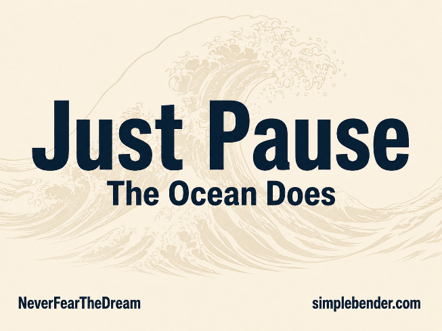
Wisdom In The Pause

The pause isn’t empty time; it’s where life prepares for what comes next, before regret.

Nature rarely operates in a continuous state. It oscillates. It moves, rests, gathers itself, then moves again. Between action and reaction lies a quiet transition—a pause. Perhaps there is wisdom in that rhythm. Perhaps we should make room for our own rhythm; our own pause.

The ocean offers one of nature’s clearest examples. Between high and low tide, slack water occurs, and the currents grow remarkably still before reversing direction. Even waves pause for the briefest instant at their crest before surrendering to gravity and reforming into something new.

The heavens follow their own pattern. Twilight gently separates day from night, and dawn does the same for night and day. The moon seems to linger near its full and new phases before its changing face becomes obvious again. A pendulum momentarily stops at the top of each swing as kinetic energy yields to potential energy, then begins its return.

Our own bodies follow the same cadence. There is a pause between each inhalation and exhalation. At rest, the heart spends more time relaxing and filling than contracting. We interrupt our vision thousands of times each day with a blink. Even the neurons that carry our thoughts require refractory periods before they can fire again.

These pauses are not interruptions; they are intentional.

Movement creates change. Pause provides definition. Without slack water, the transition between ebb and flood would be abrupt. Without the brief pause between breaths, breathing would be impossible. Without diastole, the heart could never refill, and life’s most dependable pump would fail.

Nature seems to grasp something we often resist: sustained effort is rarely sustainable. Yet we celebrate constant activity. We answer emails at dinner, fill every silence with noise, and wear exhaustion almost like a badge of honor. We confuse motion with progress and busyness with purpose. In doing so, we often sacrifice the very moments that allow us to think clearly.

Nature has endured billions of years by embracing rhythms rather than resisting them. Perhaps our greatest wisdom lies in knowing when to pause long enough to choose our next step wisely. The next time conflict arises, pause before responding. When someone finishes speaking, let a moment of silence honor both their words and your understanding of them. Pause before changing course, and before refusing to change course.

The pause is where reflection lives. It is where emotion settles enough for reason to catch up. It is where we discover whether the path we’re on still aligns with the one we intended to follow. Decisions made after a thoughtful pause are rarely perfect, but they are often wiser than those made in perpetual motion. Pausa et Reflecte…Pause and Reflect…Before Regret.  Embrace a pause; no time to rush.  NeverFearTheDream  simplebender.com

.–. .- … ..- … .- / . – / .-. . ..-. .-.. . -.-. – .


Lap Around the Sun: Daily Steps Forward
by WCBarron

Buy at Amazon Buy at Barnes & Noble Buy at Books2Read

Joy in Alzheimer’s: My Mom’s Brave Walk into Dementia’s Abyss
by WCBarron

Buy at Amazon Buy at Barnes & Noble Buy at Books2Read