Posted in Current Events

Who Lit the Fuse

Rejection of Western Supremacy: Defending Strategic Sovereignty
Perspective is everything… There is always another viewpoint to consider…not to agree or disagree with but to appreciate and understand…

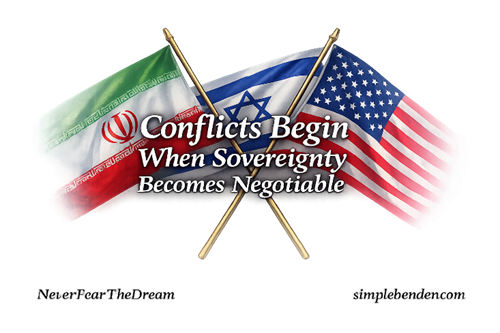
The current U.S.–Israel conflict with Iran began decades ago, through memory, humiliation, and contested sovereignty. Conflicts rarely begin with weapons. They begin when one nation decides another’s sovereignty is negotiable.

In the Iranian narrative, the creation of Israel in 1948 was not just the forced seizure of land and the establishment of a state. It was the implantation of a Western-supported political project into the heart of the Muslim world, leading to displacement, repeated wars, and ongoing territorial disputes.[1] For many throughout the region—including Iran, especially after the 1979 Islamic Revolution—the Palestinian cause became more than a geopolitical issue. It turned into a moral test of the Islamic world’s resolve and dignity. Legal disputes over occupation, settlements, and borders only strengthened that perception.[2]

Iran’s distrust of Western intentions hardened long before any nuclear ambition. In 1953, the U.S. and Britain supported the coup to overthrow Prime Minister Mohammad Mossadegh after he nationalized Iranian oil[3], just as Venezuela did. That intervention left a lasting mark, a generational memory. To the revolutionaries who later overthrew the Shah in 1979, it showed that Iranian sovereignty could be compromised whenever it conflicted with Western strategic interests.

The Shah’s brutal rule, especially during the student protests starting in 1978, was seen by many Iranians not as partnership but as alignment with foreign powers—security cooperation, oil coordination, and intelligence sharing that seemed to serve Washington’s Cold War agenda more than the interests of Iranian citizens.[3] When the Islamic Republic emerged, its ideology combined Shia political theology with anti-imperialist resistance and rejection of the Shah’s authoritarian rule. Independence was raised from a political choice to something more like a sacred duty.

The 1979 humiliating seizure of the U.S. Embassy in Tehran was viewed, by the West, as an act of lawlessness; in Tehran, it was justified as a preemptive move to prevent recurring foreign intervention.[4] The resulting hostage crisis and humiliating failed rescue attempt solidified a rift that has defined U.S.–Iran hostility ever since.[4][5]

Against this background, Iran’s nuclear program is often presented as a form of deterrence rather than aggression—especially in a region where Israel is widely believed to possess nuclear weapons under a policy of deliberate ambiguity.[6] Surrounded by U.S. military presence and regional instability, Iranian leaders argue, as do North Korea’s, that vulnerability invites intervention. Deterrence, in this context, acts as insurance, just as nuclear stockpiles do for the U.S. and Russia under the logic of mutually assured destruction.

From this perspective, what outsiders call escalation can seem like a form of strategic self-preservation. Iran’s stated goal is peaceful coexistence with neighbors—preferring trade over siege and recognition over tutelage—while staying prepared for perceived threats. Whether one accepts that framing or not, it is based on a simple idea: sovereignty needs the ability to defend itself, even as other regional sovereigns have been indiscriminately assaulted, Iran has acted with strategic patience.

This conflict is often mistakenly seen as religious because it lacks any clear reason, and adding a religious angle is the last tactic to ignite passions and gain support. In reality, the main issues are more geopolitical. Israel maintains strong ties with Muslim countries, and Iran works with non-Muslim allies when their interests align. Labeling this as a religious crusade greatly raises the chance of the conflict spreading worldwide. While religion fuels rhetoric, sovereignty shapes actions.

Remove the slogans and caricatures. They serve as rallying cries for the faithful. “Death to America” shares the same insecure roots and purpose as “fight like hell” and “axis of evil,” making the conflict easier to understand: a regional power seeking independence from a global power that wants to influence or control. Tensions have escalated over decades through intervention, oversight, resistance, mutual suspicion, secret negotiations, and arms deals.

To be very clear, the killing and abuse of protesters should never be normalized, anywhere and at any time; not during the Shah’s monarchy or under the Ayatollah. The depravity of the theological regime should not be downplayed. However, these are not external issues to solve. Western agents have been doing that for too long without any lasting change. The Iranian people chose an Islamic Republic; they can choose to change it; they have done so before and will do so again.

Empires remember insults; nations remember humiliation; and people endure suffering. Both memories tend to outlast treaties. This is another unfortunate, avoidable skirmish in a world on fire; a fire fueled by ego. NeverFearTheDream simplebender.com


Lap Around the Sun: Daily Steps Forward
by WCBarron

Buy at Amazon Buy at Barnes & Noble Buy at Books2Read

Joy in Alzheimer’s: My Mom’s Brave Walk into Dementia’s Abyss
by WCBarron

Buy at Amazon Buy at Barnes & Noble Buy at Books2Read

Footnotes

[1] Encyclopedia Britannica, “Arab–Israeli Wars” and “Palestine” entries (overview of the 1948 war and its aftermath).
[2] International Court of Justice, Legal Consequences of the Construction of a Wall in the Occupied Palestinian Territory (Advisory Opinion, 9 July 2004).
[3] Encyclopedia Britannica, “1953 Coup in Iran” (Operation Ajax; U.S./UK involvement and consequences).
[4] Encyclopedia Britannica, “Iran Hostage Crisis” (1979–1981; diplomatic rupture).
[5] U.S. Department of State, Office of the Historian, “The Iranian Hostage Crisis.”
[6] Federation of American Scientists, global nuclear stockpile assessments referencing Israel’s undeclared nuclear capability.

Posted in Current Events

Paradox of Power and Terror

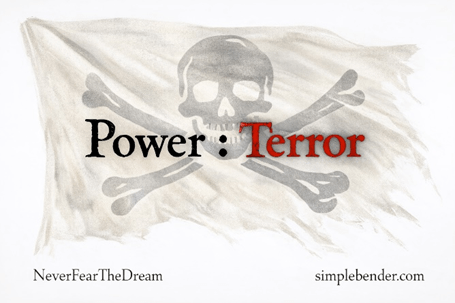
You can’t eliminate terrorist threats by becoming one. You only demonstrate that terror works.

A superpower doesn’t need to win an argument; it only needs to win the moment. And lately, the United States looks less like a restraining force and more like a superpower increasingly willing to use terror’s tools—fear, coercion, and unilateral force—then call the wreckage “security.”

Consider the new precedent we’re showing the world. On the last day of February, U.S. and Israeli strikes on Iran assassinate Iran’s Supreme Leader, Ayatollah Ali Khamenei. This act would have been unthinkable inside the “rules-based order” we demand others respect. When the strongest country on earth normalizes decapitation-by-airstrike, every aspiring strongman learns the lesson: power can replace legitimacy.

Then there’s Venezuela. In early January, U.S. forces invaded and forcefully apprehended President Nicolás Maduro—Washington’s most direct intervention in Latin America in decades. The invasion wasn’t about drugs or oil, but ego. The operation immediately spun the story of necessary law enforcement. But it’s also a template: if we can seize a head of state, others can too.

We used to be the protector of the seas, but now U.S. authorities seize tankers carrying Venezuelan crude and seek forfeiture of millions of barrels, arguing sanctions evasion and links to hostile actors. The message isn’t subtle: “international waters” don’t protect you if you are smaller and weaker, and we decide you’re sanctioned. From protector to pirate.

And coercion isn’t only military. It’s economic. Tariffs, threatened and applied as leverage, even against allies, turn trade into a cudgel. Our regime calls it bargaining, but the targets call it bullying, extortion, and coercion. Either way, it trains the world to treat commerce as warfare by other means.

The contradiction doesn’t stop at the shoreline. When immigration enforcement becomes a national spectacle, dissent gets pulled into the machinery. Amid protests of warrantless immigration detentions, Americans have been imprisoned and killed. Those deaths don’t prove a grand conspiracy; it proves something quieter: when government and protest meet in a fog of fear, people die—and everyone hardens. Terrorism isn’t only foreign. It is domestic, too—not just in bombs, but in the slow conditioning of a public: say less, vote less, protest less, comply more.

If we want the world to reject terror’s logic, we have to stop promoting and exemplifying it. By our actions, we have given Russia moral grounds to press their invasion of Ukraine, and China the justification to embargo and invade Taiwan. What we once did covertly we now do overtly; and shouldn’t be shocked when other countries do the same. We were once admired and known as the protectors of the aggrieved, the helpers of the weak. Now we are the aggressor nation. From savior to storm-trooper. Maybe we should replicate the ‘change’ at home before our national memory forgets the difference between domination and freedom.    NeverFearTheDream   simplebender.com

A nation that uses threats, fear, and terror can never be great; never.

… – .- -. -.. / ..-. — .-. / – .-. ..- – ….


Lap Around the Sun: Daily Steps Forward
by WCBarron

Buy at Amazon Buy at Barnes & Noble Buy at Books2Read

Joy in Alzheimer’s: My Mom’s Brave Walk into Dementia’s Abyss
by WCBarron

Buy at Amazon Buy at Barnes & Noble Buy at Books2Read
Posted in NeverFeartheDream

Never Fear The Dream…

Why are so many with full loaves so begrudging of those who have a slice? 26.03.2.1

Posted in Philosophy

Choice, Chance, Change

It’s easy to fall into a routine—a pattern, a path, a simple rut. After a while, it can feel like being a snake in a wagon-track after rain: pressed into the groove, unable to see a clean way out. Stuck. Destined to follow the track wherever it leads.

But remember, you helped get yourself into it, and you can help get yourself out. The way out begins with choice, then a chance, then change. Even when a situation feels unsolvable or risky, you can still act—if only to begin the process. Yes, many parts of life are socially or professionally controlled. Even inside those boundaries, there are choices—subtle ones, small ones, but choices, nonetheless. The point is to exercise them.

Every choice has consequences. That is not a reason to freeze; it is a reason to brace. The choices and chances do not have to be big, bodacious gestures. Small, incremental shifts can be deeply significant. Change often starts there: deciding you want it, choosing toward it, and accepting the chance that comes with each step.

You don’t have to wait for a grand opening, a sign, or even the perfect plan. You need to make a choice and follow through — today. Even a small pivot can change your life’s course. Many of us like the phrase  ‘turning over a new leaf’ because it is clean and peaceful. In practice, it is usually more complicated than the phrase suggests—longer-term, sometimes riskier. Still, the principle holds: be willing to turn the leaf and look for something new. Yes, there may be thorns. That comes with reaching. Sometimes the only way to discover is to try.

And if you think you’ve already turned every leaf in your effort to change, wait for spring. There will be a whole forest again—even the trees in your own yard will leaf out—offering a fresh crop of leaves to turn; nature is annoyingly generous that way. Take a deep breath and just start turning.  NeverFearTheDream     simplebender.com

– ..- .-. -. / – …. . / -.. .- — -. / .-.. . .- ..-.


Lap Around the Sun: Daily Steps Forward
by WCBarron

Buy at Amazon Buy at Barnes & Noble Buy at Books2Read

Joy in Alzheimer’s: My Mom’s Brave Walk into Dementia’s Abyss
by WCBarron

Buy at Amazon Buy at Barnes & Noble Buy at Books2Read

Posted in NeverFeartheDream

Never Fear The Dream…

Love and compassion shouldn’t be transactional events. You either love and care, or you don’t, and you’re in a negotiation. 26.03.01

Posted in Philosophy

Peace Isn’t a Transaction

True peace involves transparency and lasting stability, not just temporary agreements that leave underlying issues unresolved.

Peace usually arrives in one of two ways: the combatants decide they’ve had enough, or one side is crushed. When the cost of continuing exceeds the cost of stopping, both parties yield—grudgingly—and accept a compromise. It’s rarely elegant. More often, it’s a deal both sides dislike, but it’s better than attending the next round of funerals.

Mediators can help when they are genuinely independent: attentive to each side’s fears, aims, and non-negotiables, and skilled at translating rage into terms that can be signed. A good mediator doesn’t erase the chasm; they build a narrow, temporary bridge and keep traffic moving long enough for a fragile truce to harden into something closer to peace.

But when the mediator wants something out of the game, the process shifts. Influence becomes leverage. The negotiation stops being about stabilizing a region and starts being about capturing value. Quiet “side letters” and backchannel commitments on resources, arms, protection, exclusive access to markets, manufacturing, or intellectual property tilt the table before the first public handshake. The parties are no longer bargaining over borders or security alone; they’re trading away remaining national assets and future autonomy to a broker whose primary loyalty is to their own gain.

That doesn’t produce peace. It produces a transactional truce: temporary, brittle, and designed to be violated and renegotiated. One side will test it, and the other will retaliate. Both will rearm. Both will reposition, and each will be desperately trying to win the mediator’s favor for the inevitable next round.

And the cold-eyed, self-impressed mediator will call it “progress,” label it “strategy,” and shop for new pressure points. This is not mediation; it is profiteering, prolonging pain for profit. An oversized, bombastic arms dealer in a tailored suit, prolonging the pain until the spoils are secured. Always boasting of skills that don’t exist, promising ridiculous timeframes, and fleecing the dying for the privilege of false hope.

The irony is hard to miss: if the combatants ever compared notes, exposed the hidden terms, and refused to be monetized, they might discover a common enemy—not across the front line but behind the curtain: the amoral mediator profiting from perpetual instability. NeverFearTheDream    simplebender.com

..— ….. – …. / ….- –… – ….


Lap Around the Sun: Daily Steps Forward
by WCBarron

Buy at Amazon Buy at Barnes & Noble Buy at Books2Read

Joy in Alzheimer’s: My Mom’s Brave Walk into Dementia’s Abyss
by WCBarron

Buy at Amazon Buy at Barnes & Noble Buy at Books2Read

Posted in NeverFeartheDream

Never Fear The Dream…

Self-deception is self-deprivation—denying yourself the truth denies you growth. 26.02.08


Lap Around the Sun: Daily Steps Forward
by WCBarron

Buy at Amazon Buy at Barnes & Noble Buy at Books2Read

Joy in Alzheimer’s: My Mom’s Brave Walk into Dementia’s Abyss
by WCBarron

Buy at Amazon Buy at Barnes & Noble Buy at Books2Read
Posted in NeverFeartheDream

Never Fear The Dream…

From the moment we are born, we begin our journey on the path of mortality—embrace every step, every moment—for no one knows the length of their life’s road. 26.02.07


Lap Around the Sun: Daily Steps Forward
by WCBarron

Buy at Amazon Buy at Barnes & Noble Buy at Books2Read

Joy in Alzheimer’s: My Mom’s Brave Walk into Dementia’s Abyss
by WCBarron

Buy at Amazon Buy at Barnes & Noble Buy at Books2Read
Posted in NeverFeartheDream

Never Fear The Dream…

Choose to lead by uplifting, with a calm hand, not by fear, intimidation, or revenge. Leaders choosing the first probably care about all; the latter care only about themselves. 26.02.06


Lap Around the Sun: Daily Steps Forward
by WCBarron

Buy at Amazon Buy at Barnes & Noble Buy at Books2Read

Joy in Alzheimer’s: My Mom’s Brave Walk into Dementia’s Abyss
by WCBarron

Buy at Amazon Buy at Barnes & Noble Buy at Books2Read
Posted in Philosophy

Two Ends, One Arc, One Humanity

Two unique ends joined together in beauty...

We stand in awe at the wonder of a rainbow, where two ends seemingly anchored move with your motion. Two ends unite in a seamless band of color that reflects our shared human experience. The same unifying bands remind us that despite our differences, we are connected through the same light, the same colors, the same humanity.

Christian Lent begins in one sanctuary with penance: remember your mortality and The Sacrifice. Islamic Ramadan begins in another realm with a whispered intention: remember your dependence. Different rituals: yet, both trace back to the same broad spiritual lineage—Abraham. Fasting, repentance, charity, and self-denial are shared practices rooted in this common heritage. They are carried forward in both Islam and Christianity, illustrating our interconnected spiritual traditions.

Between those ends stretches the rainbow’s spectrum — red to violet, each band distinct, each shade necessary. The beauty is not in uniformity but in ordered diversity. Every band retains its identity while belonging to and building something larger.

Bias is what happens when we insist that only our perspective is right. When we claim ownership of the light and forget that our perceptions are shaped by perspective, we neglect the reality that shared understanding and compassion define humanity.

Fasting under a church steeple or a mosque minaret confronts the same human experience and encourages acceptance and understanding. The rainbow does not advocate for which end is the original or correct. It simply refracts what already exists, the light that we all are.

Unity is not sameness. It is recognition and acceptance. For the rainbow to exist, there must be interaction between sky and earth, sun and rain, and yet we can stand on different ground and share the same light, fostering openness and clarity.

When bias dissolves, what remains is not a blurred identity but a clearer vision of our interconnectedness. We realize that the bonds we share are not forced but natural, like the spectrum of a rainbow that was always one phenomenon, reflecting the unity inherent in our diversity.

Two unique ends. Shared colors. Common light. Humanity does not need to merge to be united. It only needs the clarity to see the arc. NeverFearTheDream   simplebender.com

. –. . .- -.-. . / … …. .- .-.. — — / … .- .-.. .- .- —

On Wednesday, February 18, 2026, Christians enter Lent and Muslims begin their first full fast of Ramadan. Ramadan and Lent align closely in 2026 and overlap meaningfully in 2027, a convergence that recurs roughly every 33 years, next appearing around 2059–2061. Ramadan follows a purely lunar calendar, while Lent follows a solar-lunar calculation tied to Easter; their seasons of sacrifice and faith overlap only when the drifting Islamic year aligns with the Christian liturgical cycle—an intersection that occurs roughly once every 33 years and can last several consecutive years before separating again.


Lap Around the Sun: Daily Steps Forward
by WCBarron

Buy at Amazon Buy at Barnes & Noble Buy at Books2Read

Joy in Alzheimer’s: My Mom’s Brave Walk into Dementia’s Abyss
by WCBarron

Buy at Amazon Buy at Barnes & Noble Buy at Books2Read