Posted in Keystone

America Does Not Need Another Tribe

CATEGORY I: FOUNDATIONAL PHILOSOPHY  |  TOPIC 1 OF 4  |  WHY THIS MOVEMENT EXISTS
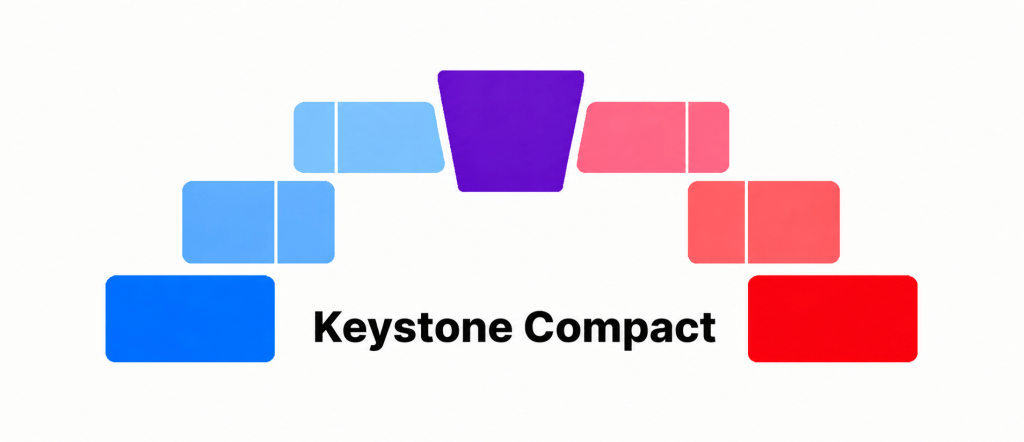
Keystone holds competing forces in position by compression....

The country does not need another political identity. It needs more citizens willing to keep ownership of their judgment

America has no shortage of political tribes. We have colors, slogans, hats, hashtags, enemies, approved grievances, and a daily supply of reasons to be furious. Belonging is not the problem; people naturally seek community. The problem arises when belonging becomes a substitute for judgment—when the team has spoken, and contradiction must be defended. No governing philosophy can survive if citizens apply principles only to their opponents.

Many Americans no longer fit the package deals offered to them. They may believe the government should live within its means without becoming indifferent to suffering. They may support personal liberty while recognizing the need for public order, favor a secure border and workable, lawful immigration, or want reliable energy alongside environmental stewardship. They may value alliances while still asking what commitments cost and where they lead. That is not confusion. It is a refusal to outsource every judgment to a platform.

The tribal bargain is tempting because it simplifies politics. Loyalty brings moral certainty, convenient enemies, and permission to overlook one’s own side. Debt can suddenly look responsible. Executive power can become necessary. Restrictions on speech can be recast as safety, or punishment as patriotism, depending on who holds authority. The facts may be unchanged while the standard quietly shifts.

The Keystone Compact is not an effort to split the difference between the parties. Nor is it an invitation to shop selectively for whichever positions feel comfortable. The keystone in an arch works because competing forces are held in check by structure. Politically, the equivalent is a set of principles sturdy enough to withstand a change in who governs.

That standard creates discomfort on both sides. The populist right can speak of freedom while tolerating government power directed at cultural adversaries and excusing fiscal recklessness. The bureaucratic left can speak of justice while accepting the expansion of administrative control, dependency, public disorder, or decisions increasingly distant from ordinary citizens. The temptations differ, but the civic danger is similar: principles become conditional on who holds power.

Keystone begins with the citizen rather than the coalition. Free citizens are not raw material for political movements. A serious political philosophy should demand less loyalty and more responsibility: think independently, weigh trade-offs, acknowledge costs, apply standards consistently, and remain willing, and eager, to change your mind when the evidence changes.

That need is evident far from Washington. It appears in the small-business owner navigating rules written with larger institutions in mind; the retiree hearing promises while leaders avoid the arithmetic behind them; parents who want schools to teach well rather than become permanent culture-war arenas; and workers who want safe communities, honest wages, reliable power, and a functioning immigration system. These concerns do not line up neatly on a partisan checklist, nor should they.

Calling such citizens ‘moderate’ misses the point. Fiscal honesty is not a midpoint. Equal rights are not a midpoint. Constitutional restraint and competent government are not compromises between extremes. They are standards, and standards matter most when applying them is inconvenient for one’s own side.

The more useful divide, then, is not simply left versus right. It is between citizens who retain their judgment and movements that ask them to surrender it. Political parties can be useful tools, but they become poor masters when membership begins excusing contradiction.

The first Keystone question is therefore not, ‘Which side are you on?’ It is more demanding: when does loyalty stop helping you participate and start giving someone else permission to think for you?

If tribes cannot dictate our judgment, the next principle follows naturally: they cannot dictate our rights either.

Next in Category I: Rights Are Not Tribal Trophies

NeverFearTheDream………. W. C. Barron………. simplebender.com……….keystonecompact.org

-. — / -. . .– / – .-. .. -… . … / .— ..- … – / -. . .– / .. -.. . .- …


Lap Around the Sun: Daily Steps Forward
by WCBarron

Buy at Amazon Buy at Barnes & Noble Buy at Books2Read

Joy in Alzheimer’s: My Mom’s Brave Walk into Dementia’s Abyss
by WCBarron

Buy at Amazon Buy at Barnes & Noble Buy at Books2Read
Posted in NeverFeartheDream

Never Fear The Dream…

Your Dreams should be chased not feared.....
NeverFearTheDream  simplebender.com

We judge quickly and forgive slowly—yet expect the inverse from others. Regret often outweighs gratitude. 25.12.4

Joy in Alzheimer’s
W.C. Barron
Lap Around the Sun
Daily Steps Forward — W.C. Barron
Posted in NeverFeartheDream

Never Fear The Dream…

Acceptance is harder than judgment—and far better. An open mind can be filled; a closed one isn’t worth the effort. Healing hurts. So does growth. So does learning. Pain often means you’re expanding your limits. 25.09.2

For Every Problem...A Solution...
Lap Around the Sun: Daily Steps Forward
Joy in Alzheimer’s: My Mom’s Brave Walk into Dementia’s Abyss

Posted in NeverFeartheDream

Never Fear the Dream……

25.01

People are like moments in time; each one is special and unique. We should be celebrating our uniqueness rather than negatively highlighting our differences. These days of stress, conflict, divisiveness, and the addiction to immediate gratification have pushed us away from simple acceptance and toward skepticism, finding fault, and casting blame. Maybe we should reflect upon the idea that if we are judging others, they, too, are judging us. And then, just for another moment, ask why we are judging anyone at all. Like moments in time, none of us will ever be created again. There will never be anyone like any of us ever again. Start fresh each year, each day, each morning, each moment to build your future. A future built with those around you, whether you like them or not. They must do the same, even if they don’t like you.

Happy New Year

#NeverFearTheDream

Posted in Philosophy

Assessing Leadership: The Search for Quality

How do you assess a leader, or maybe just maybe even yourself? What are the qualities which make any person a good leader or a good person? For each of us the criteria for determination will vary but have similar threads. These are critical times for each of us to evaluate and assess our leaders, want-to-be leaders, and frankly ourselves. A recent Marquette Law School survey showed fifty-seven percent of us have little to no confidence in Congress*. These are our elected representatives and leaders. We should assess them differently.

Think about a few characteristics which can be used to understand if they are making progress in pursuit of being better leaders. Characteristics which we can use to figure out if there is improvement rather than feeling good or feeling satisfied. Decisions on who should be a leader should not be about good feelings, but on tangible qualities.

Ask a few simple questions, these ten might be a good start:

  • Are they criticizing anybody?
  • Are they blaming anybody?
  • Are they accusing anybody?
  • Do they react to criticism and complements the same?
  • When they face obstacles do they find solutions or find fault?
  • When wrong, are they contrite or vengeful?
  • Do they demand loyalty over honesty?
  • Do they say the ‘right things’ or do the right things?
  • Do they look toward the future or dwell on the past?
  • Do they lead through hope or fear?

These are questions we should be asking about those who want to lead. We should be asking ourselves if they are more interested in promoting themselves or our county, state, and country. Are they leaders who bring out the best in all of us, or the worst?

Interestingly, the Greek stoic philosopher Epictetus during his life (50-185 AD) routinely asked many of these questions. He asked them to assess whether he and his students were making progress simply in becoming better people. We can still use them to assess the quality of ourselves and our future leaders.

Every election is an opportunity for each of us to look at the candidates, and ourselves, and ask some hard, yet basic, questions. Elections have consequences. There will not ever be a candidate who will satisfy all of us, on every subject. But there can be candidates who have standards of decency which most of us can appreciate and support. There are those who do lead with vision and recognize to be a world leader you must be an active player in world events and not an isolationist. There are those who do not parse and spin the words and facts for their personal gain or quest to retain power. There are those. We need to find them, support them, and dispose of those who do not genuinely satisfy, at least most of, our expectations of a leader. Never fear the dream of a better political and social system. Face the issues and constructively correct deficiencies, one at a time. #NeverFearTheDream

*MLSPSC18ToplinesRV.knit (marquette.edu)

This was first published in the Bend Bulletin 3/7/24