The most enduring Awakening is gradual, not sudden. Sensing all of yourself as you gather awareness—not jolted from sleep, confused and groggy. 26.02.05
The first videos weren’t clear. They were chaotic—grainy clips, partial frames, shouting without context. But the official messaging arrived before evidence was gathered, witnesses interviewed, or a timeline stitched together, the verdict was delivered. Heroic officers. Clear self-defense. Thwarted mass terror. The dead were “deranged domestic terrorists,” and the valiant officers had barely survived and saved many.
That’s narrative warfare—not investigation.
This is the modern media playbook: speak first, speak loudly, and force everyone else to prove you wrong. Flood the zone with ‘certainty,’ half-facts, and righteous adjectives. Let supporters do the rest. If later evidence complicates the story, it won’t matter; the first impression has already been welded into identity. And if you can manufacture images, clips, or “context” with AI, you can make doubt look like proof while you stall, bury, and obscure the real record.
What makes the lie persuasive is that it rides on a few fragments of truth. A legal concealed-carry permit becomes a justification for killing. A photo of a holstered firearm becomes “brandishing.” A moment of chaos becomes “attempted assassination.” A tender snapshot of agents “helping” a frightened child becomes moral cover for whatever came before or happens after. The lifestyle of one is used to instill moral judgment and question motive. Just enough ‘truth’ to make the rest feel plausible to the true believers.
We’re told to relax. Trust the regime and its process. Wait for the facts they want to show us. The rest of the facts arrive late and edited—while the narrative sprints ahead, unchallenged and amplified by officials who treat accountability as optional.
There’s a deeper fatal wound: credibility. Bullets may have killed Renee Good and Alex Pretti, but the words that followed targeted something larger—the public’s ability to discern what is real. When institutions train citizens to doubt their eyes and distrust every correction as “spin,” they aren’t governing; they’re conditioning. They are self-serving protectionists maximizing propaganda’s bullhorn.
So we should ask, without hysteria or naiveté: Was a five-year-old used as bait or as a shield? Was Good’s death justified or convenient? Was Pretti killed because he believed in the 2nd Amendment or because zealous masked bullies lost control of themselves? If we can be pushed to accept a finished story before an investigation even begins, what else have we been trained to swallow—about elections, wars, enemies, or the files that power keeps sealed? Move along, citizen. Nothing to see here. NeverFeartheDream simplebender.com
NeverFearTheDream simplebender.comStand For Truth
Please consider following simplebender, you’re reading makes my writing more fun..…
Comments and thoughts are always welcome and feel free to re-post …..
Every person ages, though few like to admit it. We prefer the glow of our youth—when everything felt strong, certain, and inevitable—we recoil from the mirror’s reflection that tells a harsher truth. The United States is now, as an aging adult, staring down its own midlife crisis: restless, nostalgic, anxious about declining vitality, and unsure of its purpose. And like any midlife crisis, it is largely self-inflicted.
As a fledgling republic, we leaned heavily on foreign counsel and support, learning to stand upright on principles whose ink was still wet. We quarreled with the empire that birthed us, a restless adolescent convinced that independence alone equaled maturity. In our late teens, our Manifest Destiny carried us across a continent—eager, energized, and careless. We violated Indigenous sovereignty, claimed vast stretches of land, and seldom paused long enough to reflect on the cost—youth rarely do.
Then came the moment we stepped beyond our borders to confront tyranny abroad. Isolation gave way to global responsibility, and in defeating fascism, we crowned ourselves “leader of the free world.” That era—the Greatest Generation era—became our cultural mythology of peak performance. In economic terms, we hit our stride: strong, wealthy, ambitious, so confident we assumed the world wanted our model replicated everywhere.
Adulthood matured us further. We recognized injustices at home and, imperfectly, pushed to correct them. We abolished poll taxes, dismantled legal segregation, expanded civil rights, and reached for gender equality—though we famously stumbled in ratifying the ERA. Still, we dreamed big. We mapped the ocean floor and walked the lunar surface. We believed no frontier was beyond reach.
But adulthood also revealed strain. Our swagger dimmed through a string of grinding foreign conflicts where overwhelming force could not overcome local pride or nationalist resolve. Regime change efforts faltered. Confidence thinned. The armor dulled. The steps slowed. The world noticed.
Now we resemble a nation in midlife denial. We want the prowess of our youth without the discipline, unity, or sacrifice that once produced it. We have become too large, internally conflicted, and politically stiff to move with the nimble decisiveness we admire in our own past. Instead of planning the next horizon, we rummage through the attic of lost greatness and flirt with symbolic trappings of monarchy—strongman fantasies, grievance crowds, and performative nationalism. These are not signs of renewed vigor; they are early symptoms of institutional cognitive decline and are affected by it.
The irony is painful: past generations always knew our shared mission. We debated the path but rarely the direction. Today, the direction itself is disputed, diluted, or abandoned. A country without a horizon behaves like a retiree with no hobbies—restless, resentful, and tempted by delusion.
Yet midlife crises can be turning points if met with humility and long-view statesmanship. Older nations that endure do so by learning from their past without worshipping it, by building for the grandchildren rather than reconstructing their own adolescence. The future is not reclaimed by nostalgia but by vision. Let’s not just look back; let’s learn from our past, reflect on it, and use it to shape our future.
So let us do what adults do at their best: acknowledge our age, accept our limitations, but not be defined by them, and chart a path worthy of those who will inherit this place. Square our shoulders, and focus forward—not back. Our midlife crisis can be a descent or a rebirth. We choose which. Collectively, with a common focus, let’s reject the polarizing radical positions of the extreme amongst us. Let’s encourage the great masses of the middle to lead us forward toward new goals and our next horizon. Let’s remember, we are all in this together, and it’s our shared responsibility to shape the future of our nation. #NeverFearTheDrem simplebender.com
NeverFearTheDream simplebender.comStand For Truth
If you’re looking for daily thoughts and insights you will want to start the morning with:
Lap Around the Sun: Daily Steps Forward
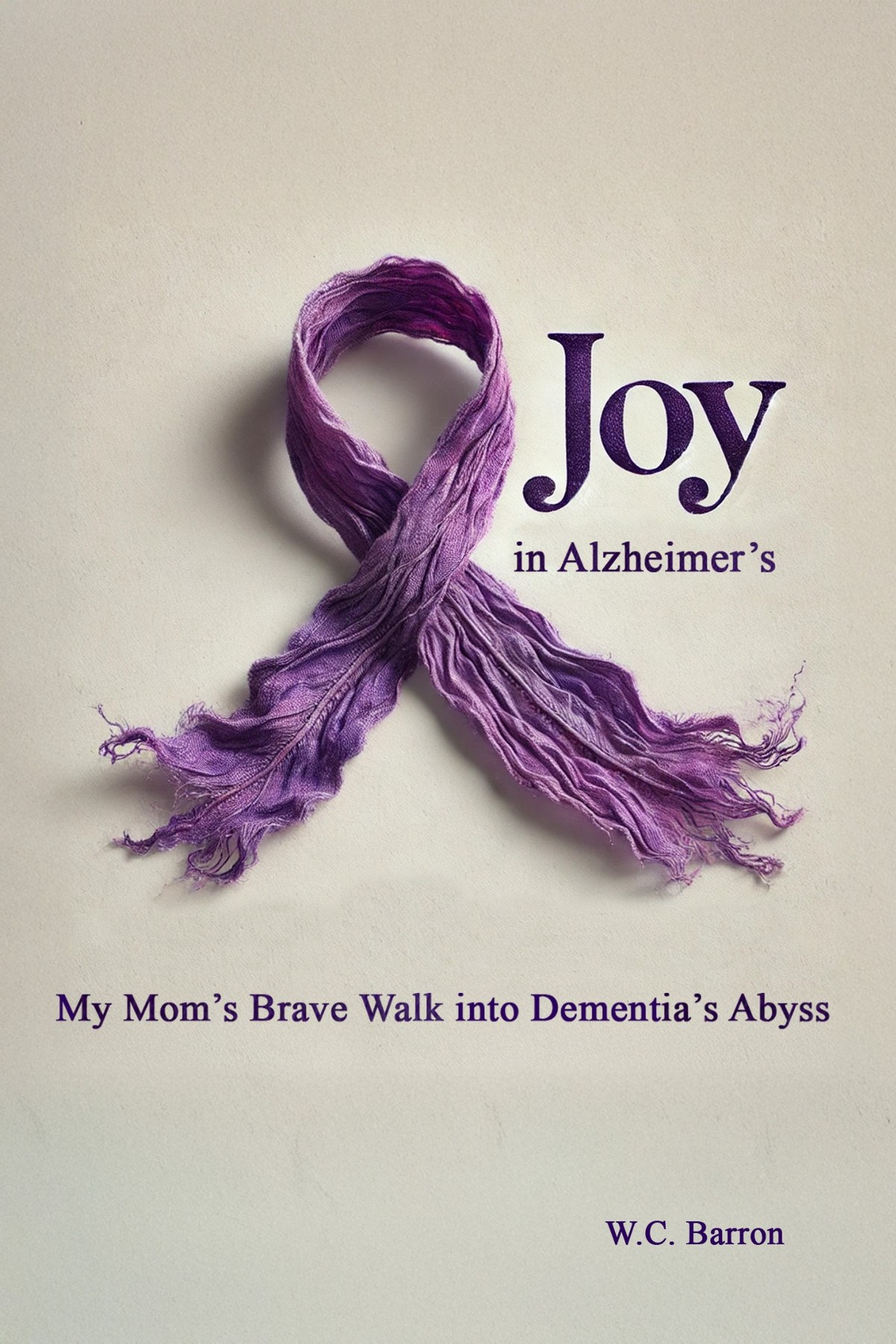
If you know someone who is facing any facet of Alzheimer’s they might gain some insight from:
Joy in Alzheimer’s: My Mom’s Brave Walk into Dementia’s Abyss
Please consider following simplebender, you’re reading makes my writing more fun..…
Comments and thoughts are always welcome and feel free to re-post …..
Our view of events is our perspective. As much as we value our experiences and hold our viewpoints in high regard, perspective differs from Truth.
Perspective is shaped by a lifetime of influences—experiences, education, training, family, friends, and the organizations we belong to. These factors color how we interpret what we see and hear. Perspectives aren’t inherently wrong—but they aren’t inherently right either. In today’s polarized, “no-gray-area” world, where nuance is often lost, this idea can be unsettling or outright rejected. Of course, my perspective is correct—what I see is what I see. But are you absolutely sure? We like to believe we wouldn’t deceive ourselves. And yet, we often do—unknowingly.
Try this: extend your arm, raise a finger, and align it with a distant object. Now close one eye, then the other. Notice how your finger shifts left or right depending on which eye is closed. Your eyes, just inches apart, see differently. So, which view is correct?
Neither. Both. That’s the point. It takes multiple viewpoints to approach the whole Truth. Without both eyes open, you lose focus and depth perception—the ability to judge distance and spatial relationships is skewed. Everything flattens into a single plane. Truth becomes distorted, even as your perspective seems perfectly valid.
Perspective is not the whole Truth. It’s a fragment of it. And if such a slight difference in viewpoint can shift what we see, imagine how much greater the distortion becomes when shaped by different life experiences, cultures, ideologies, and geographies. That’s why two people standing shoulder to shoulder can witness the same event—and come away with different interpretations.
Now consider the effect of ideology—a corrective or distorting lens we all possess. Ask yourself: Does your ideological lens help you see more clearly, or has it merely reshaped your version of the truth to make it more convenient? But the Truth is not about convenience.
If we claim to stand for Truth—and we should—that means being willing to hear perspectives beyond our own, even when they challenge us. It also means others should be willing and eager to listen to ours. Truth is not found in a single view, but in the kaleidoscope of many. No perspective is inherently more valuable or “right” than another.
We must not bury history, suppress ideas, ban books, or restrict academic inquiry. These are not acts of Truth-seeking—they are acts of fear. Instead, we should welcome diverse thought and experience in the shared pursuit of Truth.
Just know that the truth will set you free. The alternative is censored, willful ignorance—and that is not freedom. And remember, it is impossible to plan a journey by looking back and wishing to reclaim your steps. It is difficult if you’re looking down watching every step, but entirely possible if you keep both eyes open, look forward, and seek others’ perspectives.
Let’s accept that our view is ours, and we need others to fully appreciate the Truth that envelops us. Let’s plan our collective journey, appreciating where we have come from, acknowledging where we are, and setting a path to a better future.
NeverFearTheDream simplebender.com@simplebender.bsky.socialStand For Truth
It takes time for things to happen in an instant. If you cannot explain why you are doing something, what it entails, or where it will lead, it’s best to pause until you can.25.05.3
NeverFearTheDream simplebender.com@simplebender.bsky.socialStand For Truth
Everyone knows someone suffering from mental health issues, yet we’re too afraid to talk about it—and may not even know it. There are no minor mental health issues—some may be more acute than others, but all can become dangerously serious. From depression to suicidal thoughts, from dementia to delusional episodes, from feelings of worthlessness to exaggerated ego driven narcissism—mental illness surrounds us in all its variations.
This health crisis extends far beyond individuals. It impacts every family, community, and nation, yet we discuss the 725 people with measles in Texas more than the millions facing mental health challenges. Perhaps this is because measles and other infectious diseases can be controlled with vaccines and common sense. Mental health, however, remains an insidious challenge with no simple cure and few willing to discuss it.
Mental health conditions are indiscriminate in whom they affect. They’ve silently taken down elite athletes, brilliant minds, and everyday people alike. The impacts rarely make headlines but invariably stigmatize both those affected and their families. Why can we freely discuss a broken bone but not a troubled mind?
We readily discuss curable conditions because we can envision their end. While science continues making remarkable advances in physical health and immune therapy, mental health issues remain stubbornly resistant to consistent solutions, despite ongoing research. Watching someone navigate life with a physical disability can inspire us. Yet watching someone struggle with mental illness often makes us uncomfortable and frequently goes unrecognized.
Starting today and every day forward, commit to facing mental health challenges openly and bravely. Don’t shy away, no matter how uncomfortable it feels. Whether confronting depression, Alzheimer’s, dementia, suicide, or any other mental health condition—approach it with compassion. It isn’t easy. People you love may change, and you’ll both struggle to find them through the fog. Don’t add to their burden—help lighten their load in whatever way you can.
If you notice someone with a semicolon tattoo, acknowledge their struggle or that of their loved one. This simple symbol gains profound meaning when understood—just as mental health does when confronted openly rather than hidden from view.
May is Mental Health Awareness Month….Step Up and Speak Out for those who struggle to……..
NeverFearTheDream simplebender.com@simplebender.bsky.socialStand For Truth
Being wrong isn’t a problem—refusing to change when presented with credible new information is. Before judging someone’s anger or depression, ask about their pain and suffering. Understanding their struggles may transform your perspective. 25.17
NeverFearTheDream simplebender.com@simplebender.bsky.socialStand For Truth
Please consider following simplebender, you’re reading makes my writing more fun..…
Comments and thoughts are always welcome and feel free to re-post …..
You cannot change the circumstances you find yourself in. But you can logically assess, understand, and accept. Don’t worry about yesterday’s actions and words, nor be anxious about tomorrow’s. If you are, you miss the pleasures of today. You can navigate through virtually anything that confronts or confounds you. You really can if you want to. 25.12
#NeverFearTheDream simplebender.com@simplebender.bsky.socialMundus sine ceasaribus
Please consider following simplebender, you’re reading makes my writing more fun..…
Comments and thoughts are always welcome and feel free to re-post …..






 SimpleBender.....wcb