Posted in Philosophy

Escape the Prison of Reflection: A Parable of Ego and Humility

An older man, with an air of superiority, left his opulent, gilded house and strolled into a bustling marketplace surrounded by his fawning, obedient minions. He proudly carried a polished, reflective, framed glass. His head held high, he admired his own reflection as he weaved through the crowd. The crowd could see him, but he could only see himself, and he was thoroughly pleased. He barely noticed those on either side of him as his minions pushed them aside out of his view. When he did catch a fleeting glimpse, he compared himself to them—the merchants, the homeless, the travelers, the artists, and the minorities—with his arrogance, ignorance, and bombast on full display, he declared, “I am far superior to them all, and they should be forbidden from saying otherwise.”

But as the day wore on, dust gathered on the glass. His reflection grew dim and distorted. He frowned, exclaimed how unfair and unacceptable the conditions were. He lifted his feeble arm and wiped it with his soiled sleeve. Raising it again, he loudly demanded that the crowd see him as he saw himself, even through the grime. Some ignored him, some laughed, and the braver, at great peril, mocked him. His anger rose, and his threats of retaliation grew robust and offensive.

At last, an old immigrant woman left the row of unpicked crops and approached him, offering nothing but silence in her weary eyes. With her weathered hands, she took the glass gently from his manicured fingers, turned it around, and asked, “What do you see now?” The mirrored glass, once a tool for self-admiration, now became a symbol of understanding and empathy as he viewed the world rather than himself.

The old man was initially taken aback but remained self-absorbed. In the mirror was no longer his own face, but the faces of the people around him—each one bearing burdens, scars, joys, and pride of their own which he had never truly seen or bothered to comprehend.

The old woman’s voice was a gentle, refreshing breeze: “The glass is not for self-worship but for understanding. Turn it outward and you’ll see the truth: you are not the center, only a small part. Your ego makes the glass a prison; humility makes it a window.” Her words carried a profound truth that seemed to resonate in the old man’s heart.

The old man, humbled by her wisdom, lowered his head. For the first time, the marketplace seemed vast and vibrant, filled not just with his own reflection but with the dreams of real people. He left the market, dusty and disheveled, and a question lingered for all who watched: Will he remember what the mirror revealed, or will he brush away the dust of human humility and return to the prison of his own reflection? As the old woman returned to the field, she turned and said: “We should all look into our own reflective glass and ask ourselves, how much of him are we?”

For Every Problem...A Solution...
Lap Around the Sun: Daily Steps Forward
Joy in Alzheimer’s: My Mom’s Brave Walk into Dementia’s Abyss

Posted in Philosophy

No Place for Hate—Not Here

There is no room for Hate…NONE

There is no place for hate in our homes, our faiths, or our government—none. The grievances of Palestinians, Ukrainians, and displaced peoples around the world may be deep and justifiable—and may very well usher in generational hate. But we Americans have no excuse to let hate in. Not in our hearts, our homes, our places of worship—and definitely not in our policies.

Yet hate has become almost reflexive—normalized, even celebrated. It’s hoisted like a banner, waved by those clinging to lost causes and imagined enemies. It grows in minds and festers in rhetoric, often without genuine cause—and with no end goal beyond destruction and domination.

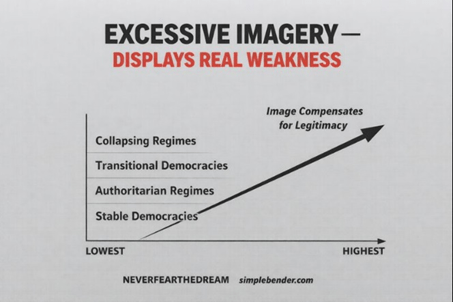
Those who lead or campaign on hate do so to divide, not to solve. Hate is a wedge—driven between communities to create illusionary superiority and incite rage. It doesn’t clarify; it confuses. It doesn’t elevate; it manipulates. When leaders resort to hate, they expose their inability to persuade, to unify, or to understand. Their bluster masks weakness. Their venom reveals fear. They seek the power of the mob, not the strength of dialogue or the courage of compromise.

Listen carefully: hate speech is no longer fringe. The denigration of individuals—by race, gender, belief, political group, or origin—has become a strategy. Its purpose is not discourse, but dominance. Not freedom, but control.

This country cannot be governed by contempt. We must reject those who exploit division. Hate has no place in a nation built on liberty—and none in a future worth striving for. America is stronger because of our diversity, not despite it. We are more mature—intellectually and emotionally—because of our historic willingness to understand and compromise.

Look neither backwards with anger nor forward with hate. Don’t give hate any space. Not here. Not now. Not tomorrow.

For Every Problem...A Solution...
Lap Around the Sun: Daily Steps Forward
Joy in Alzheimer’s: My Mom’s Brave Walk into Dementia’s Abyss

Posted in Political

The Intoxicating Mirage of American Greatness

We are no better than Don Quixote as he chased the demons he saw in windmills as we become drunk on the hysteria and mirage of American greatness. While he blamed magicians for his confusion and failure, we blame minorities and immigrants. We are no different; only our delusion is different.

Neither the Constitution nor the Preamble ever professes any illusion of aspiring to greatness. The Founding Fathers’ writings in the Federalist Papers are silent on any desire for national greatness. These men, willing to risk everything openly professed a desire for an independent nation. A nation recognized and respected as an equal by all the world’s other nations. They weren’t so egotistical to wave the vain flag of greatness or superiority.

Yet today, we insanely strive to regain something we never had, were, or will be. We are drunk on our delusions and egos. Being ‘great’ is a fixation of one’s ego. It isn’t real. It is your fantasized view of yourself. Something which, when unachieved or perceived to be lost, we blame everyone, anyone, but ourselves. Like Don Quixote blaming mystics and magicians, we lash out at everyone but ourselves. Ironically, we blame them for something that never was and can never be.

We are a country with many admirable traits and traditions and rich in resources and intellect. We are like almost every other country in the world. We all have our national pride, but our national ego is more of a liability than an asset. When working internationally, the first and biggest hurdle to overcome is not being the ‘arrogant, ugly American’ as we are known worldwide.

How do you determine ‘greatness?’ Is our historic and persistent racism a measure of greatness? As a country of immigrants, whose foundational economy was built on the backs of slaves, should our measure of greatness be the number of immigrant families we disjoined and caged or how we showed compassion? Is our historic and persistent racism a criterion of greatness? Is the denigration of minorities and the perpetuation of our domestic caste system our yardstick? Is the benchmark the number of citizens in the wealthiest Causation country suffering in poverty? Is it the number of books and ideas we can ban or sequester? Is the measure the need for a nanny state because we don’t trust half of the population to make their own decisions on healthcare? Or maybe it is our growing affinity to authoritarians and dictators rather than democracies? Democracy isn’t dead but authoritarianism a growing plague. Democracy conquered communism and now seems focused on conquering itself. A country boasting about greatness should have addressed and resolved these inequities decades ago. However, what we have shown incredible greatness in is our ability to deflect, ignore, and our propensity to find a scapegoat for our failures.

While we are a blessed nation, no country is great at everything. They all have strengths, weaknesses, and blind spots. The pragmatic salient question might be, ‘Should America strive to be average or average at all things?’ If we are average, we acknowledge there are those better than us in some things, and we are better in others. By being average at all things, we surrender those areas in which we can be superior.

Our desire and aspiration to be Great should not cloud the realization that we are just one among many in this world. Our founders knew this, and they promoted internationalism, not isolation, to gain acceptance and influence. They didn’t strive for dominance but for mutually beneficial relationships. In our drunken, intoxicated state of euphoria, touting our Greatness, let’s hope we ultimately don’t drive ourselves to Mediocrity.

Maybe our Greatness is our ability to cast an eye over our shoulder to see how far we’ve come, accept where we are, and then turn to look forward and have a vision of where we should be. Sober love of country over drunken delusions. NeverFearTheDream……simplebender.com

This was first published in the Bend Bulletin 11/20/24