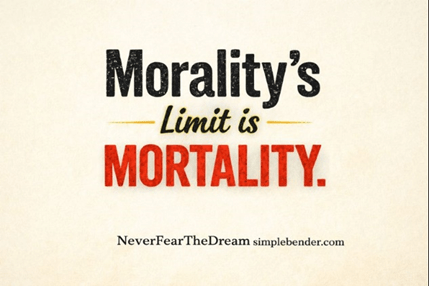
Morals are the guardrails of daily life. When laws are slow, ambiguous, or absent, morals keep neighbors from becoming predators. Yes—morals change, even within a single culture. Some call that “decline.” Others call it “advancement.” When morality ceases to be a shared thread and becomes a private permit, I’m only limited by my moral limits, which are the only ones that matter; social order is at risk.
We don’t have to guess whether moral change can be good. Slavery was defended based on profit and convenient readings of scripture. Interracial marriage was illegal in many states until 1967. Divorce was branded a moral failure, even as an escape from violence. Women who chose careers over homemaking were dismissed as selfish, as if ambition were a vice.
Even our smaller moral judgments have shifted. Tattoos and piercings, once shorthand for “irresponsible,” “a drunken folly,” or signs of criminal association, are now common, meaningful personal statements and art. Online dating used to carry a whiff of desperation, but now it’s ordinary, and even practical.
So the issue isn’t the changing landscape of morality. The issue is the persistent temptation of power to usurp it. It’s when a determined few, or an individual, insist that their morals should govern everyone else, while exempting themselves from the burden of society’s norms of consistency.
That’s when moral limits replace moral fiber. Moral fiber restrains the self. Moral limits wielded by the powerful are used to restrain others. When leaders claim to be the sole keepers of the moral framework, history doesn’t reward them with harmony. Instead, it rewards them with conflict, mistrust, and the slow degradation of the very moral foundation they claim to defend. And those who mainly want comfort, access, and advantage will often go along—because chameleon morality is profitable when you’re standing near the throne.
In a healthy society, the moral posture of elected officials should broadly reflect the people they serve—all of them, not just the loyal, the loud, and/or those who bend a knee. Moral diversity isn’t wrong; it’s necessary. But a line is crossed when one imposes their morality on others without dialogue. Majority rule matters, but so do minority rights—because “shared morality” without protection becomes tyranny with faux-moral backing.
Morals will keep evolving as life does. Moral fiber isn’t loud. It shows up in restraint, fairness, and the humility to admit, “I could be wrong.” A society isn’t shaken because people argue about morals; it is when the powerful stop being bound by anything—when “values” become a weapon, not a compass.
Find your moral fiber, but don’t stop there. Demand it—publicly and relentlessly—from anyone who seeks authority over your life. If they won’t live by civil standards, treat their immoral talk as propaganda to be challenged and rejected. One certainty: moral limits cease with mortality. NeverFearTheDream simplebender.com
NeverFearTheDream simplebender.com Stand For Truth
Please consider following simplebender, you’re reading makes my writing more fun..…
Comments and thoughts are always welcome and feel free to re-post …..



 SimpleBender.....wcb