Posted in Communication

Recognition Heals—and Then Hustles

a leader extolls people by acknowledging their plight...only to gain their loyalty
NeverFearTheDream   simplebender.com

We like to think facts, arguments, and data persuade us. But we are fooling ourselves. We are moved by something much simpler and more primitive: being seen —being acknowledged.

When someone with power looks out at a frustrated crowd and says, “You’ve been ignored, dismissed, and lied to—and you’re right to be angry,” they’ve already won half the battle and most of the crowd. No policy yet, no cost, no trade-offs. Just an acknowledgement. And for people who feel they have been treated as invisible for years, those words are not just drunk, but we bathe in them.

This is the benevolent side of acknowledgment. It’s the foundation of honest dialogue. When people feel genuinely heard, they experience a sense of dignity and respect. They can tolerate imperfect outcomes if they trust the process and believe their concerns are genuinely recognized. Acknowledgment restores a sense of worth: I exist in this system. I matter.

The subsequent step is where things get murky and sticky. First comes acceptance: “At least this one is listening.” Then, subconsciously, we yield our trust: “If they hear me on this, they must be on my side in general.” Give it a little more time and constant repetition, and that trust quietly turns into loyalty. Not because the leader has delivered, but because the follower feels psychologically indebted: “Everyone else ignored us; this one didn’t. This one understands us, believes in us. We owe them a chance.” That shift is dangerous—moving from judging leaders based upon results to unquestioningly defending them because they once made us feel heard and important. This is precisely where healthy acknowledgement can harden into uncritical allegiance. Your ego has been played.

Once someone in authority is branded as “the only one who really understands us,” they can cash that emotional credit almost anywhere. They can stay vague on solutions. They can peddle simple stories for complex problems. Anything can be solved on ‘day one.’ Leaders may use hollow acknowledgment to manipulate, shifting blame and redirecting anger while still being applauded—because they’ve anchored themselves to identity, not performance. Questioning becomes essential to avoid falling for theater rather than reality.

At this point, the line between leadership and chicanery gets very thin and easily crossed. The leader doesn’t need to heal the wound; they need to keep poking it, refusing to let it heal, wanting it to fester. Keep naming the grievance, keep feeding the resentment, keep pointing at new enemies. Distracting you from seeing what is really happening. The followers’ loyalty is no longer about what’s actually being done; it’s about who stands with “people like us.”

Suppose the feeling of being acknowledged matters more to us than the reality of what is actually being done on our behalf. How long will it be before we become willing accomplices in our own manipulation, or have we already crossed that bridge?

Whenever a leader spends far more time jabberwocking and mirroring your pain than functionally measuring their results, don’t be flattered that they “see you”—check your wallet, your rights, and your future. NeverFearTheDream    simplebender.com

Joy in Alzheimer’s
W.C. Barron
Lap Around the Sun
Daily Steps Forward — W.C. Barron

Posted in Communication

Thank you……

In the last 30 days I’m amazed by the number of people who have invested some of their precious time to read my posts. I really appreciate it….

But…Just one question……Hey Madison….

How the in the world did you find me? Please let me know I’m really curious.

Seriously….how did any of you find me?

Thank you very much…..

For Every Problem...A Solution...
Lap Around the Sun: Daily Steps Forward
Joy in Alzheimer’s: My Mom’s Brave Walk into Dementia’s Abyss

Posted in Communication

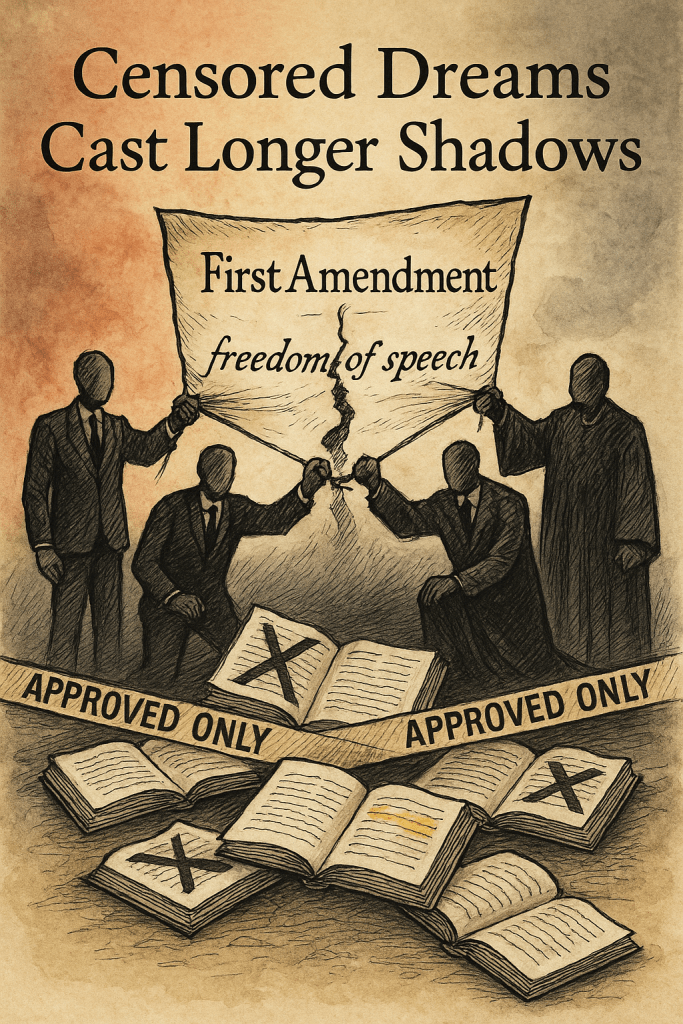
Viewpoint Discrimination: Forgetting What Makes Us Free?

Isn’t the difference of opinion the very thing that built this country?

We weren’t founded on sameness—but on dissent. The thirteen colonies didn’t rise up because they agreed with the power, but because they dared to question it. That impulse—audacious, messy, courageous—is what the First Amendment was written to protect. And yet, here we are again, toying with the dangerous idea that some speech is more tolerable than others. That some viewpoints belong, and others must be silenced and erased.

Shouldn’t that make us uncomfortable?

When tax-funded public institutions—schools, libraries, boards—begin removing books because someone doesn’t like what they say, that’s not preservation of order. That’s viewpoint discrimination. It’s not protecting children. It’s insulating and cuddling weak ideologies. And it’s a blade that ultimately cuts both ways.

You may cheer today when a book you dislike is banned. But what happens tomorrow, when the next board turns its gaze toward the ones you cherish? What makes you think your shelves won’t be next?

We have been here before. In the 1950s, it was Communists. In the 1930s, it was Jews, dissidents, and “degenerates.” Ideas were labeled threats. Libraries were sanitized. People fell silent. Is that the direction we want to revisit?

And what of free speech? Have we forgotten that the First Amendment isn’t just the right to speak, but the right to receive, to read, to explore—especially the uncomfortable truths?

A candidate who once shouted from podiums about the sanctity of the First Amendment, to get elected, now wields it like a partisan tool—defending it when it serves him, abandoning it when it doesn’t, and threatening retaliation, retribution, revoking citizenship, and deportation. Isn’t that the ultimate hypocrisy? To claim allegiance to liberty, but only on your terms, isn’t democracy; it is authoritarianism.

Let’s ask plainly: If a public school or library removes a book about a Muslim child exploring faith, or an LGBTQ teen navigating identity, or a historical critique of systemic injustice—while allowing others that affirm dominant religious or political norms—can that possibly be considered neutral? Can it promote learning diversity and inclusion, or only foster selfish isolation and the illusion of greatness?

And if the government—through policy, threat, or performance—signals what speech is safe and what is not, can we still call ourselves a free people?

Pluralism is not about liking every voice. It’s about letting them speak. It’s about understanding that in a nation where taxes are paid by atheists and Baptists, Muslims, Mormons, and immigrants, the public square must be open to all—or none.

If one religion is given space in a publicly funded institution, then all must be. If one ideology is allowed to teach, then all must have a place at the table. If one set of values is protected, then all must be. Or else what we are protecting is not freedom—but control.

So, we must ask ourselves: Do we still believe in a country where debate is encouraged, not silenced? Where a library or a school is a place of discovery, not conformity? Where the power of ideas—not the fear of them—leads us? Because if not, then we are no longer the land of the free—we are simply the land of the approved, bowing to fragile egos. We, and the world, have been there before and rejected viewpoint discrimination; we can, have, and must do better.

For Every Problem...A Solution...
Lap Around the Sun: Daily Steps Forward
Joy in Alzheimer’s: My Mom’s Brave Walk into Dementia’s Abyss

Posted in Communication

Parallax of Truth… Perspective’s Facets

Our view of events is our perspective. As much as we value our experiences and hold our viewpoints in high regard, perspective differs from Truth.

Perspective is shaped by a lifetime of influences—experiences, education, training, family, friends, and the organizations we belong to. These factors color how we interpret what we see and hear. Perspectives aren’t inherently wrong—but they aren’t inherently right either. In today’s polarized, “no-gray-area” world, where nuance is often lost, this idea can be unsettling or outright rejected. Of course, my perspective is correct—what I see is what I see. But are you absolutely sure? We like to believe we wouldn’t deceive ourselves. And yet, we often do—unknowingly.

Try this: extend your arm, raise a finger, and align it with a distant object. Now close one eye, then the other. Notice how your finger shifts left or right depending on which eye is closed. Your eyes, just inches apart, see differently. So, which view is correct?

Neither. Both. That’s the point. It takes multiple viewpoints to approach the whole Truth. Without both eyes open, you lose focus and depth perception—the ability to judge distance and spatial relationships is skewed. Everything flattens into a single plane. Truth becomes distorted, even as your perspective seems perfectly valid.

Perspective is not the whole Truth. It’s a fragment of it. And if such a slight difference in viewpoint can shift what we see, imagine how much greater the distortion becomes when shaped by different life experiences, cultures, ideologies, and geographies. That’s why two people standing shoulder to shoulder can witness the same event—and come away with different interpretations.

Now consider the effect of ideology—a corrective or distorting lens we all possess. Ask yourself: Does your ideological lens help you see more clearly, or has it merely reshaped your version of the truth to make it more convenient? But the Truth is not about convenience.

If we claim to stand for Truth—and we should—that means being willing to hear perspectives beyond our own, even when they challenge us. It also means others should be willing and eager to listen to ours. Truth is not found in a single view, but in the kaleidoscope of many. No perspective is inherently more valuable or “right” than another.

We must not bury history, suppress ideas, ban books, or restrict academic inquiry. These are not acts of Truth-seeking—they are acts of fear. Instead, we should welcome diverse thought and experience in the shared pursuit of Truth.

Just know that the truth will set you free. The alternative is censored, willful ignorance—and that is not freedom. And remember, it is impossible to plan a journey by looking back and wishing to reclaim your steps. It is difficult if you’re looking down watching every step, but entirely possible if you keep both eyes open, look forward, and seek others’ perspectives.

Let’s accept that our view is ours, and we need others to fully appreciate the Truth that envelops us. Let’s plan our collective journey, appreciating where we have come from, acknowledging where we are, and setting a path to a better future.

This article was first published in the Bend Bulletin 5/20/25

Posted in Communication

We want to hear what we like to hear…..

cartoon three monkeys one covers eyes, one covers ears and one yells through a mebaphone....

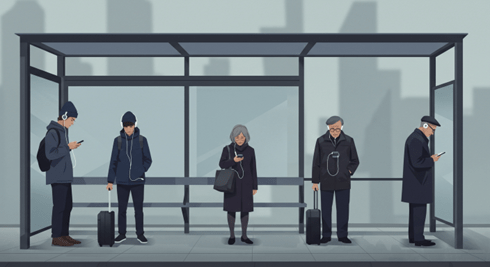
Collectively, we tend to avoid what makes us uncomfortable. We flip past the page, change the channel, swipe away — anything to distract ourselves from what we’d rather not face. We prefer to hear what validates our opinions and makes us feel good about ourselves. More than ever, we seem to believe that something is only valid if it feels agreeable, and we’re becoming openly hostile toward uncomfortable truths.

Some don’t want to hear that being pro-Palestinian doesn’t make someone antisemitic; it may simply mean they are anti-Zionist. Others ignore reports describing an increase in antisemitic violence by domestic white nationalists since the start of the Gaza war and focus more on pro-Palestinian protestors. We may dismiss the idea that small local government is better than big government — especially if we are or were government employees. We might resist the notion that most immigrants pay taxes, work hard to support their families, and deserve due process and a chance at citizenship. At the same time, we might reject the argument that only immigrants who entered legally should have that chance or resist the idea that employers of undocumented immigrants should face prosecution as aggressively as the immigrants themselves.

It makes us uncomfortable to admit that this country has a caste system and remains racially divided, with ongoing systemic discrimination. We may prefer to look away from images of both past and present racism or dismiss the idea of reverse discrimination altogether. Some can study discrimination while others live it; that’s a privilege. Many avoid acknowledging Russia as the aggressor, just as others refuse to confront Israel’s humanitarian atrocities in Gaza. We may ignore the fact that we are a debtor nation — consuming more than we produce, importing more than we export, and holding one of the world’s highest national debts and budget deficits. It’s easier to blame drug trafficking across our borders than to ask why so many of our neighbors are using drugs. We often find it more comfortable to claim victimhood and scapegoat others than to confront the root causes of our problems. We make excuses for those in one group while castigating others on the other side for similar actions.

Through it all, we seek comfort over truth. We isolate ourselves in ideological bubbles, surrounding ourselves with people who echo our views. This mental isolationism is dangerous. Life in an echo chamber is not healthy.

We are eager to listen to what doesn’t offend us — even if it offends someone else. We want to be heard yet often refuse to listen. We can do better. We don’t have to blindly believe anything a charismatic, compelling speaker tells us without analysis. We don’t have to nod our heads just because others do. We are more intelligent and compassionate than we let on. We have more access to information — and misinformation — than any previous generations. We can stop scrolling past the uncomfortable and try to understand. We can try, just a little every day, to listen to something uncomfortable. Listen. We should use every intellectual tool at our disposal to think critically and unpack why it makes us uneasy. We can be as outwardly reflective as we are inwardly introspective. And when we do, the discomfort will feel a little more comfortable.

NeverFearTheDream simplebender.com @simplebender.bsky.social Stand For Truth

This was first published in the Bend Bulletin 4/17/25

Posted in Communication

This Christmas, Safe refuge at the kid’s table

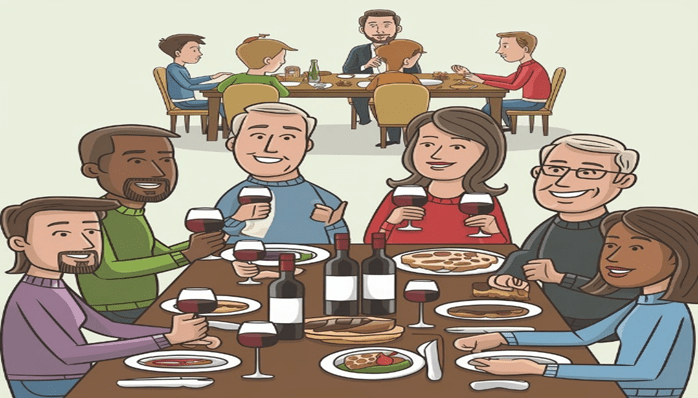
This Christmas, I took a break from the drama and posturing at the adult table and found refuge at the kid’s table.

Yearning for the casual banter of innocence, the insight of young wisdom, and the opportunity to hear the thoughts and words of our future, I decided to sit at the kid’s table. Sitting in smaller chairs, closer to the ground, we may be better grounded than in taller, oversized adult chairs, which these days seem a little too tipsy.

The easy game of Connect the Dots yields winks and laughs as we dabble and play with our food. We chatted and giggled about the presents we had opened and those gifts we still hoped to get. I chuckle at the confused looks as we taste the cranberry sauce and smile as the dressing and mashed potatoes are swirled into a tasty mush.

Overhearing the adults discuss their ‘big people’s topics as I watch the kids. The toast for ‘world peace’ quickly regressed to biting analogies of the Middle East and Ukraine. The younger ones seem more confused as the voices rise. The ‘older ones’ frown and turn away from the tension, showing some disgust at the hypocrisy and arguments. Turning up my hearing aids just a little, I hear one mumble…’ giving aid to one for genocide and taking it away from another fighting for self-defense.’ As their heads shook a little, the simple game of hangman took on new meaning. The table returned to the whispers and giggles of youth as a game or two of tic-tac-toe started. I pondered their insight and perspective and lost the hangman game.

The lighthearted snickers and under-the-table poking were interrupted as another bottle of wine was opened for the adults. A hearty toast at their table as we lifted our glasses of water and mimicked them with our silly smiles and googly eyes. The topics at the big people’s table ebbed and flowed about current events, sports, business, and then back to politics. I shook my head and wished they could listen to us at the kid’s table. We were having fun, laughing, and smiling. Their table got louder as abortion and women’s rights became the main topic. Then the epiphany. One of the girls whispers to another…’ great, the convicted sex predator wants to protect us whether we like it or not…cringe…’ I turned my hearing aids back down, hoping to give them the space they needed and not become the adult at the table.

I thought about what I’d heard at both tables. I wanted to avoid the stress and conflict at the adult table, but I only saw and heard the stress that wafted across the room to the kid’s table. Their young minds are open to so much. Soaking in everything and forming opinions that will drive our world’s future. Too much stress. Too much tension. The heat spilling out of the kitchen to the tables filled with the cornucopia of abundance. We sat there wondering about those with so much less and how fortunate we were. This privileged family has the luxury of having discussions and not worrying about where their next meal is coming from. And yet, these adults don’t realize they may be forming irreversible opinions and generational hate through their terse and tense words.

We, the adults, can impart hope or hate. We can show how to listen and try to understand. It is our choice, and they, the kids, are watching and listening to everything.

My distracted thoughts were interrupted when the youngest leaned over, tapped me, and said, ‘Knock, knock.’ I smiled and thought, ‘Maybe, just maybe, things will be alright’…’ Who’s there?’

NeverFearTheDream     simplebender.com

This article was first published in the Bend Bulletin 12/26/24

Posted in Communication

Better Not to Hear than Not be Heard

In our zeal to appear to listen to everyone, we are not hearing anyone. This unfortunate reality has turned the tables in politics, neighborhoods, and even families. We almost seem to be ‘play listening, ‘ nodding our heads in agreement all the while formulating our response without really hearing. We are treating people like we scroll headlines—no real interest, just browsing.

We all want to be heard. We all want our expressed thoughts and opinions to, at least, be heard. The failure to be heard has brought us to where we are and will take us where we will go. The facade of hearing and the misdirection of understanding have been the tools of the deceivers forever.

The examples of perceived lack of hearing pepper our history. Women felt oppressed, disenfranchised, and weren’t being heard, which led to suffrage. African Americans cried out about racial injustice and oppression, leading to civil rights reforms. LGBTQs faced the same lack of understanding and have pressed for social change. And now, rural Americans of all races and genders are screaming to be heard about the loss of rights and freedoms. It isn’t that they weren’t speaking, but they weren’t being heard. The voices were muffled and muted and, in some cases, literally covered and gagged to prevent their speech. If we don’t pay attention, we will cycle through these and other issues infinitely more times.

Without being heard in civil discord, those affected lash out, resorting to yelling and physical actions to get attention. Their plight is real to them. We will only perpetuate a cycle of misunderstanding, disregard, mistrust, and violent upheaval until we are ready to hear and absorb what they say and mean.

This cycle will continue until a champion comes forward who, at least, appears to hear their plight. It doesn’t matter if they really care or not. They are someone who has stature and who takes up the cause. They become bigger than life, regardless of their own life story. They become the voice of the unheard. Their past transgressions are irrelevant to the yelling mob. They are giving the mob a voice, a charismatic champion, someone willing to take up the cause and press forward. Like the snake oil salesman, acknowledging your ailment and offering you a dubious elixir to cure your pains. Unfortunately, the hangover from the cure might be worse.

Being hearing impaired, I understand the frustration of not hearing. I understand the isolation in a crowded room. I’ve watched people become frustrated with repeating what they have said because I have difficulty hearing them. However, their frustration is even more profound when their message falls not on deaf ears but on ears unwilling to hear or listen. It is far better not to hear than not to be heard. Stop formulating a response and hear what others are saying. Hear what others are asking and pleading for. Their needs are real to them, just as yours are to you. People are much more than the scrolling headlines at the bottom of the TV. People matter. Don’t just stop and listen, but stop and really hear and try to understand, even if you disagree.

NeverFearTheDream……..simplebender.com

Posted in Communication

No Comprehension, Just Digital Skimmers and Clickbait

A-Digit:gettyimages

In our rapidly evolving digital age, we face a critical challenge: a widespread decline in reading comprehension. This isn’t merely about reading less; it’s about how we process and understand information in ways that threaten the foundations of an informed society. Like crossing a pond, hopping from rock to rock, one headline to another, never pondering the depth of the pond.

The modern media landscape has transformed how we consume information. We are now digital skimmers racing through headlines and social media posts without pausing for deeper understanding. Our attention spans have dramatically shortened, trained by endless streams of bite-sized content and algorithmic feeds designed to keep us scrolling. While technology has democratized access to information, it has simultaneously fragmented our ability to process it meaningfully.

When we lose the capacity for deep reading, we sacrifice more than comprehension. We lose the essential tools for critical thinking and reasoned decision-making. Without these, we become vulnerable to misinformation and make snap judgments based on emotional triggers rather than careful analysis. We share articles without reading beyond headlines, allowing confirmation bias to override intellectual curiosity.

The problem extends beyond individual habits. Modern digital platforms, while offering unprecedented access to diverse perspectives, prioritize engagement over substance. Their interfaces exploit psychological vulnerabilities, training our brains to crave constant stimulation. Pressured by collapsing revenue models, traditional media outlets often choose clickbait over quality journalism and editing. The 24-hour news cycle demands speed over accuracy and gore over substance, making it increasingly difficult for nuanced, well-researched stories to find their audience.

Educational systems compound these challenges. Schools focused on standardized testing often prioritize rote memorization over critical thinking skills. Socioeconomic factors are crucial, as reading proficiency strongly correlates with economic status. Cultural stereotypes dismissing reading as uncool or elitist create additional barriers, particularly among young people—the very people we need to have open, inquisitive minds.

The consequences of this decline ripple through every aspect of society. In politics, discourse devolves into sloganeering and tribalism, while voters make decisions based on emotional appeals rather than policy analysis. Business leaders make snap judgments instead of studying data and long-term implications. In healthcare, the inability to comprehend medical literature leaves people vulnerable to pseudoscience, misguided health choices, and misinformation on diagnosis and treatment.

This crisis demands a multifaceted response. While individual efforts to read more deeply and verify information are important, they alone cannot address systemic issues. We need educational reforms that emphasize critical thinking and analysis. Media platforms should reconsider algorithms that prioritize engagement over understanding. News organizations need sustainable models that reward quality journalism. Authors must be succinct and reach their point without much fluff and dithering. Readers need to be able to read above a fifth-grade level.

Reading comprehension isn’t just about processing words. It’s about developing the cognitive tools to understand an increasingly complex world. Losing these capabilities will lessen our ability to engage in reasoned debate, empathize across differences, and make informed decisions about our collective future.

The decline in reading comprehension represents more than an educational challenge; it’s an existential threat to informed democracy and societal progress. While artificial intelligence and other technological advances pose their challenges, the erosion of human capacity for deep understanding and critical analysis may be our most pressing crisis.  #NeverFearTheDream   simplebender.com

Posted in Communication

Bravado In Anonimity

Why are we so much braver, louder, and opinionated when we are anonymous? When no one knows who we are we yell, and scream protected by the fog of obscurity. Is the bravado of anonymity a sign of general cowardice? History has many examples showing those who cover their faces with masks and hoods are more aggressive. Anonymity is used as a shield and a foil. A shield to protect those brave enough to risk blowing the whistle on corruption, poor safety, and other malicious acts otherwise wanting to be kept secret. A foil as a weapon to perpetuate misinformation, rumors, and lies to injure someone’s life or reputation. We are in a technology-driven world, able to easily conceal our true identity. In fact, today we don’t have to use hoods and masks, while still some choose to. Today, we can assume many identities on many platforms to further expand our efforts to discredit and perpetuate conspiracy theories.

Not so long ago, individuals took immense pride in expressing their thoughts and opinions openly, willingly attaching their names to their words and actions. People valued the recognition and accountability that came with sharing their ideas publicly. There was a sense of personal responsibility and integrity in communication. Unfortunately, those days seem to have faded into the past, replaced by a culture of hiding, concealing, and distancing from one’s statements.

In our current digital landscape, we face significant challenges in identifying and confirming the sources of information. The ease with which individuals can hide behind pseudonyms or fabricated identities has made it increasingly difficult to trace the origins of statements, claims, or accusations. This shift has profound implications for the quality and reliability of public discourse.

If we aspire to have a culture of accountability, it is imperative we support individuals willing to stand firmly behind their words. This means creating and supporting an environment where people are not only comfortable but proud to associate their identities with their expressions. We can create a more transparent, responsible, and trustworthy communication landscape by re-enforcing this connection between individuals and their statements. Personal accountability is essential for rebuilding trust in our interactions and information exchanges, both online and offline.

Protocols can be put in place to truncate the use of anonymity as a false shield and sharp foil. Social media outlets can require a publicly accessible, verifiable name associated with each account. There can be a limit on the number of times any tweet and/or post of any article can be blindly or mindlessly forwarded. Algorithms can be written to require human interaction to verify accounts and terminate those that cannot be verified. Imagine the impact on bot propagation if ten percent of every social media account was randomly verified every day. If social media companies can write and employ algorithms to target content, contacts, and advertising, they can create this algorithm. The local newspapers could refuse to publish and reject electronic comments by contributors using unique usernames and not their real names. Most papers require Guest Column and Letter to the Editor contributors to give their full name and verifiable contact information before publication. The same could be required for all. This isn’t censorship, this is requiring everyone to dissolve themselves.

For those who have anonymously sent snarky physical letters and online comments, your fake bravado is acknowledged. While I appreciate your concern for my well-being, I would more welcome an opportunity to have a civil dialogue. We don’t have to agree to be respectful and listen to each other. So, who am I? Like every contributing author, I am your neighbor willing to express a thought or opinion, sign my name, and stand by my words.

#NeverFearTheDream  simplebender.com

This was first published in the Bend Bulletin 9/11/24 Patriot’s Day

Posted in Communication

Defend the Freedom to Read

Freedom to Read is an inalienable right. A right inherent and integral to the freedom of the press. Freedom to read allows all citizens access to the marketplace of ideas. The freedom of expression and the press falls mute when freedom to receive the material is repressed.

This right is under attack by those who want to control what is available for us to read. They endeavor to protect their comfort and their right to choose while sacrificing everyone else’s. Everyone’s liberty to choose, to seek knowledge and information, as well as the investigation of ideas should be respected. Those who believe contrary ideas should be banned are dangerous people. They are those who cannot deal with controversy and the whole truth. Information is power. Writings are torches in the darkness.

Those who choose to ban and censor books and print are destined for disappointment. You cannot ban and censor ideas forever. Ideas have a fire unto themselves which is uncontrollable and inextinguishable. They will emerge. They will grow. The victors write history, not the vanquished. The story of the conquered eventually is told and the victors held accountable when the whole truth is known. Those who choose to try to control, ban, and censor today should be prepared for the inevitable reversal of fate. This is a sad vicious cycle which should never have started. But it is a cycle which we can resist and one which must be stopped. It is contradictory to profess support of Freedom of the Press and simultaneously restrict and ban publications.

Stand up; defend and exercise your freedom to read, your freedom to write, your freedom to express individual thoughts and ideas. Encourage open publication and distribution without fear of the censor’s blade. Only when citizens explore the full range of human thought and emotion, weighing all perspectives in the balance, can we truly govern ourselves and claim our democratic birthright. Let’s openly, respectfully, grapple with challenging ideas and controversial subject matter. Push yourself to be uncomfortable, very uncomfortable. Then draw your own conclusions. Conclusions based on broad thoughts, not narrow ones. Information wants to be free. It cannot forever be restrained or repressed. Be brave, be willing to defend expression of ideas, regardless of how much you disagree with them. Resist those in power who want to try to extinguish this flame by censorship and banning. Support the authors who persist. Those who write the truth to, and in spite, of power. Those who present ideas and options to the masses, and let them think it all through. Read for pleasure, adventure, insight, and intrigue, but always fiercely defend the Freedom to Read. #NeverFearTheDream

If you find this article interesting or maybe challenging, please see some more of my musing at simplebender.medium.com. Please consider following me and never miss an article…Stay well