Posted in Philosophy

When Hyperbole becomes Hypocrisy*

“Love thy neighbor as thyself.” That wasn’t a suggestion. It wasn’t conditional—based on citizenship, health, or ideology. It was a commandment. And it’s not a value exclusive to Christianity. In Islam, the Prophet Muhammad declared, “None of you truly believes until he loves for his brother what he loves for himself.” (Sahih Muslim 45).

Yet here we are—deporting the desperate, dismantling Medicaid, trimming food assistance—while proclaiming Judeo-Christian values and shouting “God bless America.” If “faith without works is dead” (James 2:17), then what is belief without basic compassion? Are we still our brother’s keeper—were we ever?

All major world religions share a call to love, share, and care. To walk with the downtrodden. To clothe the naked, feed the hungry, and welcome the stranger. These aren’t metaphors. “I was a stranger, and you welcomed me.” (Matthew 25:35). But today we build legal walls and bureaucratic barbed wire, often in the name of sovereignty or security. It’s hard to square that with the Quran’s instruction: “Do good to parents, relatives, orphans, the needy, the near neighbor, the distant neighbor, the companion at your side…” (Quran 4:36). Neither scripture suggests checking someone’s documentation before offering mercy. In Hinduism: “The best way to find yourself is to lose yourself in the service of others.” (Bhagavad Gita 3:19, interpreted)

And what of the sick? Medicaid—flawed, but vital—was designed to catch those who would otherwise fall. Yet many leaders now seek to shrink it, as if health were a luxury item. Would Jesus have denied healing because of a lack of insurance? Would the Prophet have charged the sick? “Whatever you did not do for the least of these, you did not do for me.” (Matthew 25:45). Moral clarity doesn’t get much plainer.

The same goes for hunger. SNAP isn’t charity—it’s survival. Reducing it isn’t fiscal responsibility—it’s spiritual failure. “He who oppresses the poor shows contempt for their Maker.” (Proverbs 14:31). And Islam reminds us: “He is not a believer whose stomach is filled while his neighbor to his side goes hungry.” (Sunan al-Kubra). If we take these words seriously, cutting food aid isn’t just bad policy—it’s hypocrisy.

Meanwhile, the rhetoric hardens. Hate has grown bold—voiced not only on fringe platforms but from seats of power. Immigrants are labeled as invaders. The LGBTQ+ community is cast as a threat. People experiencing poverty and the foreign scapegoated for systemic failure. The Bible warns: “The tongue has the power of life and death.” (Proverbs 18:21). Islam teaches: “A kind word is charity.” (Sahih Bukhari). Words are not just sounds—they are signals of the soul, or sledgehammers to the weak.

Some maintain that compassion is a private duty, not a governmental one. But when our policies punish the very people our faiths command us to protect, what exactly are we defending? Government doesn’t stand apart from morality—it reflects it. And right now, the reflection is disturbing. You cannot wave a Quran, Bible, or any other religious doctrine in one hand and slam the door on the vulnerable with the other. You cannot preach abundance and legislate scarcity and discrimination. If we are to be judged by how we treat the least among us—and all major faiths, say we are—then we are not just falling short. We are failing. We can be better.

*This was first published in the Bend Bulletin 7/25/25

For Every Problem...A Solution...
Lap Around the Sun: Daily Steps Forward
Joy in Alzheimer’s: My Mom’s Brave Walk into Dementia’s Abyss

Posted in NeverFeartheDream

Never Fear the Dream…

Once you know what you’re committed to, ask yourself why. Do you do what’s right because it is right—or for praise for doing what you should have done all along? 25.07.4
For Every Problem...A Solution...
Lap Around the Sun: Daily Steps Forward
Joy in Alzheimer’s: My Mom’s Brave Walk into Dementia’s Abyss

Posted in Communication

Viewpoint Discrimination: Forgetting What Makes Us Free?

Isn’t the difference of opinion the very thing that built this country?

We weren’t founded on sameness—but on dissent. The thirteen colonies didn’t rise up because they agreed with the power, but because they dared to question it. That impulse—audacious, messy, courageous—is what the First Amendment was written to protect. And yet, here we are again, toying with the dangerous idea that some speech is more tolerable than others. That some viewpoints belong, and others must be silenced and erased.

Shouldn’t that make us uncomfortable?

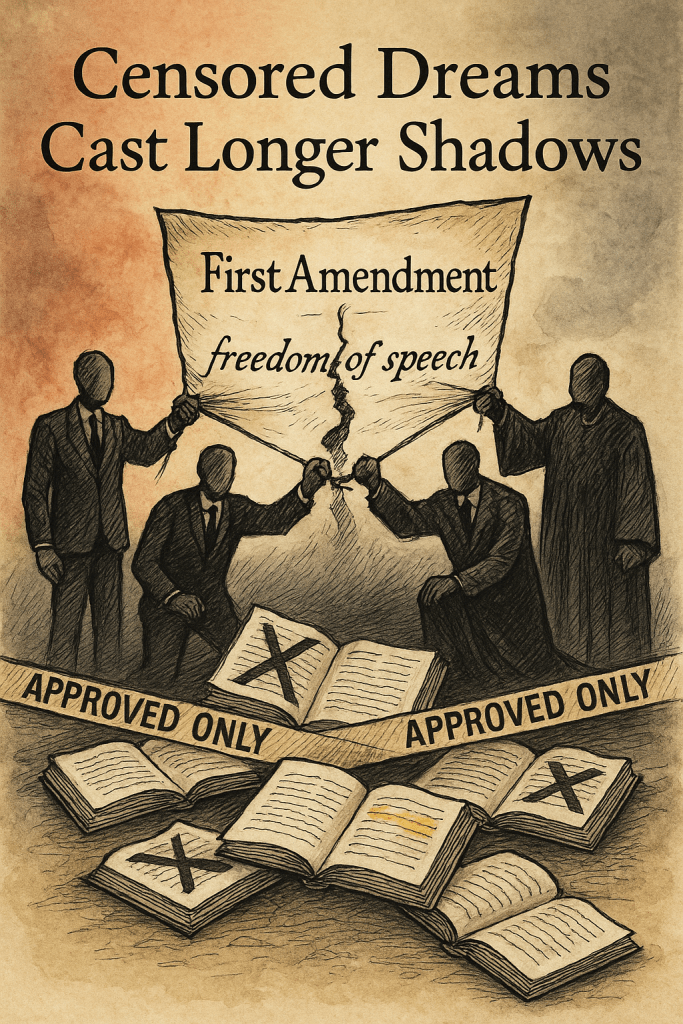
When tax-funded public institutions—schools, libraries, boards—begin removing books because someone doesn’t like what they say, that’s not preservation of order. That’s viewpoint discrimination. It’s not protecting children. It’s insulating and cuddling weak ideologies. And it’s a blade that ultimately cuts both ways.

You may cheer today when a book you dislike is banned. But what happens tomorrow, when the next board turns its gaze toward the ones you cherish? What makes you think your shelves won’t be next?

We have been here before. In the 1950s, it was Communists. In the 1930s, it was Jews, dissidents, and “degenerates.” Ideas were labeled threats. Libraries were sanitized. People fell silent. Is that the direction we want to revisit?

And what of free speech? Have we forgotten that the First Amendment isn’t just the right to speak, but the right to receive, to read, to explore—especially the uncomfortable truths?

A candidate who once shouted from podiums about the sanctity of the First Amendment, to get elected, now wields it like a partisan tool—defending it when it serves him, abandoning it when it doesn’t, and threatening retaliation, retribution, revoking citizenship, and deportation. Isn’t that the ultimate hypocrisy? To claim allegiance to liberty, but only on your terms, isn’t democracy; it is authoritarianism.

Let’s ask plainly: If a public school or library removes a book about a Muslim child exploring faith, or an LGBTQ teen navigating identity, or a historical critique of systemic injustice—while allowing others that affirm dominant religious or political norms—can that possibly be considered neutral? Can it promote learning diversity and inclusion, or only foster selfish isolation and the illusion of greatness?

And if the government—through policy, threat, or performance—signals what speech is safe and what is not, can we still call ourselves a free people?

Pluralism is not about liking every voice. It’s about letting them speak. It’s about understanding that in a nation where taxes are paid by atheists and Baptists, Muslims, Mormons, and immigrants, the public square must be open to all—or none.

If one religion is given space in a publicly funded institution, then all must be. If one ideology is allowed to teach, then all must have a place at the table. If one set of values is protected, then all must be. Or else what we are protecting is not freedom—but control.

So, we must ask ourselves: Do we still believe in a country where debate is encouraged, not silenced? Where a library or a school is a place of discovery, not conformity? Where the power of ideas—not the fear of them—leads us? Because if not, then we are no longer the land of the free—we are simply the land of the approved, bowing to fragile egos. We, and the world, have been there before and rejected viewpoint discrimination; we can, have, and must do better.

For Every Problem...A Solution...
Lap Around the Sun: Daily Steps Forward
Joy in Alzheimer’s: My Mom’s Brave Walk into Dementia’s Abyss

Posted in NeverFeartheDream

Never Fear the Dream…

Independent thought is bold to some, seductive or even dangerous to others. Be bold anyway. Make your thoughts your own—don’t regurgitate the ideas of others. Life’s path is a conundrum: follow the rugged trail of Truth is Knowledge, rather than retreat to the comfortable path of Ignorance is Bliss. 25.07.3

For Every Problem...A Solution...
Lap Around the Sun: Daily Steps Forward
Joy in Alzheimer’s: My Mom’s Brave Walk into Dementia’s Abyss

Posted in NeverFeartheDream

Never Fear the Dream…

The right thing is often obvious and usually the hardest, but it yields the best outcomes. Yet, what is “right” depends on perspective—and perspective shapes everything. Even the ranting of the insane makes sense to them. Strive to see the world through their eyes, not to agree, but to understand. 25.07.2

For Every Problem...A Solution...
Lap Around the Sun: Daily Steps Forward
Joy in Alzheimer’s: My Mom’s Brave Walk into Dementia’s Abyss

Posted in Philosophy

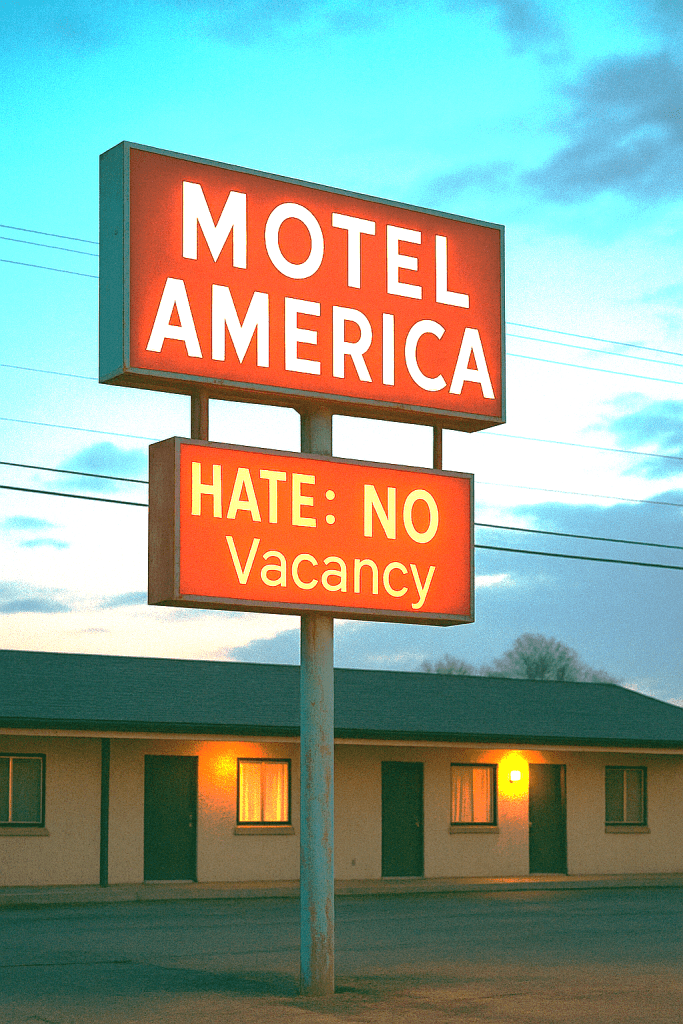
No Place for Hate—Not Here

There is no room for Hate…NONE

There is no place for hate in our homes, our faiths, or our government—none. The grievances of Palestinians, Ukrainians, and displaced peoples around the world may be deep and justifiable—and may very well usher in generational hate. But we Americans have no excuse to let hate in. Not in our hearts, our homes, our places of worship—and definitely not in our policies.

Yet hate has become almost reflexive—normalized, even celebrated. It’s hoisted like a banner, waved by those clinging to lost causes and imagined enemies. It grows in minds and festers in rhetoric, often without genuine cause—and with no end goal beyond destruction and domination.

Those who lead or campaign on hate do so to divide, not to solve. Hate is a wedge—driven between communities to create illusionary superiority and incite rage. It doesn’t clarify; it confuses. It doesn’t elevate; it manipulates. When leaders resort to hate, they expose their inability to persuade, to unify, or to understand. Their bluster masks weakness. Their venom reveals fear. They seek the power of the mob, not the strength of dialogue or the courage of compromise.

Listen carefully: hate speech is no longer fringe. The denigration of individuals—by race, gender, belief, political group, or origin—has become a strategy. Its purpose is not discourse, but dominance. Not freedom, but control.

This country cannot be governed by contempt. We must reject those who exploit division. Hate has no place in a nation built on liberty—and none in a future worth striving for. America is stronger because of our diversity, not despite it. We are more mature—intellectually and emotionally—because of our historic willingness to understand and compromise.

Look neither backwards with anger nor forward with hate. Don’t give hate any space. Not here. Not now. Not tomorrow.

For Every Problem...A Solution...
Lap Around the Sun: Daily Steps Forward
Joy in Alzheimer’s: My Mom’s Brave Walk into Dementia’s Abyss

Posted in NeverFeartheDream

Never Fear the Dream…

Beware of those who promise glory without the effort it requires. In nature and life, sudden transformation is a myth. How you handle small setbacks reveals how you will face true adversity. Don’t avoid the truth because it’s unpleasant—face it because it’s necessary. 25.07.1

For Every Problem...A Solution...
Lap Around the Sun: Daily Steps Forward
Joy in Alzheimer’s: My Mom’s Brave Walk into Dementia’s Abyss

Posted in NeverFeartheDream

Never Fear The Dream…

Life is a game of cards—you play the hand you’re dealt. Know who’s dealing. If it’s not you, you may be a bit player in someone else’s life game. Fold when needed, bluff if you must, but next time, make sure you’re the one dealing. 25.06.04

For Every Problem...A Solution...
Lap Around the Sun: Daily Steps Forward
Joy in Alzheimer’s: My Mom’s Brave Walk into Dementia’s Abyss

Posted in Philosophy

Universities and Ideas Aren’t the Enemy

Ideas Breach Barriers–They cannot be Constrained

Universities are not fortresses of indoctrination or cabals of conspiracy. They are incubators of ideas, innovation, and independence. Yet, in times of fear, they often become scapegoats. History has shown us what happens when knowledge becomes the enemy, when inquiry is suspect, and when education is seen as subversion. As M. Bormann (Hitler’s Head of Party Chancellery) and Reichsmarschall Goring routinely espoused to propagate class warfare and division while creating Nazi Germany:

“Education is dangerous—every educated person is a future enemy.”

Today’s attacks on colleges, universities, and professors echo darker past chapters. When public figures brand professors as “the enemy,” claim that universities are “hostile institutions” conferring “legitimacy to the most ridiculous ideas,” they step into rhetorical territory dangerously close to totalitarian dogma. These aren’t just criticisms of curriculum but efforts to discredit education and incite division.

Ideas are powerful. So powerful, in fact, that J. Stalin once said, “Ideas are more powerful than guns. We would not let our enemies have guns—why should we let them have ideas?” Fearful, weak regimes suppress thought. Secure, free societies cultivate it. Indeed, ideas can wound more deeply than fists—and their scars often outlast bruises.

University campuses are cauldrons of friction and growth. For many, this is their first encounter with people from different faiths, regions, and ideologies. That tension—uncomfortable as it may be—tempers conviction and sharpens perspective. Whether you come out with your views fortified or transformed, you come out thinking. That is the point.

These institutions are not perfect—no system is—but they are essential. Universities question assumptions, rewrite narratives, and challenge dogma. They are both repositories of history and laboratories for the future. Without them, our medical breakthroughs, technological advances, and understanding of ourselves would stagnate.

This is not just about liberal arts colleges or elite universities. The attack on higher education is part of a broader attempt to discredit education at all levels—trade schools included. There is a symbiosis between designers and builders, researchers and craftsmen. One imagines, the other realizes. We need both.

“The important thing is not to stop questioning. Curiosity has its own reason for existing.” A. Einstein

And yet, some would shut the doors on curiosity itself. Book bans. Mandated curricula. Politically driven defunding. These are not acts of fiscal prudence—they are acts of intellectual cowardice perpetrated by those who are the beneficiaries of those same institutions. Education should be supported, not to control ideas but to unleash them. To ensure that research is guided by truth, not tribalism. To ensure the historical records are studied and analyzed, in their fullness, to guide us away from past folly and despair.

“For an idea that does not first seem insane, there is no hope.” A. Einstein

The freedom to think dangerously, to imagine the impossible, has been the lifeblood of progress. Yes, bad ideas exist—but so do good ones, and ironically, some of the most outlandish were once thought heretical. That is the risk of liberty: the right to be wrong, and the space to grow into something right.

Universities are not enemies of the people. They are expressions of a free people. Critique them, yes. Improve them, certainly. But fear them? Only if you fear ideas themselves, which some have and apparently some still do.

Because without ideas, there is no democracy. Only dogma, perpetual fear, and misinformation. Maybe it would be better to espouse, as René Descartes did: “I think; therefore I am.” 

This article was first published in the Bend Bulletin 6/21/25

For Every Problem...A Solution...
Lap Around the Sun: Daily Steps Forward
Joy in Alzheimer’s: My Mom’s Brave Walk into Dementia’s Abyss

Posted in Miscellaneous Thoughts

Never Fear The Dream…

Don’t see things as impossible; see them as they are–challenges needing solutions. Open your mind to believing rather than closing it with doubt. 25.06.03

For Every Problem...A Solution...
Lap Around the Sun: Daily Steps Forward
Joy in Alzheimer’s: My Mom’s Brave Walk into Dementia’s Abyss