ponderings on the world we live in…….Nothing is known to be absolute…some thoughts may touch you others may not…take what is useful and ponder the rest …..Never Fear The Dream
Author: simplebender
William C. Barron is a published author of numerous technical articles and a regular guest columnist in regional news outlets. This blog (simplebender.com) has garnered an international readership across the United States, Canada, Europe, and Asia.
Graduating from The University of Texas and now a retired petroleum engineer, William brings decades of global experience, having worked professionally on three continents—above the Arctic Circle and below the Equator. His career has spanned roles from offshore roustabout to engineer, operations manager, and senior corporate executive. He also served as Director of the Oil and Gas Division for the State of Alaska. Currently, he is the Principal of Trispectrum Consulting. He is a co-holder of several patents and has provided expert testimony before state legislatures and at numerous public forums.
Outside of his professional achievements, William is a seasoned endurance athlete. He has represented Team USA at multiple ITU Duathlon World Championships, completed the Boston Marathon, and finished numerous half-Ironman and Ironman events.
....always seeking... always learning....
Be Bold.....Never Fear the Dream.....Stand for Truth
Better to look the fool than be someone else’s. Don’t take yourself too seriously—the mighty and the meek share the same final chapter. Before you start your journey, ask if you’re prepared for the hardships or if you’re chasing the glory. 25.12.4.1
Please consider following simplebender, you’re reading makes my writing more fun..…
Comments and thoughts are always welcome and feel free to re-post …..
Laws are supposed to be the bones of a society: neutral, structural, holding us upright. Law enforcement and the courts are meant to be the muscles that move those bones, not the fists of those who hold the throne or the majority. When that line blurs, when enforcement and justice become tools of power rather than its restraint, a nation quietly shifts away from a representative republic into a dystopian state.
We don’t have to look too far back in history for insight…
On the eve of the French Revolution, courts and law enforcement were not known for their impartiality. Judgeships were bought. Noble privilege was protected. Commoners knew they lived under one set of rules while the gilded lived under another. The Bastille didn’t fall because of seven prisoners; it fell because the building had become a cold stone symbol proclaiming that the law served the crown, not the people.
More recently, Nazi Germany carried this to an industrial scale. The regime did not usually act “outside” the law; it rewrote the law. Judges swore loyalty not to justice, but to Hitler. Police, courts, and camps formed a single pipeline: define enemies, demean them, label them criminal, process them through a legal machine designed to produce the same answer every time—guilty and repulsive. Decent people and law enforcement could tell themselves they were “following and upholding the law,” all the while the law itself had been converted into a weapon.
The pattern is always the same: two-track justice, selective enforcement, and a growing sense that legal outcomes can be predicted by status, ideology, race, ethnicity, or wealth before any evidence is heard. Power claims the language of order and safety, then quietly rigs the referees.
We should stop deceiving ourselves that “it can’t happen here.” Instead, we must ask: Are the laws and enforcement practices fair and impartial? Citizens need to question whether the justice system’s harshness is aimed downward and if mercy is truly reserved for the well-connected or like-minded. The uniforms, the architecture, and the slogans may differ. The logic does not. It may not be their intent, but their enforcement practices become a reality they must recognize. As many lose confidence in their independence, they lose support, which in turn leads to greater distrust and disdain.
A free society does not depend on the moral character of its rulers; it depends on the independence of its restraints. When those restraints are captured and controlled, the slide is already underway, even if the fragile skeletal forms of democracy remain.
So the uncomfortable question is this: Is law enforcement and justice beginning to tilt toward power? How long can ordinary citizens obey without quietly helping to destroy the very rule of law they claim to defend? When will they rise up, and will it be too late? Turn up the volume and blow your whistle loud and often. NeverFearTheDream simplebender.com
NeverFearTheDream simplebender.comStand For Truth
Please consider following simplebender, you’re reading makes my writing more fun..…
Comments and thoughts are always welcome and feel free to re-post …..
Wisdom isn’t what you know—it’s what you do with what you know, and how quietly you do it. A sense of purpose gives people drive, direction, and more profound joy than knowledge alone ever could. 25.12.3
NeverFearTheDream simplebender.comStand For Truth
If you’re looking for daily thoughts and insights you will want to start the morning with:
Lap Around the Sun: Daily Steps Forward
If you know someone who is facing any facet of Alzheimer’s they might gain some insight from:
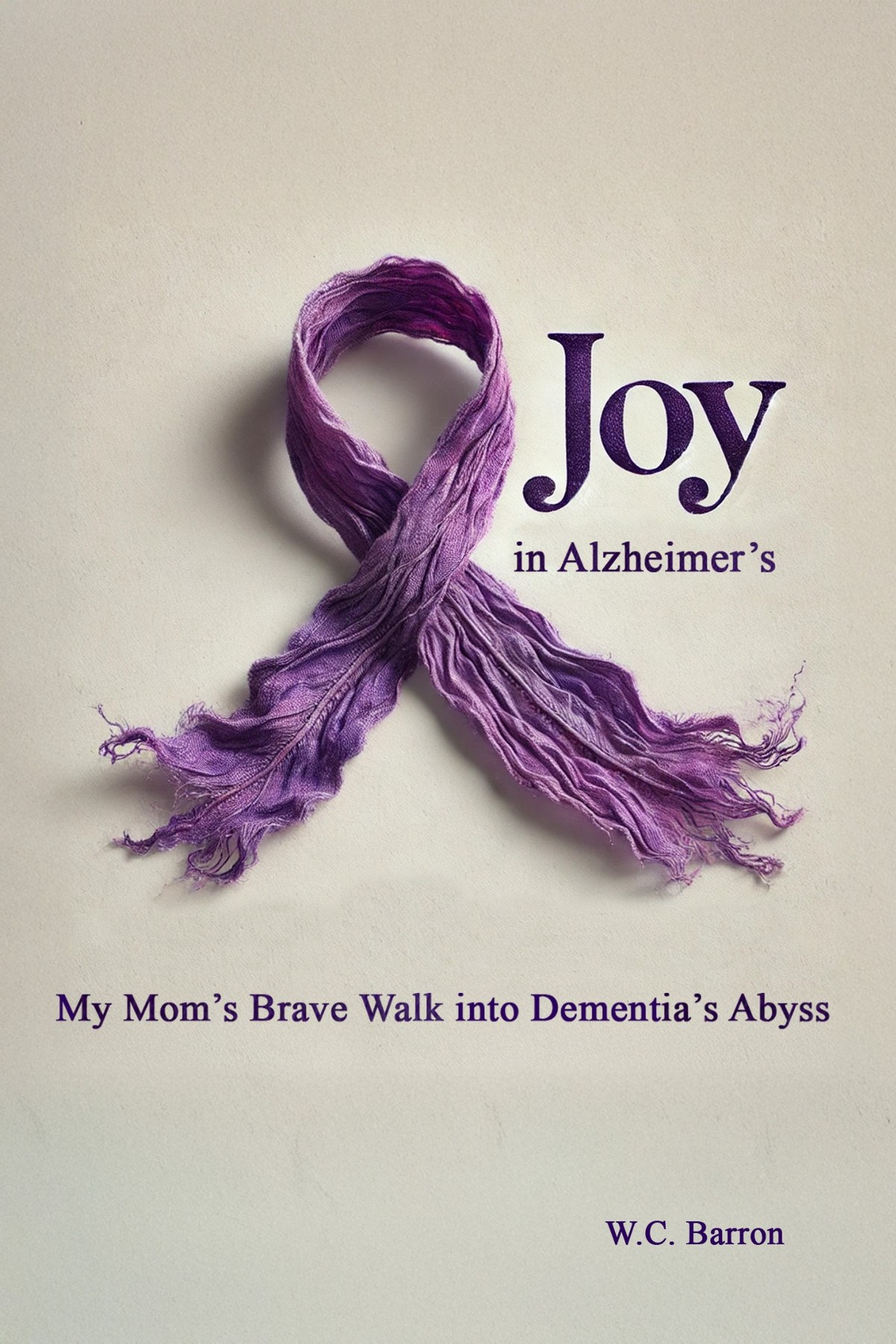
Joy in Alzheimer’s: My Mom’s Brave Walk into Dementia’s Abyss
Please consider following simplebender, you’re reading makes my writing more fun..…
Comments and thoughts are always welcome and feel free to re-post …..
In weary corners of the world, three elder kings sat in their gilded castles, polishing medals they’d never earned. Their peasants staggered through hunger, cheap drugs, and endless funerals, but the kings were busy with more important matters—like drawing new lines on old maps and wallowing in opulence.
One dark, cold winter, the kings gathered at a marble table and decided that ruling their own crumbling kingdoms wasn’t enough. They would divide the whole world into “areas of influence,” like carving a roast they hadn’t paid for. Each slice came with rights: to plunder, to threaten, to “stabilize” by force. Responsibilities, however, were deemed inefficient. One would gain the Orient, one would be allowed, unfettered, to restore their former Empire, and the last would gain a vast Western Hemisphere. They embraced, shook hands, winked, made the deal, and secretly crossed their fingers behind their backs.
Their longtime allies—small kingdoms that had stood by them through storms and wars—were called into the throne rooms and, in ungracious tones, scolded; they were now “on their own.” It was dressed up as tough love, of course. “You must learn to defend yourselves. You must be strong, not weak,” the kings said, while quietly moving their troops, their money, and their promises elsewhere.
The peasants, meanwhile, noticed something awkward: the kings always seemed richest after a war, and safest after a crisis. So the villages began whispering across borders. Farmers traded grain instead of insults. Healers crossed checkpoints to treat strangers. Workers in different lands realized they were all being squeezed by the same velvet-gloved hands.
Soon, small alliances of towns and regions formed—not to conquer, but to refuse. They refused to buy the king’s fear, refused to send their sons and daughters to die for “influence,” and declined to hate people who were just as tired and broke as they were.
When the three kings tried to enforce their New World Order, they found something inconvenient: the world had quietly ordered itself, not into empires, but into bonds of mutual survival. They found that the sovereigns they had harassed and attacked, out of vanity and spite, had aligned against them. The small sovereignties had forged strength by joining together. The weakened kings found that by trying to be dominant, they had become feeble and irrelevant. And then, to their horror, each discovered the other king had made secret trade deals and alliances outside their spheres. Each cheated on the other because they thought they could get away with it.
It turns out, when rulers isolate and divide, the people eventually learn the oldest truth of all: if we don’t lift each other, no one is coming to save us. It turns out that failing, deceptive, greedy kings cannot divvy up the world and forge a lasting new world order. They lie, cheat, and steal for their own prosperity, not the betterment of the people, and the people finally know the truth. NeverFearTheDream simplebender.com
NeverFearTheDream simplebender.comStand For Truth
If you’re looking for daily thoughts and insights you will want to start the morning with:
Lap Around the Sun: Daily Steps Forward
If you know someone who is facing any facet of Alzheimer’s they might gain some insight from:
Joy in Alzheimer’s: My Mom’s Brave Walk into Dementia’s Abyss
Please consider following simplebender, you’re reading makes my writing more fun..…
Comments and thoughts are always welcome and feel free to re-post …..
Always return to your beginner’s mind—your shoshin. No matter your skill or experience, seek the wonder and energy of the first time. Good things don’t happen to just a few—it’s that a few choose to see the good in everything. 25.12.2
NeverFearTheDream simplebender.comStand For Truth
If you’re looking for daily thoughts and insights you will want to start the morning with:
Lap Around the Sun: Daily Steps Forward
If you know someone who is facing any facet of Alzheimer’s they might gain some insight from:
Joy in Alzheimer’s: My Mom’s Brave Walk into Dementia’s Abyss
Please consider following simplebender, you’re reading makes my writing more fun..…
Comments and thoughts are always welcome and feel free to re-post …..
We are told the world is running out of everything: security, dignity, opportunity, patience. The message is constant—there is not enough to go around. And when people believe there is not enough, they do what humans have always done under threat: they turn on whoever is closest, whoever they think has what they should have.
This is manufactured scarcity—not a natural shortage, but a strategic one. The point is not merely to frighten us. The point is to redirect our fear sideways.
Horizontal hostility is far more useful to those in power than unity ever could be. If we are busy resenting each other, we are not examining the hands holding the power strings and who declared the scarcity to begin with.
Consider who benefits when workers distrust workers, when rural communities distrust urban ones, when generations resent each other, when racial and ethnic groups fight over scraps. At the same time, the banquet table is dragged into a gilded private room. The beneficiaries are not hard to identify. They are the ones who remain untouched by the conflict they provoke. They are the ones who used the distraction to fleece for their benefit.
Manufactured scarcity is a form of quiet governance. It makes control self-enforcing. No police state is needed when citizens police each other, when communities fracture themselves, when people become suspicious by default. But this civil fracture is used as an excuse to declare manufactured emergencies to seize more power.
But scarcity is not just political—it is psychological. Once trust is gone, every interaction becomes expensive. Friendship takes caution. Cooperation takes courage. Even hope feels dangerous. The fringe takes stronger hold as the masses in the middle scan the horizon for hope, while looking back in fear of cowardly aggression.
And yet, trust is not rebuilt by argument or persuasion. Ideology is a divider. No ideology has ever restored a broken community. Trust is rebuilt the oldest way humans have ever known: by doing things together, understanding that the most potent joining agents are dreams and suffering, not ideology.
When we work side-by-side—repairing a fence line, running a volunteer shift, restoring a riverbank, organizing a childcare co-op—we rebuild something deeper than agreement. We rebuild interdependence. We remember, through action, that we rely on one another to live.
This is the part those who profit from division fear most. They do not fear protest slogans. They do not fear outrage. They fear cooperation and communication.
Because cooperation makes scarcity visible for what it is: a story someone told us. A story that has authors and agents who have their own agenda.
The significant problems are only solved when the small ones are solved first. We do not need to solve the world’s problems before the nation’s, or the nation’s before we solve the ones on our street. We do not need to fix society before we rebuild the block we stand on. We don’t need to tear down the building to fix the windows.
When we choose to stand together and challenge the narrative, the manufactured scarcity loses its power. The illusion breaks. The wedge loses its edge. And the architects of division suddenly find themselves standing alone. Let’s start by turning away from face-to-face conflict toward shoulder-to-shoulder and side-by-side cooperation and community growth. #NeverFearTheDream simplebender.com
First Published in Bend Bulletin 12/2/25
NeverFearTheDream simplebender.comStand For Truth
If you’re looking for daily thoughts and insights you will want to start the morning with:
Lap Around the Sun: Daily Steps Forward
If you know someone who is facing any facet of Alzheimer’s they might gain some insight from:
Joy in Alzheimer’s: My Mom’s Brave Walk into Dementia’s Abyss
Please consider following simplebender, you’re reading makes my writing more fun..…
Comments and thoughts are always welcome and feel free to re-post …..
Your faults are yours. Theirs are theirs. Strengthen yourself and accept others as they are. Don’t waste energy trying to change them—change yourself. See with sober eyes, both inward and outward. Step back from the stones of the mosaic to grasp the whole picture. Be self-sufficient, not isolated. 25.12.1
NeverFearTheDream simplebender.comStand For Truth
If you’re looking for daily thoughts and insights you will want to start the morning with:
Lap Around the Sun: Daily Steps Forward
If you know someone who is facing any facet of Alzheimer’s they might gain some insight from:
Joy in Alzheimer’s: My Mom’s Brave Walk into Dementia’s Abyss
Please consider following simplebender, you’re reading makes my writing more fun..…
Comments and thoughts are always welcome and feel free to re-post …..
Bonds are built on trust and shared purpose. What begins as social alignment can harden into dependency and quiet surrender. We’re encouraged to join teams, tribes, and causes—to belong. But what happens when those bonds start to dictate not just our identity, but also what we’re permitted to think?
Healthy bonds help us carry burdens, share experiences, and grow. They give us identity, protection, and the comfort of not standing alone. Long, strong bonds take effort: listening, repair, and the freedom to disagree without being cast out.
Yet the same bond that holds us up can also hold us down. It becomes bondage when internal disagreement feels like betrayal and outside questions feel like an attack. When you sense that leaving—or even doubting—will cost you your status, your income, your family, or your place at the table, you’re no longer just bonded. You’re being managed.
This innocuous type of bondage isn’t so bold as handcuffs. It seeps in through reward and punishment. Praise for loyalty. Shame for dissent. Fear of exile. Our “independence muscle” atrophies, not only because we stop using it, but because the systems around us—media, parties, teams, neighborhoods, companies, even congregations—profit from our reflexive defense of the group. We start repeating talking points. We don’t think or challenge; we begin to become puppets. Their script becomes our voice.
And yet, people don’t choose this only out of weakness or neglect. Tight bonds promise safety in a chaotic world. They offer clear enemies, simple answers, and the warmth of “us.” Sometimes bondage feels much better than isolation.
That’s why we need quiet tests of our own chains. When was the last time you openly challenged your group’s beliefs, and how did they respond? If you walked away tomorrow, what would you truly lose—and what might you gain?
Society survives through bonds—and through resisting the slide into silent obedience. So yes, build bonds. But also actively seek out and connect with those who think differently, and to those your group teaches you to fear or mock. Cross-group ties don’t erase convictions; they loosen the hidden shackles of certainty.
Stand with others, not under a thumb or behind a shield. Bonds are necessary—bondage is optional and may not be escapable. NeverFearTheDream simplebender.com
NeverFearTheDream simplebender.comStand For Truth
If you’re looking for daily thoughts and insights you will want to start the morning with:
Lap Around the Sun: Daily Steps Forward
If you know someone who is facing any facet of Alzheimer’s they might gain some insight from:
Joy in Alzheimer’s: My Mom’s Brave Walk into Dementia’s Abyss
Please consider following simplebender, you’re reading makes my writing more fun..…
Comments and thoughts are always welcome and feel free to re-post …..




 simplebender