Posted in Political

Uniformity is the Exception

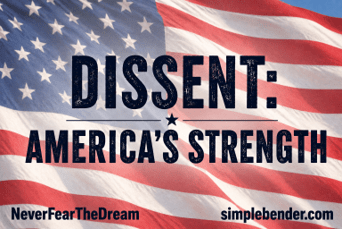
America was never built on agreement. It was built on managing disagreement without abandoning the republic. The great American myth is that we were once united in thought. The great American strength is that we never had to be.

From the beginning, Americans have passionately argued while finding enough common ground to move forward. That is why elections matter. Why opposition is legitimate. Why compromise is a necessity, not a nicety. And why today’s loser must always have the opportunity to become tomorrow’s winner. Violence belongs only as the last resort of last resorts—not the default response.

The Revolution was far from unanimous. Nearly one-fifth of colonists remained loyal to the Crown, while many others chose neutrality rather than rebellion. America did not begin with uniformity of opinion. It began with free people drawing different conclusions about the same future.

The Constitution was not born of unity. It was born of an argument. At the Constitutional Convention, Federalists and Anti-Federalists fiercely debated the proper role of government, individual liberty, and the distribution of power. People of different faiths, economic interests, regions, and priorities concluded that compromise was preferable to division. That wasn’t unanimity; it was constitutional and emotional maturity and a matter of survival.

Dissent has shaped our history. Manifest Destiny divided churches, politicians, and families. The Civil War was the tragic consequence of irreconcilable differences that remain unresolved even today. Americans argued fiercely over entering both World Wars. Reconstruction, civil rights, women’s suffrage, labor rights, women’s rights, immigration, and the role of government all sparked passionate disagreement. Every major turning point in our history has been accompanied by dissent, and its outcome has been shaped by it.

But through this, we have learned not to suppress disagreement but to channel it through the institutions designed for debate and resolution. Unfortunately, today those very institutions are losing their ability to seek compromise. Their representatives protect their own longevity and power and fear their tribe. The value of dissent is being lost for the sake of convenience.

The lesson and goal should never be to eliminate disagreement. Free societies do not survive because everyone agrees. They survive because citizens embrace disagreement as legitimate, necessary, and beneficial.

Today, we still disagree on morality, religion, citizenship, immigration, stewardship, ownership, individual rights and freedoms, and the proper role of government. None of that is new. What is new is the speed with which opinion becomes certainty, certainty becomes outrage, and outrage becomes identity. Immediate communication and unverified information often replace thoughtful research and debate with emotional reaction, making compromise seem like a weakness rather than a sign of wisdom.

The danger is not dissent. The danger is ignorant tribal certainty.

Opposing opinions are rarely obstacles to understanding; they are often its starting point. Every perspective brings experiences we may not have and assumptions we should question. Progress comes not from silencing disagreement but from listening long enough to find where another viewpoint can strengthen our own.

Every generation has believed the nation was coming apart. Yet the republic has endured. And it will unless we fail it. Uniformity has never been America’s way of operating. Dissent, argument, and compromise have been. Our national strength has never been in reaching the same conclusion. It has been in believing that those who reached different conclusions still belong to the same country under the same Constitution.

We see and hear the myth of discord’s devastation, but not the reality of its value. There is power and insight in opposing opinions. There is even greater power in understanding those differences and building on their strengths rather than attacking their weaknesses. Our greatest challenge is not learning to agree, but remembering that the freedom to disagree has always been one of America’s defining strengths. NeverFearTheDream simplebender.com

-.. .. … … . -. – / .. … / … – .-. . -. –. – ….


Lap Around the Sun: Daily Steps Forward
by WCBarron

Buy at Amazon Buy at Barnes & Noble Buy at Books2Read

Joy in Alzheimer’s: My Mom’s Brave Walk into Dementia’s Abyss
by WCBarron

Buy at Amazon Buy at Barnes & Noble Buy at Books2Read

Posted in NeverFeartheDream

Never Fear The Dream…

Long-term solutions evolve through compromise, and short-term ones evolve through conflict. Yours isn’t the only viable opinion, and maybe you are more wrong than right. 25.11.4

For Every Problem...A Solution...
Lap Around the Sun: Daily Steps Forward
Joy in Alzheimer’s: My Mom’s Brave Walk into Dementia’s Abyss

Posted in Current Events, Political

Vilifier to Victim Cycle

Vilification is not an innocent weapon — it’s a destructive one. It takes little effort to sling insults, caricature opponents, or cast entire groups as villains. But like a boomerang, what you hurl often returns. The sharper the words, the more likely they cut you on the rebound. This cycle of destruction is something we must recognize — and break.

When you vilify, you don’t invite reasoned debate but reactionary hate. Anger rarely absorbs anger; it mirrors it. History shows escalation is almost inevitable: one stone cast is met with another, one torch answered with fire. In that spiral of hostility, the target shifts. Today’s accuser becomes tomorrow’s accused. The vilifier becomes the victim.

History offers painful lessons. Denunciation fueled the French Revolution, each faction outshouting and out-purging the last. Robespierre, once the loudest voice condemning “enemies of the revolution,” soon faced the guillotine he praised. Hate and retribution have no loyalty — they devour their own.

Modern politics echoes the same pattern. Leaders, activists, and media figures who stoke division often find themselves caught in the very fires they lit. Hate has no brake; once unleashed, it runs its own course.

Vilification is seductive. It feels like strength — drawing bold lines, protecting your tribe, mobilizing energy. But human nature is wired for reciprocity: what we project comes back. To weaponize hate is to release a force you cannot control. Your gender, race, faith, politics, or power won’t shield you — the backlash spares no one — you reap what you sow.

This is not a call for naïve pacifism but for clarity. To vilify is to plant the seed of retribution. To demonize is to risk becoming the demon in another’s story. History is merciless to those who think they can ride the tiger of hate and not be eaten.

When there is no room for counter-opinion, there is no compromise. Without compromise, polarity hardens into conflict. And conflict, left unchecked, leads to violence — and death. But there is hope. We should call for understanding, not for “beating the hell out of” those we oppose. Listening can reveal common ground. Words can wound, but they can also heal. If we speak to persuade rather than to poison, we stand a chance of escaping the boomerang’s return flight. Vilification may win the moment, but it never secures a peaceful future.  #NeverFearTheDream

For Every Problem...A Solution...
Lap Around the Sun: Daily Steps Forward
Joy in Alzheimer’s: My Mom’s Brave Walk into Dementia’s Abyss

Posted in Philosophy

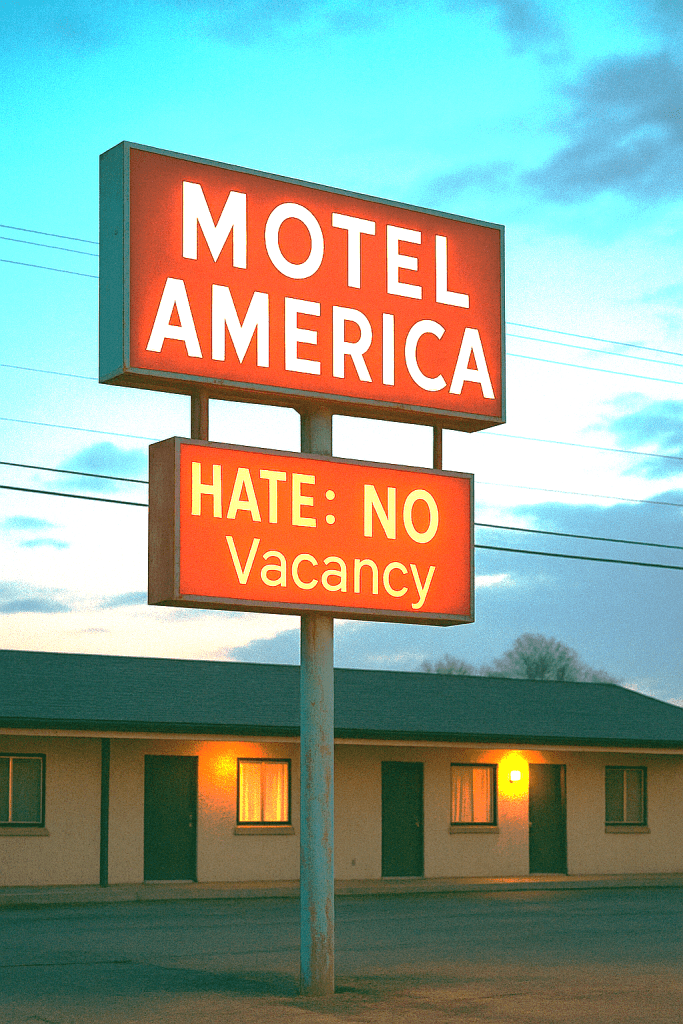
No Place for Hate—Not Here

There is no room for Hate…NONE

There is no place for hate in our homes, our faiths, or our government—none. The grievances of Palestinians, Ukrainians, and displaced peoples around the world may be deep and justifiable—and may very well usher in generational hate. But we Americans have no excuse to let hate in. Not in our hearts, our homes, our places of worship—and definitely not in our policies.

Yet hate has become almost reflexive—normalized, even celebrated. It’s hoisted like a banner, waved by those clinging to lost causes and imagined enemies. It grows in minds and festers in rhetoric, often without genuine cause—and with no end goal beyond destruction and domination.

Those who lead or campaign on hate do so to divide, not to solve. Hate is a wedge—driven between communities to create illusionary superiority and incite rage. It doesn’t clarify; it confuses. It doesn’t elevate; it manipulates. When leaders resort to hate, they expose their inability to persuade, to unify, or to understand. Their bluster masks weakness. Their venom reveals fear. They seek the power of the mob, not the strength of dialogue or the courage of compromise.

Listen carefully: hate speech is no longer fringe. The denigration of individuals—by race, gender, belief, political group, or origin—has become a strategy. Its purpose is not discourse, but dominance. Not freedom, but control.

This country cannot be governed by contempt. We must reject those who exploit division. Hate has no place in a nation built on liberty—and none in a future worth striving for. America is stronger because of our diversity, not despite it. We are more mature—intellectually and emotionally—because of our historic willingness to understand and compromise.

Look neither backwards with anger nor forward with hate. Don’t give hate any space. Not here. Not now. Not tomorrow.

For Every Problem...A Solution...
Lap Around the Sun: Daily Steps Forward
Joy in Alzheimer’s: My Mom’s Brave Walk into Dementia’s Abyss