CATEGORY I: FOUNDATIONAL PHILOSOPHY | TOPIC 1 OF 4 | WHY THIS MOVEMENT EXISTS
The country does not need another political identity. It needs more citizens willing to keep ownership of their judgment
America has no shortage of political tribes. We have colors, slogans, hats, hashtags, enemies, approved grievances, and a daily supply of reasons to be furious. Belonging is not the problem; people naturally seek community. The problem arises when belonging becomes a substitute for judgment—when the team has spoken, and contradiction must be defended. No governing philosophy can survive if citizens apply principles only to their opponents.
Many Americans no longer fit the package deals offered to them. They may believe the government should live within its means without becoming indifferent to suffering. They may support personal liberty while recognizing the need for public order, favor a secure border and workable, lawful immigration, or want reliable energy alongside environmental stewardship. They may value alliances while still asking what commitments cost and where they lead. That is not confusion. It is a refusal to outsource every judgment to a platform.
The tribal bargain is tempting because it simplifies politics. Loyalty brings moral certainty, convenient enemies, and permission to overlook one’s own side. Debt can suddenly look responsible. Executive power can become necessary. Restrictions on speech can be recast as safety, or punishment as patriotism, depending on who holds authority. The facts may be unchanged while the standard quietly shifts.
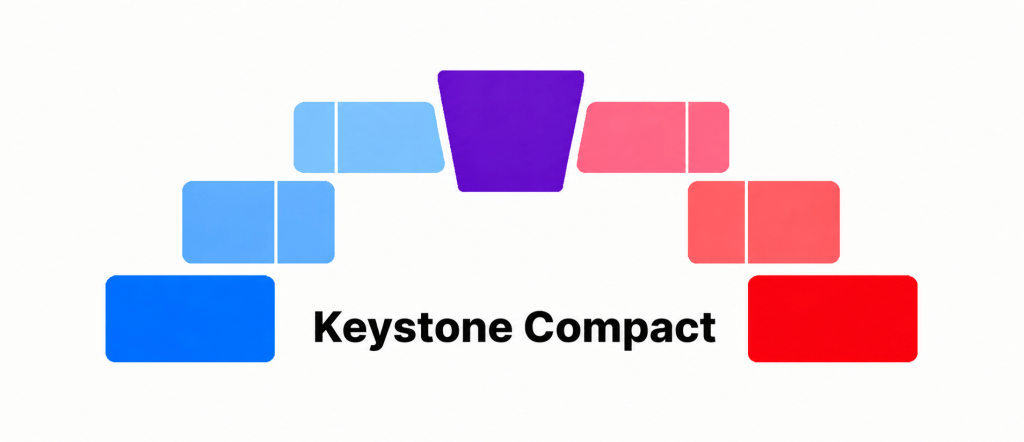
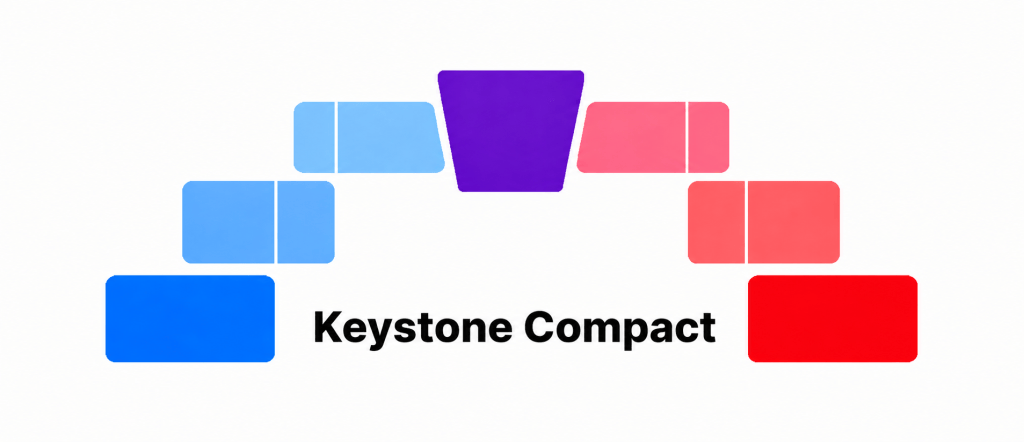
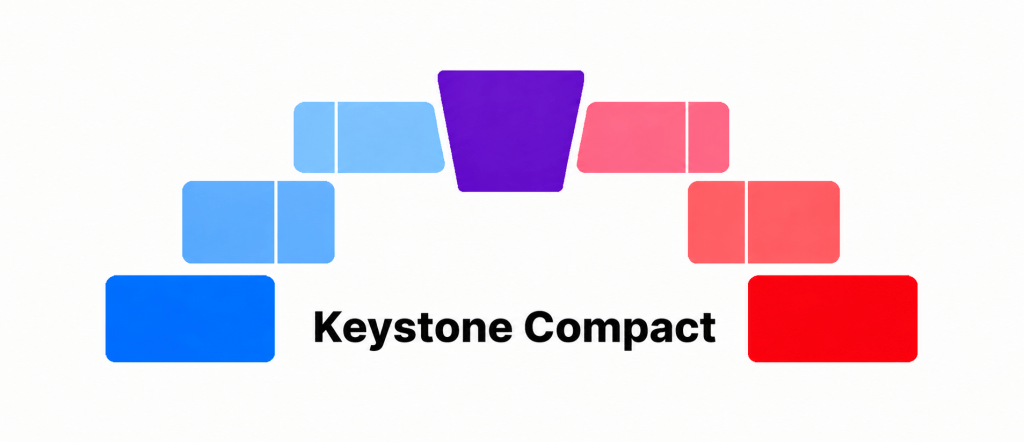
The Keystone Compact is not an effort to split the difference between the parties. Nor is it an invitation to shop selectively for whichever positions feel comfortable. The keystone in an arch works because competing forces are held in check by structure. Politically, the equivalent is a set of principles sturdy enough to withstand a change in who governs.
That standard creates discomfort on both sides. The populist right can speak of freedom while tolerating government power directed at cultural adversaries and excusing fiscal recklessness. The bureaucratic left can speak of justice while accepting the expansion of administrative control, dependency, public disorder, or decisions increasingly distant from ordinary citizens. The temptations differ, but the civic danger is similar: principles become conditional on who holds power.
Keystone begins with the citizen rather than the coalition. Free citizens are not raw material for political movements. A serious political philosophy should demand less loyalty and more responsibility: think independently, weigh trade-offs, acknowledge costs, apply standards consistently, and remain willing, and eager, to change your mind when the evidence changes.
That need is evident far from Washington. It appears in the small-business owner navigating rules written with larger institutions in mind; the retiree hearing promises while leaders avoid the arithmetic behind them; parents who want schools to teach well rather than become permanent culture-war arenas; and workers who want safe communities, honest wages, reliable power, and a functioning immigration system. These concerns do not line up neatly on a partisan checklist, nor should they.
Calling such citizens ‘moderate’ misses the point. Fiscal honesty is not a midpoint. Equal rights are not a midpoint. Constitutional restraint and competent government are not compromises between extremes. They are standards, and standards matter most when applying them is inconvenient for one’s own side.
The more useful divide, then, is not simply left versus right. It is between citizens who retain their judgment and movements that ask them to surrender it. Political parties can be useful tools, but they become poor masters when membership begins excusing contradiction.
The first Keystone question is therefore not, ‘Which side are you on?’ It is more demanding: when does loyalty stop helping you participate and start giving someone else permission to think for you?
If tribes cannot dictate our judgment, the next principle follows naturally: they cannot dictate our rights either.
Next in Category I: Rights Are Not Tribal Trophies
NeverFearTheDream………. W. C. Barron………. simplebender.com……….keystonecompact.org
-. — / -. . .– / – .-. .. -… . … / .— ..- … – / -. . .– / .. -.. . .- …
-. — / ..-. . .- .-. / -. — / … .. .-.. . -. -.-. .
NeverFearTheDream simplebender.com Stand For Truth
Please consider following simplebender, you’re reading makes my writing more fun..…
Comments and thoughts are always welcome and feel free to re-post …..
 SimpleBender.....W. C. Barron