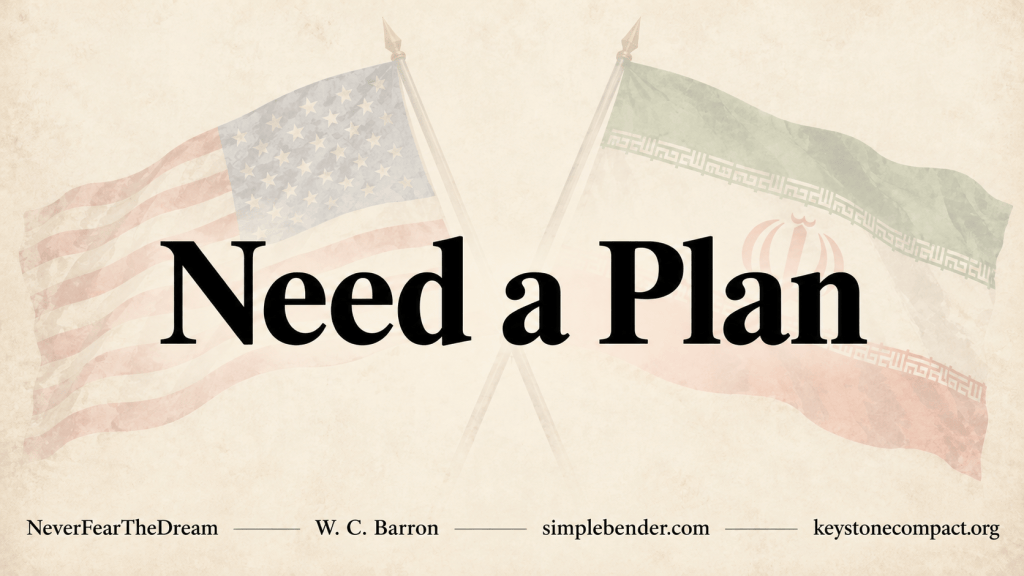
Pressure is the ability to impose costs; leverage is the ability to secure results.
A fundamental difference separates winning a confrontation from achieving an objective. Governments often mistake their capacity to punish an adversary for their ability to change its behavior. The current conflict with Iran illustrates the consequences of that confusion and the cost of abandoning a strategy without a credible alternative.
In May 2018, the United States unilaterally withdrew from the Joint Comprehensive Plan of Action (JCPOA), an internationally negotiated agreement that restricted Iran’s nuclear enrichment and provided enhanced international oversight. The agreement wasn’t perfect, but it was functioning within its nuclear mandate. Rather than securing a stronger replacement, the U.S. 45th President imposed a maximum-pressure sanctions campaign. Iran subsequently expanded its nuclear capabilities and curtailed international monitoring. The result was an increasingly dangerous confrontation, marked by diminishing transparency and a slow-burning fuse.¹
The United States bears responsibility for abandoning a diplomatic instrument without securing an effective alternative. Iran bears responsibility for its reactions, including its regional activities and nuclear expansion. Their reactions should not have been surprising and should have been anticipated. The escalating confrontation was foreseeable, and given the players involved, an eventual conflict was almost inevitable.
The Middle East and the United States are once again embroiled in conflict, with consequences extending well beyond the region. Three questions merit further consideration.
First, what was the functional alternative in 2018? One possibility was to remain in the JCPOA while negotiating supplementary agreements on ballistic missiles and regional security. Whether politically achievable is debatable, but withdrawing without an enforceable replacement surrendered existing constraints in pursuit of uncertain concessions.
Second, why did the U.S. expect sanctions to achieve what negotiated restrictions already provided? Economic pressure certainly harmed Iran, but it failed to produce the broader agreement that was earnestly sought. Meanwhile, Iranian enrichment advanced, and oversight diminished.² Pressure is the ability to impose costs; leverage is the ability to secure results. They are not the same.
Third, what is the strategic objective today? Preventing an Iranian nuclear weapon, eliminating enrichment, weakening regional military capabilities, changing Iran’s government, and/or establishing lasting regional stability? These are distinct objectives and may not be interdependent. Success in one does not guarantee success in another. Without clearly defined objectives, how can we measure success, recognize failure, or assess the value of restraint?
The JCPOA had legitimate shortcomings, including provisions that expired over time and its limited treatment of ballistic missiles and Iran’s regional activities. Preserving it would have reduced one risk while leaving others unresolved. But does abandoning an imperfect agreement make sense when the alternative offers fewer constraints, less visibility, and greater uncertainty?
The subsequent chain of events offers a cautionary lesson. An international agreement is unilaterally canceled. Sanctions failed to secure a replacement agreement. Nuclear restrictions eroded. Diplomatic trust deteriorated. Military force increasingly replaced negotiation, and each escalation brought new consequences and fewer obvious ways out. The path was neither automatic nor solely America’s making, yet its risks were hardly unimaginable.³
Before taking the first step, the U.S. should have heeded its allies’ concerns and confronted a simple question: Then what? That question remains relevant after every subsequent decision, especially when military success is mistaken for a sustainable political outcome.
We cannot undo the withdrawal or the decisions that followed. We can, however, demand coherent objectives, realistic measures of success, and an exit strategy that acknowledges the limits of coercion. Pride and punishment are poor substitutes for policy, and military superiority does not guarantee political success.
Even after being told countless times that we have won. If we cannot explain what comes after the confrontation, how can we claim to know what winning looks like?
-.. — / -. — – / .– .- .-.. -.- / .- .– .- -.–
NeverFearTheDream………. W. C. Barron………. simplebender.com……….keystonecompact.org
-. — / ..-. . .- .-. / -. — / … .. .-.. . -. -.-. .
NeverFearTheDream simplebender.com Stand For Truth
Please consider following simplebender, you’re reading makes my writing more fun..…
Comments and thoughts are always welcome and feel free to re-post …..
Books You Might Enjoy…
Lap Around the Sun: Daily Steps Forward
by WCBarron
Buy at Amazon
Buy at Barnes & Noble
Buy at Books2Read
Joy in Alzheimer’s: My Mom’s Brave Walk into Dementia’s Abyss
by WCBarron
Buy at Amazon
Buy at Barnes & Noble
Buy at Books2Read
Sources
- International Atomic Energy Agency (IAEA), Verification and Monitoring in the Islamic Republic of Iran in Light of United Nations Security Council Resolution 2231 (2015), September 2025. Documents the May 2018 U.S. withdrawal and the progressive deterioration of Iran’s compliance and monitoring arrangements beginning in 2019.
- Congressional Research Service, Iran’s Nuclear Program and 2025 UN Sanctions Reimposition, updated October 13, 2026. Documents the breakdown of JCPOA restrictions, diminished monitoring, reimposed UN sanctions, and continuing uncertainty concerning Iran’s nuclear capabilities.
- Reuters, Iran Says It Will Reply to U.S. Response on Hormuz Proposal Once Review Over, October 12, 2026. Documents the continuing conflict and unresolved disagreement over nuclear negotiations and regional maritime security.

