Posted in Current Events, Philosophy

Capacity for Pain

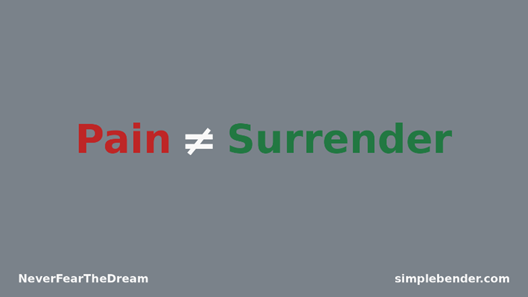
Middle Eastern tolerance for pain is greater than expected. Once again, a Western power is repeating the same mistake with Iran as they have with much of the modern Middle East: they assume pain leads to surrender. That is a very Western way of understanding conflict: material, linear, and transactional. But in the Middle East, suffering is often not seen just as loss. It can also signify and reinforce the resolve for endurance, legitimacy, memory, and honor. Iran demonstrates this logic in one way; the Palestinians in another. Yet they both share and reveal a broader regional pattern of viewing pain not just as punishment but as proof that the struggle is real and, therefore, must be endured.

Iran exemplifies this concept most clearly. The Islamic Republic relies on the Karbala paradigm, martyrdom symbolism, and a political culture of resistance that has intensified since 1979. However, it is not powered solely by martyrdom. It also depends on maslahat—expediency, prudence, and the preservation of the state. This is the crucial point many outsiders miss. Tehran is not built to die heroically. It is constructed to endure, adapt, and survive. It promotes resistance when it benefits the system and compromises when necessary to maintain stability.

That instinct was shaped in ancestral times and hardened in recent history. The 1953 coup taught Iranians that foreign powers would overthrow a government when independence threatened outside interests. The 1979 revolution then fused anti-imperial memory with sacred politics. The Iran-Iraq War completed the lesson. It was prolonged, hugely destructive, and formative. It exemplified much of Iranian strategic thinking: that time itself can be weaponized. One does not always need a clear victory. One only needs to deny the enemy closure, increase his costs, outlast his patience, and drag him through the quagmire for as long as possible.

The Palestinian example demonstrates a similar pattern of resilience. The word sumud—meaning steadfastness—has long represented a way of enduring, surviving, and refusing to be erased regardless of hardship and genocide. A sumud approach fosters a determination to stay in place despite persistent attacks. Iran’s state-centered doctrine and propaganda also use this. Suffering can gain political importance and become a source of strength. Pain does not automatically erase identity; instead, it can bolster it. Bombing, siege, isolation, and coercion do not always lead to surrender. Sometimes, they deepen collective memory, increase grievances, renew the desire to resist, and feed intergenerational hostility and hate.

That is why Western strategy often misfires. It keeps viewing pain as if it were always disqualifying and debilitating. In this region, it is frequently absorbed, narrated, and repurposed. Iran has turned that into statecraft and proxy warfare across Hezbollah, Iraqi militias, the Houthis, and allied networks. Palestinians live it as the national standard bearer of steadfastness, resistance, and survival. If we continue to interpret these societies through a purely Western lens of cost, comfort, and quick resolution, why are we still shocked when assault results in resolve, not in surrender? NeverFearTheDream   simplebender.com

.. -. … …. .- .-.. .-.. .- ….


Lap Around the Sun: Daily Steps Forward
by WCBarron

Buy at Amazon Buy at Barnes & Noble Buy at Books2Read

Joy in Alzheimer’s: My Mom’s Brave Walk into Dementia’s Abyss
by WCBarron

Buy at Amazon Buy at Barnes & Noble Buy at Books2Read
Posted in Current Events

Uniquely American: Civil Discord and Disobedience

Ideas can wound more deeply than fists—their scars often outlast bruises. But dissent isn’t treason; it’s the American expectation. The audacity to voice a contrarian view without fear of punishment was once a defining feature of our national character. That freedom, that courage, is slipping.

A fundamental right is to stand, speak, write, or peacefully protest what you believe is wrong. It’s a moral responsibility at the core of our civic being. It is how we started. As Americans, it is who we are.

Yes, this right has been repeatedly abused and suppressed: during the Civil Rights Movement, LGBTQ advocacy, and Black Lives Matter protests. These weren’t our proudest moments—they were our failures. And yet, we are better than those moments. And we are better because of them. Just as we should be better than today’s attempts to silence pro-Palestinian and pro-Ukrainian voices, or to weaponize immigration enforcement.

Yes, public safety matters. And yes, misinformation can be dangerous, especially when weaponized at scale. But the line between protection and suppression is perilously thin. When fear becomes a rationale for silencing protest, we drift toward authoritarianism under the guise of security.

But let me be honest. I write this as someone of privilege—a white male in the dominant race and gender. I’ve never feared for my safety when expressing my views. I’ve never had to calculate the cost of speaking out to simply be heard. That insulation is not universal. And acknowledging that it is the least I can do.

The truly brave are those who speak anyway, knowing the risks. Minorities are demanding the rights that this country claims to guarantee. Immigrants who were escaping violence and chasing a future are thrust back into violence. And yet, their domestic complicit employers are not subject to the heavy hand of the law. The Pro-Palestinian voices speaking into the silence of global indifference as their homeland, their homeland of generations, is taken and broken, and their families are indiscriminately killed and starved. And even those supporting Ukraine as it fiercely defends its children and its homeland from slaughter by an invading army.

They are the ones carrying this nation’s conscience forward. They take the blows, not for fame or ideology, but for survival and dignity. The road to a better America is paved by those who get off the couch and speak out through civil dialogue, discord, and yes, disobedience.

This country grows not by force, but by engagement. We will be stronger when those in power trade masks and riot gear for open conversation—and when fabricated, non-existent, dystopian, national “emergencies” are no longer used to justify suppression. When we are afraid to speak out, the words of others fill the void, becoming all that is heard. When those of us who can speak don’t, we become complicit in the decay. The slide is ours to stop; or ours to be held accountable.

For Every Problem...A Solution...
Lap Around the Sun: Daily Steps Forward
Joy in Alzheimer’s: My Mom’s Brave Walk into Dementia’s Abyss

Posted in Philosophy

Victims Are Not Villains

Fiction portrays superheroes battling archetypal villains—Superman vs. Lex Luthor and General Zod, Batman vs. The Joker and Two-Face, and Buzz Lightyear vs. Emperor Zurg. But in reality, self-proclaimed “heroes” often manufacture enemies from vulnerable populations to justify their pursuit of personal power.

Throughout history, authoritarians and dictators have vilified specific groups to establish themselves as saviors: Pol Pot (Cambodia) targeted intellectuals and professionals to impose his radical agrarian vision, Saddam Hussein (Iraq) persecuted Kurds as part of a broader political and ethnic conflict, Idi Amin (Uganda) expelled Asians and Indians to consolidate power, Mao Zedong (China) targeted the wealthy and educated in his Cultural Revolution, and Joseph Stalin (Soviet Union) engineered famines and imprisoned political opponents to maintain control. Adolf Hitler (Germany) vilified and massacred Jewish people, while his protege Benito Mussolini (Italy) targeted ethnic minorities to strengthen his nationalist image. Benjamin Netanyahu (Israel) is in a genocidal quest against Palestinians. Vladimir Putin (Russia) has used both Chechen insurgents and Ukrainians as political scapegoats to justify military aggression and solidify power. Meanwhile, his United States counterpart, and admirer, has been scapegoating minorities and immigrants and demanding the persecution of political opponents to consolidate support.

These leaders rely on lies, unchecked narratives, and twisted pseudo-facts to sway the public and position themselves as national saviors. Repeating falsehoods and distorting facts, they endeavor to create the illusion that only THEY can protect society from fabricated threats.

Authentic leadership doesn’t create chaos to demonstrate value—it brings calm to existing turmoil. History ultimately judges these “saviors” as humanity’s supervillains, while vindicating their victims.

We don’t need self-proclaimed heroes dividing us against each other, and we don’t need someone victimizing groups to feel powerful. Today’s “villain” could be YOU tomorrow. When someone claims they alone can “save” society, their motivation is often self-interest, not public welfare. Progress comes through finding common ground and embracing differences, not through polarization and isolation. We are stronger united than divided by those who would name themselves our protectors.

NeverFearTheDream simplebender.com @simplebender.bsky.social Mundus sine ceasaribus