Posted in Keystone

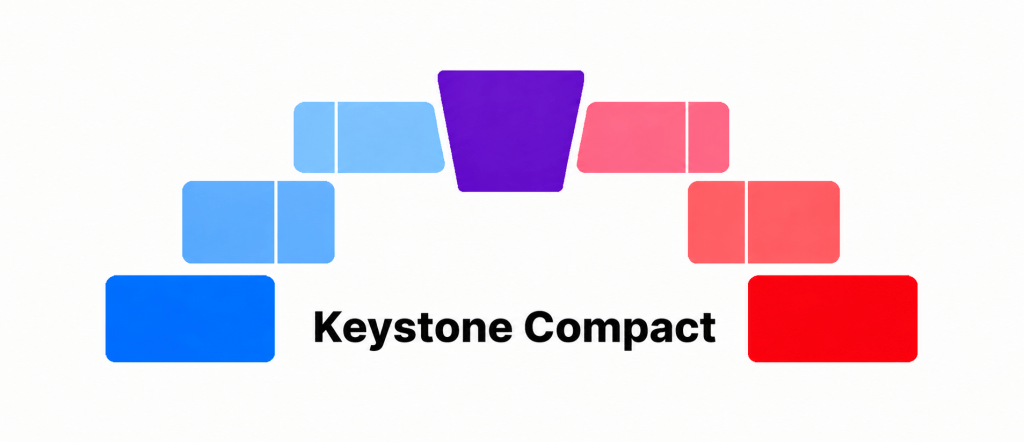
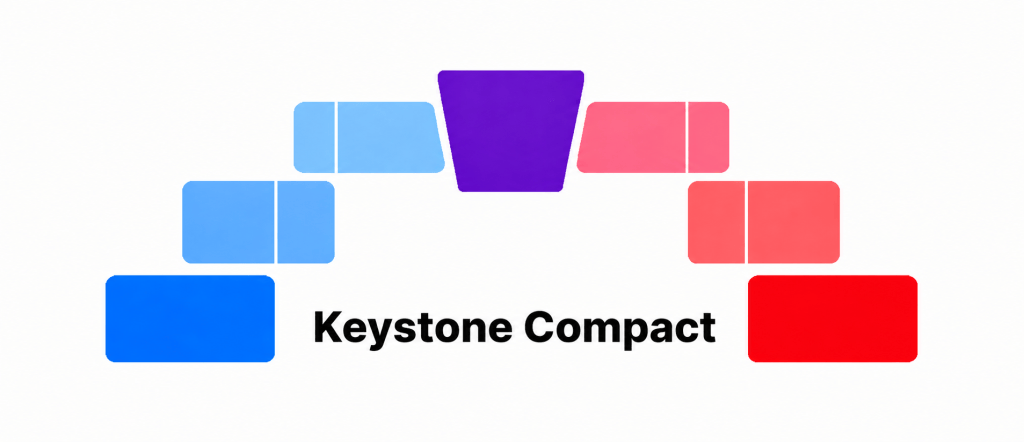
Keystone Compact: A Governing Alternative

The Keystone Compact is my effort to organize ideas about liberty, responsibility, government, and public life into a coherent framework. The views expressed here are mine. Agreement is welcome, disagreement is expected, and thoughtful common ground is the goal. The purpose is not to declare a final answer but to make these principles clear enough to be tested, challenged, and improved.

____________________________________________________________________________

America does not need a softer middle ground between fractured political tribes. It needs a disciplined governing philosophy grounded in liberty, responsibility, strength, and restraint. We are not short on political energy; we are short on governing discipline. One tribe seeks power strong enough to punish cultural enemies. Another seeks power broad enough to manage conscience and outcomes. Both warn against government abuse when the other side governs, then tolerate it when control changes hands.

The Keystone Compact begins with a refusal: citizens should not be required to trade judgment for belonging. This is neither centrism nor an average of two broken agendas. A bridge between two sinking ships remains a poor place to live.

Its core statement is direct: government should be strong where it must be, limited where it should be, and humble where it has repeatedly failed. It should secure rights, protect public order, defend the country, enforce fair rules and contracts, keep essential promises, and live within its financial reality. It should not manage private conscience, punish peaceful dissent, censor opposition, pick economic winners through political favor, subsidize irresponsibility, or mortgage the future for the next election.

Free Lives. Honest Budgets. Responsible Government.

Personal liberty is the default, but it does not include harming others. Rights must apply even to those we dislike. Social peace requires pluralism: citizens must remain free to speak, worship, marry, organize, raise families, and disagree without government harassment. Public safety and due process are not competing values. Order without rights becomes intimidation; rights without order become fragile.

Fiscal discipline is moral discipline because every unfunded promise has a future owner. Markets need competition, enforceable rules, and consequences for fraud—not exemptions for insiders. Safety nets should prevent ruin while restoring dignity, independence, and work, where possible. Decisions should remain close to communities whenever practical, so citizens can see results and hold leaders accountable.

Those principles lead to policies that will discomfort both tribes. Keystone supports balanced-budget discipline, pay-for rules for spending and tax cuts, and a simpler, flatter tax code that protects lower-income households, retirees, and small businesses. It would protect current Social Security and Medicare beneficiaries while fixing the math for younger generations. Health care should offer clearer pricing, stronger primary care, catastrophic protection, competition, and understandable choices. Education should combine strong public schools, family choice, vocational dignity, and one firm rule: public money requires public accountability.

The Compact takes a pro-choice position grounded in government restraint, where medicine, conscience, privacy, and bodily autonomy intersect. It affirms responsible citizens’ constitutional right to own firearms while insisting that rights and responsibilities travel together. It supports constitutional policing, due process, and firm consequences for violent and repeat offenders. On immigration: deport criminals, secure the border, respect work, modernize lawful immigration, protect genuine asylum seekers, and stop conflating cruelty with control.

National resilience requires practical discipline. Energy policy should be diversified, technology-neutral, and reliability-first, with energy sources judged by performance, cost, resilience, security, and environmental impact. Permitting should protect health and habitat without making needed infrastructure impossible to build.

Institutions also need repair before they harden into inheritance. The Compact supports constitutionally grounded, carefully phased 20-year active terms for Supreme Court justices rather than lifetime tenure and political roulette. Voting districts should use equal population as the controlling standard, applied through neutral, transparent criteria rather than partisan advantage or incumbent protection. Voters should choose representatives, not the other way around.

Abroad, the United States should support allies, strengthen NATO, resist authoritarian aggression, and defend its interests without writing blank checks. Military commitments should have clear objectives, oversight, burden-sharing, and an answer to the question, What next? Strength does not require silence, and loyalty does not require automatic agreement.

These priorities share a principle: maximum practical liberty, minimum necessary coercion, honest public accounting, and equal rules. That is the Keystone Test: Does a policy protect liberty, respect constitutional limits, show the bill, solve a real problem, avoid unnecessary coercion, preserve local flexibility, reduce favoritism, strengthen civic trust, and leave the country more resilient? If it cannot withstand those questions, it may be less about governing than about theater.

The Keystone Compact asks Americans to reclaim the habits of a free people: tell the truth, pay the bills, respect differences, defend rights, protect the vulnerable, reward work, punish corruption, question power, keep the lights on, and leave the country stronger.

Rights for everyone. Favors for no one. Power with limits. Policy with sense.

The series begins with the citizen. Before budgets, borders, courts, energy, or foreign policy, a more basic question comes: can Americans keep their judgment when the tribe starts chanting?

NeverFearTheDream………. W. C. Barron………. simplebender.com……….keystonecompact.org

-. — / -. . .– / – .-. .. -… . … / .— ..- … – / -. . .– / .. -.. . .- …


Lap Around the Sun: Daily Steps Forward
by WCBarron

Buy at Amazon Buy at Barnes & Noble Buy at Books2Read

Joy in Alzheimer’s: My Mom’s Brave Walk into Dementia’s Abyss
by WCBarron

Buy at Amazon Buy at Barnes & Noble Buy at Books2Read
Posted in Keystone

Keystone Test:

Judge the Power, Not the Party

We are bracing to endure the countless ads, promises, and false narratives in the midterms. Before backing a promise, consider what authority it confers, what costs it conceals, what outcomes it promises, and whether you would trust it if roles were reversed.

We don’t need contracts, treaties, or MOUs, which turn out to be just words on paper, signed apparently with disappearing ink. We need real commitment, a covenant, a compact. Guidelines that let us truly assess the candidates, the parties, and their platforms. Like a keystone holding an arch together, taking a critical view of all sides, not just one, and holding up from the center. The Keystone Compact is a principle that should endure changes in party, personality, beneficiary, and political fashion.

The Keystone Test is not a purity test. It is a discipline that evaluates governing principles.

Before granting authority, spending money, or surrendering liberty, ask:

  • Does it protect liberty?

Peaceful adult life belongs to the person living it. Rights must protect speech, conscience, privacy, property, bodily autonomy, lawful self-defense, due process, and equal treatment. Liberty does not excuse harm to others.

  • Does it respect constitutional limits?

Good intentions do not confer unlimited authority. Power requires a lawful basis, defined boundaries, meaningful review, and consequences for abuse.

  • Does it solve a real problem?

Identify the problem, state the intended outcome, and measure performance. A policy that cannot define success is usually crafted for applause rather than for improvement.

  • Does it avoid unnecessary coercion?

Government should use no more force, surveillance, restrictions, or bureaucracy than the problem requires. National power should not replace local action simply because it offers a louder voice.

  • Does it show the bill?

Disclose the full cost, who pays, who benefits, and what future obligation is created. Spending without pay-fors and tax cuts without spending discipline are the same form of evasion.

  • Do equal rules apply?

Rights cannot depend on identity, party affiliation, wealth, influence, or popularity. Markets should not be skewed toward donors or incumbents. Enforcement should not vary by target.

  • Does it preserve local proof?

Keep decisions close to citizens, practical, visible enough to measure, and flexible enough to correct. Local control cannot excuse violations of constitutional rights.

  • Does it strengthen capacity?

Serious policy should help people stand up and leave the country better prepared for the next disruption. It should strengthen work, family, safety, community, civic trust, reliability, and resilience.

  • Does it limit entrenchment?

Emergency powers and orders need to expire. Institutions need renewal. Districts should serve voters; courts should remain independent and not become lifetime partisan prizes; and failed policies must be removable.

  • Would we accept the same power in our opponents’ hands?

If a power seems safe only when our side controls it, it is not truly safe. If a rule is fair only when it helps our coalition, it is not truly fair.

Not every candidate will receive ten yeses. Constitutional rights sometimes require national protection. A true emergency may require temporary extraordinary action. The test requires leaders to identify and limit tradeoffs and to remain accountable.

The test is straightforward. A tax cut must be paired with spending discipline. Public safety must protect citizens and uphold due process. Immigration policy must restore the rule of law, punish criminals, respect work, and fix legal pathways. Energy policy must preserve reliability while improving measurable environmental performance. Foreign policy must define American interests, objectives, costs, and limits.

The Keystone Test will not eliminate disagreement but will make hypocrisy harder to hide. Judge the policy before the party, the power before the personality, the result before the slogan, and the bill before the accolades.

Now is the time for free citizens to stop asking whether a policy helps their tribe and to start asking whether that power deserves to survive the next election.

NeverFearTheDream………. W. C. Barron………. simplebender.com……….keystonecompact.org

-.- . -.– … – — -. . / -.-. — — .–. .- -.-. –


Lap Around the Sun: Daily Steps Forward
by WCBarron

Buy at Amazon Buy at Barnes & Noble Buy at Books2Read

Joy in Alzheimer’s: My Mom’s Brave Walk into Dementia’s Abyss
by WCBarron

Buy at Amazon Buy at Barnes & Noble Buy at Books2Read
Posted in Political

The Hidden Engine: Incentives Drive American History

History can be viewed through many lenses—culture, religion, technology, personalities, and ideals. One of the least celebrated, yet most consistently revealing, is incentives.

Our nation’s history, like that of most nations, is wrapped in slogans, banners, symbolism, and stirring ideals. Those are the stories we are taught, love to recite, and eagerly pass down from one generation to the next. Beneath them, however, lies a quieter force: incentives. History is also a story of wealth, resources, and the struggle to control them. Looking beyond the slogans does not diminish our past—it helps explain it, understand our present, and better anticipate our future.

History loves heroes because they are easy to remember. Incentives are harder to celebrate, yet they often explain why events unfolded as they did. The American Revolution is remembered as a triumph of liberty over tyranny. It was also a dispute over taxation, restrictions on western land, merchant profits, and who would control the colonies’ economic future. Liberty became the language of the revolution; incentives supplied its momentum.

The Constitution is rightly celebrated as the foundation of our republic. It also sought to stabilize commerce, resolve debt, protect contracts and property, and balance the competing interests of sovereign states and the new federal government. The Louisiana Purchase was as much about controlling the Mississippi River and expanding agriculture as it was about national destiny. The Mexican-American War brought territory, ports, mineral wealth, and farmland, accelerating American growth.

The Civil War is too often reduced to a choice between slavery and freedom. It was also a massive collision between competing economic systems. The North relied on industry, wage labor, railroads, finance, and expanding domestic markets. The South depended on plantation agriculture built on the horrific institution of slavery—a labor system that required enormous capital and drove global cotton production. Tariffs, transportation, banking, and western expansion were all gears in that engine.

The United States entered both world wars only after concluding that its secure commerce and long-term strategic interests were directly threatened, not for the grandiose, much-heralded altruistic reason of ‘saving the world.’ The New Deal helped struggling Americans and stabilized capitalism during an unprecedented economic crisis, thereby averting an outright civil revolt. The Cold War, Vietnam, and the Gulf conflicts were framed in ideological and moral language and falsely cast as pitched battles against Communism and Islam. Yet strategic resources, trade routes, and regional influence consistently drove policy.

The pattern persists today. Taxes, tariffs, national debt, healthcare, housing, climate policy, artificial intelligence, and immigration are debates over incentives and resource allocation. Politics is the mechanism by which societies decide how wealth, opportunity, and resources are created, distributed, protected, and transferred. Major conflicts arise when people no longer agree on those rules.

Every political philosophy ultimately answers one unavoidable question: Who controls the incentives that determine wealth, opportunity, and power? Everything else is the language used to justify those decisions. People rarely fight over money itself; they fight over the rules that determine who earns, keeps, taxes, inherits, spends, or controls it. Look beyond the banners and speeches. Whether the issues are local, regional, domestic, or international, follow the incentives. They have explained our past—and they will be the hidden engine driving our future.   NeverFearTheDream      simplebender.com

.. -. -.-. . -. – .. …- . … / -. — – / .. -.. . .- .-.. …


Lap Around the Sun: Daily Steps Forward
by WCBarron

Buy at Amazon Buy at Barnes & Noble Buy at Books2Read

Joy in Alzheimer’s: My Mom’s Brave Walk into Dementia’s Abyss
by WCBarron

Buy at Amazon Buy at Barnes & Noble Buy at Books2Read

Posted in Philosophy

Bound in Fragile Balance: Freedom and Liberty

Can you be free without liberty or have liberty without freedom?

When freedoms are being challenged, coerced, and twisted to fit ideologies—as they are now- this isn’t a rhetorical question. It is an essential one. Because freedom and liberty are not the same thing. You can be free without liberty; however, you cannot have liberty without freedom.

Freedoms are what everyone is born with. They are innate. The freedom to speak, roam, think, and express yourself. Liberty is the social contract, a framework that defines those rights and protects them from government overreach, ideology, mob rule, and individual abuse.

Freedoms can exist in isolation; liberty requires a society. You can escape to the wilderness and be as free as you like. Liberty exists to balance the tensions between individual freedoms and the responsibilities of societal citizens coexisting in a communal environment. There will always be tension between them as social norms and technologies continue to evolve. But it is our liberty that will guide us, allow us to protect it, and our freedoms. Liberty protects our rights to do what we ought to do, not the power to do what we want to do.

Liberty is guarded and protected; freedom is what you assert and claim. And yet, liberty’s role is to protect your freedoms if others impinge on yours and vice versa. Liberty is for everyone and must be protected by everyone. Because freedom can be absolute, liberty must be conditional. Without setting civil boundaries within the construct of liberty, freedom will run amok. Everyone believing and acting as if they have no responsibilities or accountability is the recipe for chaos and anarchy, making humans no better than any other social animal. Freedom untethered isn’t freedom at all.

Liberty is created when people agree to limit certain freedoms. Ironic as that may seem. Liberty is a civilized form of freedom. It is the civil contract we live by. It allows the freedoms we agree upon. Freedom of speech, but not speech that incites violence. Freedom of the press, but not a deceptive, manipulated media. Freedom to worship and assemble without fear of retribution by worshiping a minority religion or assembling to support, or protest, what may be viewed as unjust or a violation of liberty. Within the context of our liberty, we should pause before yielding to the temptation to trade freedoms for perceived security. Once lost, those freedoms are hard to regain, just as yielding civil authority to the government.

While Patrick Henry decried, “Give me Liberty or give me Death“; Thomas Paine opined, “Government, even in its best state, is but a necessary evil; in its worst state an intolerable one.” Their’s wasn’t a cry for freedom, but for a governing system that protected the agreed-upon freedoms of all. We may not like the clamorous protests demanding action, or the ideas and opinions espoused by others—just as much as they may not appreciate ours—but in our Liberty we have agreed to allow them, and that Liberty is worth defending. Without it, the saber of perceived justice can and will cut both ways, depending upon who yields it. The Liberty we should protect, our Liberty, must sheath the sword and allow the voices of freedom to be boldly, openly, and freely expressed.

For Every Problem...A Solution...
Lap Around the Sun: Daily Steps Forward
Joy in Alzheimer’s: My Mom’s Brave Walk into Dementia’s Abyss